

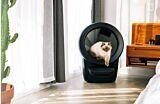
The best self-cleaning litter box isn’t the one that advertises the longest gap between scoops — it’s the one that fits your cat’s size and has strong safety measures before a cleaning cycle begins. Litter‑Robot 4 and PETKIT Purobot Max Pro 2 are two premium options available in Europe. Litter‑Robot 4 prioritizes an automatic sifting system, a waste drawer and usage/weight tracking; Purobot Max Pro 2 adds a camera, recognition features and a wider set of sensors. If you want a proven system focused on waste removal, Litter‑Robot deserves attention; if you prefer more visual monitoring, PETKIT brings more tech layers.
Italy/EU: these are expensive, bulky devices. Before ordering from Amazon Italy or an official store, check dimensions, the return policy, EU warranty coverage, the cost of consumables and who pays return shipping.
Weight and size of your cat are the first filter, not the brand
The mistake is buying from photos and discovering the entrance, drum or weight limits aren’t suitable. An automatic box must adapt to the cat — never the other way around.
PETKIT specifies an approximate weight range of 1.5 to 10 kg for the Purobot Max Pro 2. Litter‑Robot publishes its own requirements and recommendations by model and by age/weight. Check the current spec sheet, especially for kittens, very large cats or animals with reduced mobility.
Action: weigh your cat and measure the space it comfortably uses in the current tray. Then compare entrance size, interior surface and the official limits. If your cat is near the limit, don’t buy hoping it will fit.
Litter‑Robot 4 vs PETKIT Purobot Max Pro 2: two automation philosophies
| Criterion | Litter‑Robot 4 | PETKIT Purobot Max Pro 2 |
|---|---|---|
| Cleaning | Automatic sifting and a waste drawer | Automatic cleaning and waste container |
| Monitoring | App with usage, weight and level tracking | App + 1080p camera + face/weight recognition |
| Declared capacity | Marketed for multi-cat homes according to the manufacturer | 76 L drum and 8 L waste drawer |
| Connectivity | Wi‑Fi/app Whisker | Wi‑Fi 2.4/5 GHz as specified |
| Safety | Presence sensors and detection | 12 declared safety sensors |
| Differentiator | Ecosystem centered on the litter box | Camera and visit analytics |
Litter‑Robot 4 makes more sense if your priority is automating waste removal; the Purobot Max Pro 2 is appealing if you want to see who’s using the box and review events visually.
But the camera introduces the next risk: confusing observation with diagnosis.

A camera can show changes, but it can’t tell you what illness your cat has

PETKIT promotes visit tracking and recognition features. That can help you notice if something has changed — frequency, duration or which cat used the box. It does not turn the device into a veterinary diagnostic tool.
If you see straining to urinate, no urine, blood, vocalizing, repeated visits or any worrying change, don’t wait for the app to "interpret" it. Treat the data as a prompt to act and, when appropriate, consult your veterinarian.
Litter type: the detail that can ruin an expensive purchase
Automatic boxes usually rely on clumping litter that’s compatible with their mechanism. The mistake is assuming any litter your cat currently uses will work the same.
Check granule size, clumping ability and the manufacturer’s restrictions. PETKIT states compatibility with various clumping litters under its conditions; Whisker also publishes recommendations for Litter‑Robot.
Do the full cost math: device + bags/liners + compatible litter + filters or deodorizers + possible accessories. Purchase price is only the first number.
Safety: what to check before you let it clean unsupervised
A motorized device operating around an animal must detect presence and stop or block a cycle when appropriate. The mistake is installing it, turning it on and assuming the default settings are safe for every cat.

- Read the official limits: age/weight and recommendations for kittens.
- Update firmware: if the manufacturer publishes improvements.
- Supervised testing: watch several cycles during the first days.
- Keep a traditional tray: during the transition.
- Don’t force the adjustment: a cat frightened by the mechanism needs time.
The turn is psychological: a box can be technically correct and still fail if the cat decides not to use it.
How to introduce an automatic litter box without provoking rejection
The mistake is removing the old tray on the same day. A machine that spins, smells different and occupies a new spot can be enough for a cautious cat to avoid it.
Place the new box near the usual one when possible, initially disable automatic cycles if the manufacturer recommends and let the cat explore. Don’t remove the alternative until you see regular, relaxed use.
Decision matrix before you spend
| Your priority | What to check first | Candidate |
|---|---|---|
| Automation without a camera | Size, sifting, EU service | Litter‑Robot 4 |
| Camera and visitor identification | Privacy, the app, weight range | PETKIT Purobot Max Pro 2 |
| Very large cat | Interior dimensions and entrance | Do not buy until you measure |
| Small kitten | Official safety limits | May require manual mode or waiting |
| Nervous cat | Adaptation process | Keep a traditional tray as backup |
Checklist for buying in Italy
- Measure the space: device, opening and room to empty the drawer.
- Weigh the cat: compare with official limits.
- Check the litter: don’t assume compatibility.
- Review returns: these are large, costly items to ship.
- EU warranty: identify who repairs or replaces.
- Consumables: bags, filters, deodorizers and litter.
- Privacy: if there’s a camera, review storage and permissions.
Frequently asked questions before automating the box
Is an automatic litter box suitable for multiple cats?
Both manufacturers consider multi-cat homes, but real capacity and emptying frequency depend on use. Also check that all cats meet the size/weight limits and accept the same litter.
Can I remove the traditional tray immediately?
Not a good strategy for all cats. A gradual transition lowers the risk of rejection. Keep an alternative until you confirm regular use.
Can the app detect urinary problems?
It can log patterns or events depending on the model, but it does not diagnose disease. Significant changes in urination or behavior require veterinary evaluation.
Verified sources
After you automate the litter box another need appears: if your cat goes outside, no litter‑box camera tells you where they are when they leave the house. That’s where GPS, device weight and real coverage matter.
🔍 Looking for something else?
If you want to read other articles similar to Best self-cleaning litter box for cats: safety first, not the app you can visit the category Health & Care.
Leave a Reply
More cat breeds!