

You are cooking, your cat is staring at you from the floor, and meowing for a tiny piece of pork. Can you give it to them? Yes… but one way of preparing that exact same pork could kill them in a matter of days.
This is not an exaggeration meant to scare you. There is a specific disease, with a proper medical name, that comes from raw pork and is practically always fatal in cats. Most pet owners have never heard of it. I will get to that in a moment.
The short answer: yes, but with conditions
Let's start with the basics: well-cooked, unseasoned pork is safe meat for cats. It is animal protein, exactly what their carnivorous bodies need. As an occasional treat, a small, lean, cooked piece is perfectly fine.
The fundamental rule is that it must remain just that: a treat, not their main meal. A cat needs a complete and balanced diet as their foundation.
Now that is clear, here is what matters most: the type of pork that can actually harm them.
Aujeszky’s disease: the nearly unknown threat

It is called Aujeszky's disease, or pseudorabies. It is a porcine herpesvirus, and pigs are its only natural reservoir.
Here is the detail that makes it dangerous: in pigs, it often shows no symptoms — the animal carries it and goes about its normal life. But when that virus jumps to a cat, dog, or any other carnivore, the story changes drastically.

What you need to know about Aujeszky's, straight up:
- In species like cats, the disease progresses rapidly and is almost always fatal
- There is no treatment. The only thing that works is preventing infection
- The course of the illness lasts from one to three days after the first symptoms appear
- The most characteristic symptom is intense, localized itching, so severe that the animal injures itself by scratching
- It is transmitted by eating raw meat or organs from infected pigs or wild boars
It does not affect humans. Only animals.
In countries with regulated commercial pig farming, the disease is heavily contained, so today the real risk comes primarily from wild boar: game meat, offal, or scraps left within reach.
And yes — thoroughly cooking the meat destroys the virus. That is the entire point of this article.
The three types of pork to avoid

1. Raw. For the reasons you just read, plus the typical parasites found in raw meat. No exceptions, no "it came from a trusted source." Cooked or nothing.
2. Fatty. Fatty cuts cause digestive upset and, with repeated exposure, can trigger pancreatitis. Always stick to lean cuts.
3. Processed or seasoned. This is the most common trap because it seems harmless: bacon, ham, sausages, salami, cured loin.
MYTH: "A single slice of ham won't hurt them; it's just meat." False.
FACT: Ham contains far too much sodium for a 9-pound animal, and processed cold cuts often include garlic and onion, which are toxic to cats because they damage their red blood cells. That "treat" is one of the worst things you can give them.
How to feed it properly
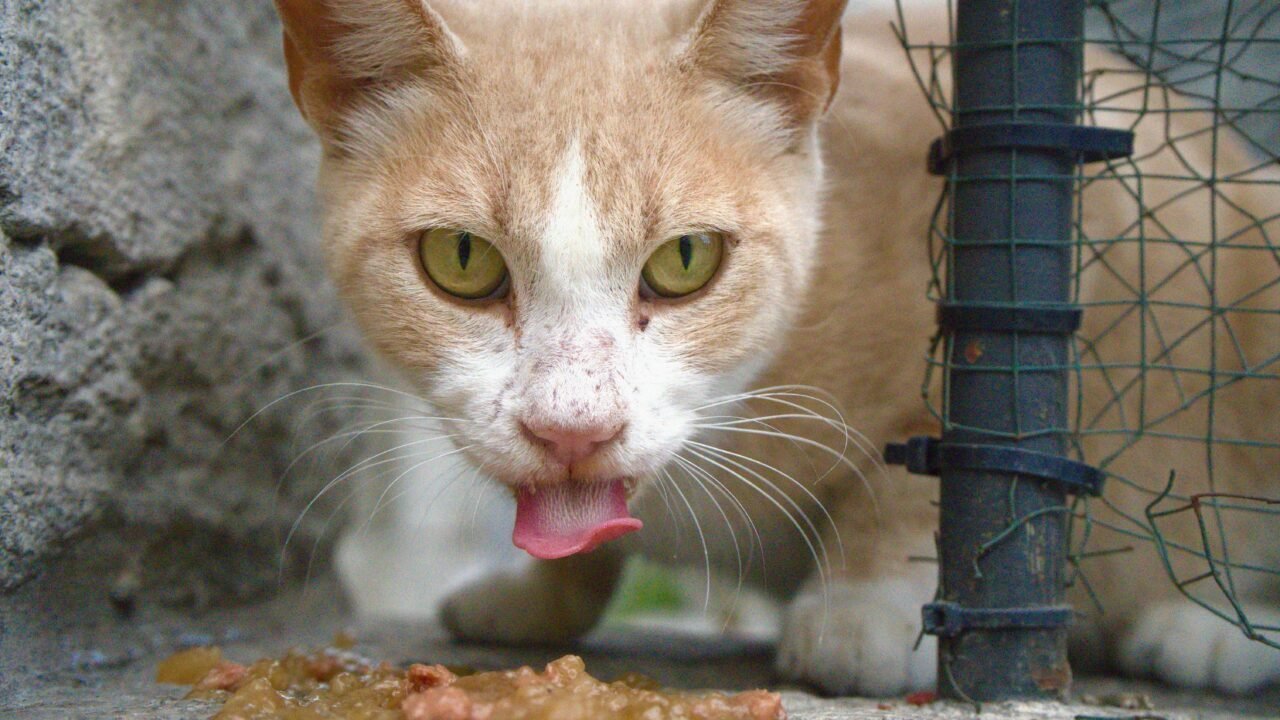
The rule is easy to remember: thoroughly cooked, lean, salt-free, unseasoned, cut into small pieces, and only occasionally.

- Complete cooking. No pink in the center. Heat kills the virus and parasites.
- Nothing added. No salt, no oil, no garlic, no onion, no sauces. Plain pork and nothing else.
- Bone-free. Cooked bones splinter easily and can puncture their digestive tract.
- Small pieces. Cats barely chew; they swallow. A large piece poses a choking hazard.
- Treat portion. Two or three bites, not a whole plate.
👇 What everyone believes: "A raw diet is natural; it's what they would eat in the wild."
👇 What actually happens: a wild cat eats rodents and birds, not pigs. Pork is not part of any natural feline diet.
👇 What vets say: of all meats, raw pork carries the highest risk due to Aujeszky's.
👇 What nobody tells you: if you follow a BARF diet, pork is precisely the meat that almost all serious protocols exclude.
If you suspect your cat ate raw pork
Don't panic: most of the time nothing happens, especially if it was supermarket meat from a country with strict pork sanitary controls.
However, monitor them for a week, especially if the meat was game or of unknown origin.
Go to the vet immediately if you notice:
- Obsessive scratching in a specific spot, to the point of causing wounds
- Excessive drooling
- Sudden behavior changes, agitation, or disorientation
- Tremors, lack of coordination, or hind leg weakness
- Fever accompanied by sudden lethargy
And tell the vet: "they ate raw pork X days ago". That detail completely changes the differential diagnosis.
Pork isn't the enemy. Raw, fatty, or heavily salted and seasoned pork is. The difference between a treat and a problem happens in the kitchen, not in the meat itself.
And since we are talking about what is truly good for your cat, there is something much more fascinating about them that you probably didn't know, which explains why they stare at you intently in the dim light: find out why cats can see in the dark (and the myth almost everyone believes).
Frequently asked questions about cats and pork
Can cats eat pork meat?
Yes, as long as it is thoroughly cooked, lean, and free of salt or seasonings. Under those conditions, it serves as a safe protein source for an occasional treat. Raw, fatty, and processed pork should always be avoided.
What is Aujeszky's disease and why is it so serious?
It is a porcine herpesvirus infection that cats contract by eating raw meat or organs from infected pigs or wild boars. In non-porcine species, the disease progresses rapidly and is almost always fatal, and there is no treatment: the only defense is preventing infection by thoroughly cooking the meat. It does not affect humans.
Can my cat eat ham or bacon?
It is not recommended. Ham, bacon, and cured meats contain far too much salt for a small animal, and often garlic or onion, which are toxic to cats because they damage their red blood cells. Even if they love the taste, it is one of the worst possible treats.
What if I feed my cat a raw BARF diet?
Pork is precisely the meat that most serious BARF protocols exclude, specifically because of the risk of Aujeszky's and parasites. If you feed a raw diet, consult a veterinary nutritionist and leave pork off the menu.
How often can I give pork to my cat?
Only as an occasional treat, not daily or as a main meal. Their base should be a complete cat food. Two or three bites of lean, cooked pork every now and then is enough and safe.
My cat accidentally ate raw pork, what should I do?
If it was supermarket meat from a country with regulated pork sanitary controls, the risk is low. Monitor them for a week and visit the vet if obsessive scratching in one area, excessive drooling, tremors, or sudden behavioral changes appear. Always mention that they ate raw pork: that detail guides the diagnosis.
🔍 Looking for something else?
If you want to read other articles similar to Can cats eat pork? How to feed it safely you can visit the category Nutrition.
Leave a Reply
More cat breeds!