

Confession: this site used to have THREE separate posts about cat litter, and each one said something different. One insisted on daily full changes, another on every two weeks, another on weekly swaps. We merged them, checked the facts, and figured out why half the internet contradicts itself on this topic.
The root of the confusion is one misused word: “change” is not the same as “clean”. When a blog says “change the litter daily,” what it usually means is “scoop the waste daily.” Because posts get copied without careful reading, the instruction gets distorted and people end up dumping kilos of perfectly good litter in the trash every day—funding the litter industry without realizing it.
Two separate tasks (and two different schedules)
SCOOP (with a scoop): 1–2 times a day, every day. Remove solids and urine clumps. Takes two minutes.
FULL CHANGE (empty and wash the box): depends on the litter. Clumping litter: every 2–4 weeks. Non-clumping (crystals, paper, wood pellets): once a week, or up to twice a week if it’s simple clay.
That’s the whole mystery. If you scoop daily, quality clumping litter will comfortably last 2–4 weeks. If you don’t scoop daily, not even the most expensive litter will save you: clumps crumble, trapped odor gets released, and you end up changing everything earlier than you should. The daily scoop is literally what saves you money.
How to tell you’re late (your cat has already told you)
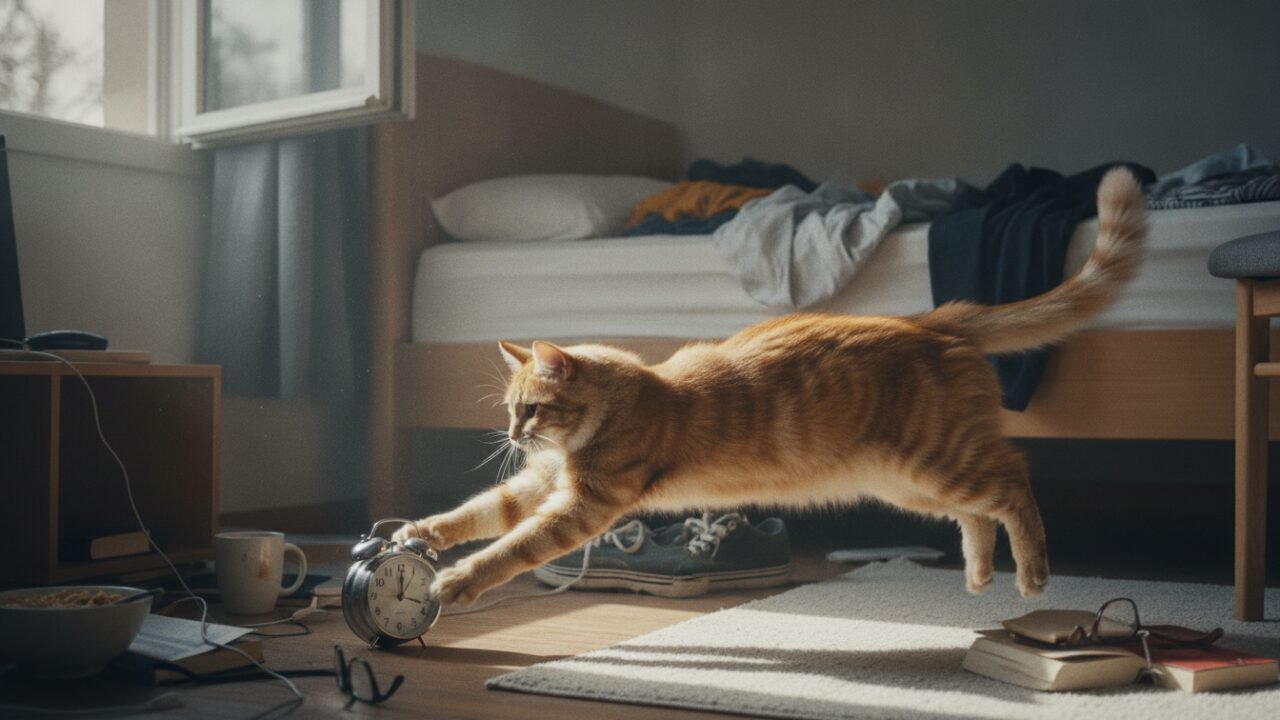
Cats don’t send hints; they send signals. If the litter box is dirtier than your cat’s standard, you’ll see things like: they step in, scratch for two seconds and leave; they perch on the rim like a gymnast to avoid touching the litter; or they christen your carpet. The latter isn’t revenge—it’s a very tidy animal refusing to use a toilet you wouldn’t use either.
And here’s the serious part: a dirty box isn’t only about smell. Cats that avoid the litter box hold their urine in, and that’s associated with urinary infections and behavior problems that end up costing vet visits. Two minutes with a scoop is cheaper than a feline urologist.
The full-change day, step by step
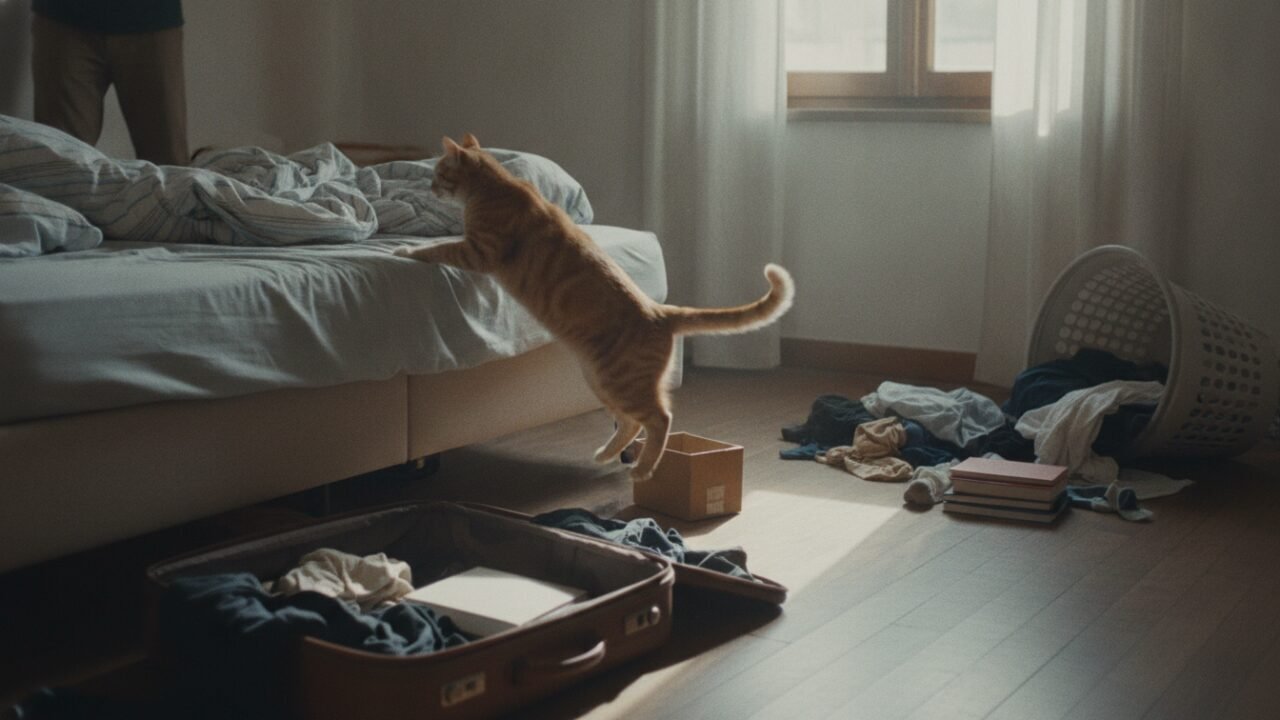
1. Toss all the old litter into a sealed bag.
2. Wash the box with warm water and unscented mild soap —no perfumes. Avoid bleach or strongly scented disinfectants: strong chemical odors can make your cat reject a freshly cleaned box. Cruel irony.
3. Dry thoroughly and refill with 7–10 cm (3–4 in) of fresh litter. Too little and it won’t cover properly; too much and your cat will kick it everywhere like confetti.
If you have more than one cat: the n+1 rule

Easy vet rule to remember: one litter box per cat, plus one extra. One cat = two boxes. Two cats = three. Yes, it sounds like a lot of furniture for poop, but cats are territorial even about bathrooms, and sharing a box is the number one cause of inappropriate urination in multi-cat homes. Also, with multiple cats you need to clean more often: scoop twice a day and do a full change of clumping litter every 1–2 weeks.
Two details almost nobody mentions
If someone in the house is pregnant: have someone else handle the litter box, or use gloves and wash hands afterwards. The reason is toxoplasmosis, a parasite that can be present in cat feces and is risky during pregnancy. Scooping daily also helps here: the parasite needs more than a day in feces to become infectious.
The breed myth: you’ll read that Persians or Maine Coons “need different schedules” by breed. There’s no evidence for that. The only real difference is that long-haired cats shed more into the litter and larger cats produce more volume — so you adjust based on what you see in the box, not pedigree.
In short
Scoop daily, full change of clumping litter every 2–4 weeks (weekly if non-clumping), use unscented mild soap, and follow one box per cat plus one extra. Your home will stop smelling, your cat will stop protesting, and you’ll stop dumping clean litter like expensive confetti.
If the problem isn’t frequency but your cat won’t use the box, we have a guide for that: how to teach your cat to use the litter box. And if you were thinking of using free beach sand as litter, read this first — spoiler: bad idea.
We are not veterinarians: we are an editorial team that verifies every fact before publishing. The guidance in this article reflects veterinary consensus on litter maintenance (daily scooping, full change depending on litter type, the n+1 rule) and standard health recommendations about toxoplasmosis and pregnancy. If your cat suddenly urinates outside the box, see the vet first: it can be a medical issue, not behavioral.
How often should you throw it all out and start over? The uncomfortable truth about litter
You get used to scooping the daily “gifts,” right? And we assume that’s enough. But how often should you replace all the litter? Here’s the part nobody wants to hear because it means extra work. Cleaning the litter box daily — which you should do without fail — is not the same as replacing all the litter. Those microscopic residues, even if you remove the big stuff, remain stuck to the bottom. Bacteria form, odor builds up, and your fastidious cat starts protesting.
Ideally do a full change every one to two weeks. Yes, it sounds like torture. But your nose and your cat will thank you. Remove all the old litter, wash the tray with water and unscented soap (no strong chemicals that will scare them), dry well and refill. If you use high-quality clumping litter you might stretch it to three weeks, but not more. It’s the difference between a decent bathroom and a cesspool. And nobody wants to live with a cesspool at home, right?
🔍 Looking for something else?
If you want to read other articles similar to How Often Should You Change Cat Litter? Cleaning and Replacing Aren't the Same you can visit the category Health & Care.
Leave a Reply
More cat breeds!