

Slender bodies, striking eyes, sculptural silhouettes. Asian cat breeds are among the most admired in the feline world. They also have the longest lists of hereditary health conditions tied to their name.
There is a question almost nobody asks before falling in love with an Oriental cat: why does it look like that? The answer isn't "because it was born that way." It is because, for decades, someone selectively bred the finest, longest, and most angular specimens, litter after litter. And every time a bloodline is narrowed down to achieve a specific silhouette, something else narrows with it. This is what lies behind those faces we love so much.
“Asian cat” isn’t a breed: it’s a map
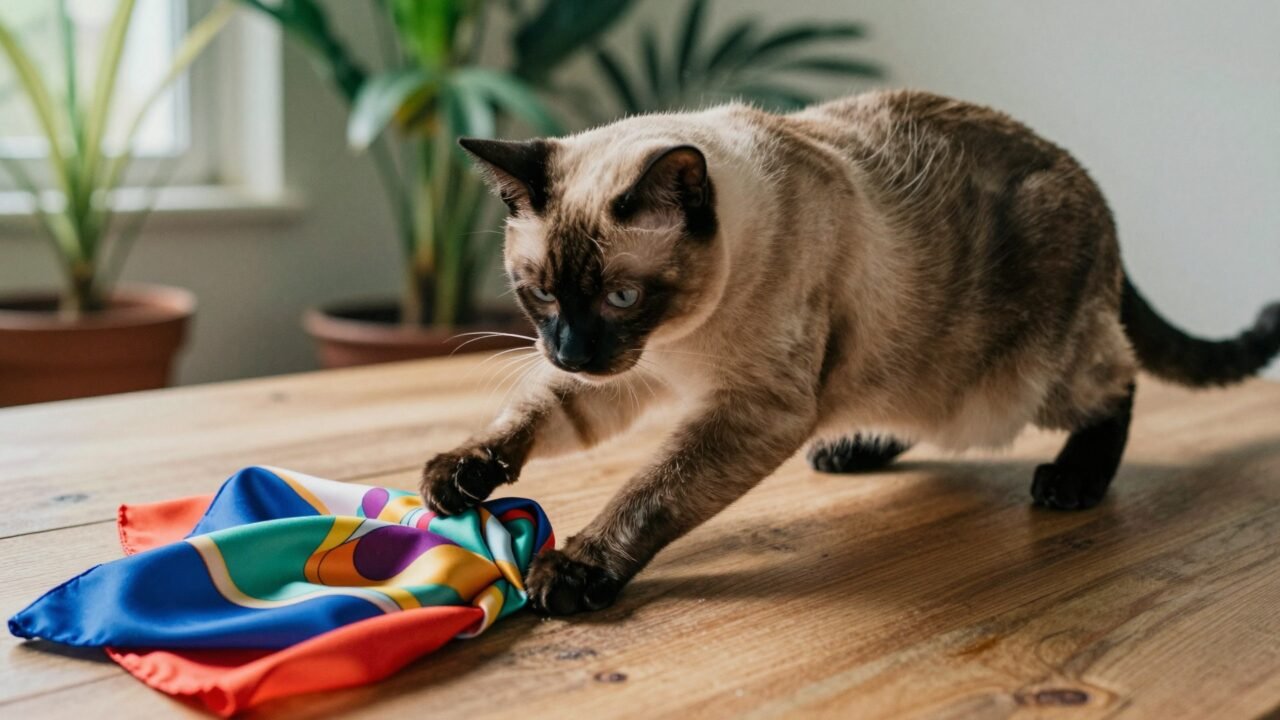
Let's start by clearing up a common misunderstanding. There is no single "Asian cat breed." It is a convenience label that groups together breeds with documented origins in Asia: the Siamese and Korat (Thailand), the Burmese and Burmilla (Burma, now Myanmar), the Khao Manee (Thailand), the Japanese Bobtail (Japan), and the Oriental and Tonkinese (developed in the West from the aforementioned breeds).
It's worth pointing this out because a lot of misinformation circulates: the Himalayan is not Asian—it was developed in the United States by crossing Persians and Siamese—and the Persian doesn't belong to this typological group either, even though its name points to Iran. A breed name is rarely a certificate of origin.
The Siamese and the Oriental: The price of that silhouette
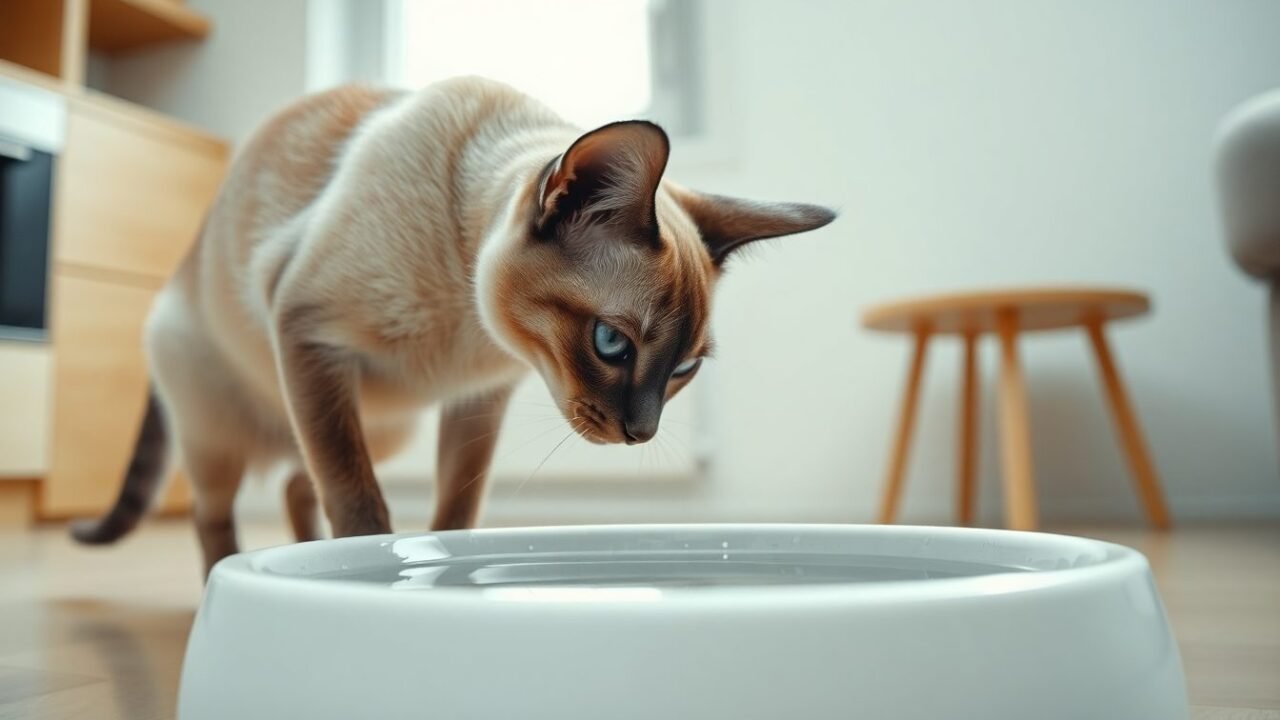
The modern Siamese doesn't look like the Siamese of 1950. Back then, it had a rounder head and a more compact body. Today's version is all angles. That transformation was a human decision, and it brought along a medical history that any serious breeder will mention before you even ask:
- Amyloidosis: The buildup of abnormal protein in the liver or kidneys. This is the condition most associated with the Siamese-Oriental line and typically appears in adulthood.
- Feline asthma: Higher prevalence than in the general cat population. Repeated dry coughs are not just "hairballs."
- Progressive retinal atrophy (PRA): Gradual vision loss with genetic testing available.
- Strabismus and nystagmus (eye tremors): Currently rare thanks to selective breeding, but historically tied to this line.
None of this means a Siamese is guaranteed to get sick. It means its veterinary record starts with more check-boxes than a mixed-breed cat's, and ignoring that fact is the only unforgivable mistake.

Burmese, Korat, and Khao Manee: Three names, three distinct risks
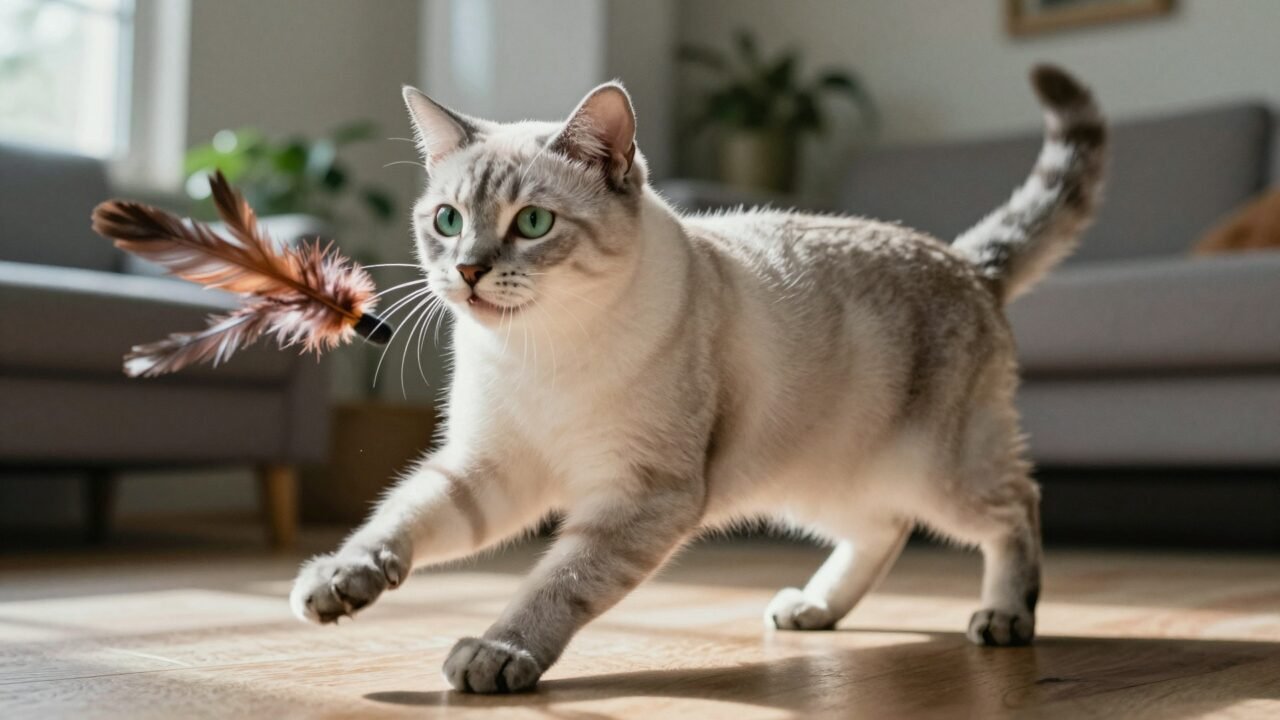
The Burmese is the most sociable of the group and also the one that requires the most metabolic monitoring: it is associated with congenital hypokalemia—muscle weakness caused by low potassium, for which a genetic test is available—along with a higher prevalence of diabetes mellitus than other breeds.
The Korat, that silver cat with green eyes traditionally given as a pair in Thailand as a symbol of good fortune, carries the risk of GM1 and GM2 gangliosidosis: severe, hereditary neurological diseases. The good news is that a genetic test exists, and responsible breeders use it routinely. If a Korat breeder cannot show you this test, they aren't a breeder: they're a salesperson.
The Khao Manee, the "diamond-eye cat," is pure white and often has one blue eye and one gold eye. That white coat comes from the dominant W gene, the same one associated with congenital deafness, most frequently on the side of the blue eye. A deaf Khao Manee can live a perfectly happy life, but it should never go outside unsupervised: it won't hear oncoming cars.
And the Bengal, which almost everyone mistakenly includes here
The Bengal appears on almost every list of "Asian cats," yet it technically does not belong to this family. It is a hybrid: descended from a cross between the domestic cat and Prionailurus bengalensis, the wild Asian leopard cat. That changes two important things.

The first is legal: in several countries and cities, owning hybrids is regulated or restricted depending on the generation (F1, F2, F3...). It's best to check beforehand, not afterwards. The second is about cohabitation: the closer the cat is to the wild generation, the more energy, territory, and mental stimulation it will require. A Bengal in a small apartment without proper enrichment isn't just a pretty cat; it's a frustrated animal.
The elegance of these breeds didn't come for free. Their genetics paid the price, and anyone who adopts one inherits that bill. Knowing beforehand doesn't kill the desire to have one—it just prevents nasty surprises.
And if, after reading this, you look at your own household cat and wonder what's in its mix, there is a more honest answer than you might imagine: what breed your cat actually is and why almost none of them belong to one.
Frequently Asked Questions About Asian Cat Breeds
What are the best-known Asian cat breeds?
The Siamese and Korat (Thailand), Burmese and Burmilla (Myanmar), Khao Manee (Thailand), and Japanese Bobtail (Japan). The Oriental and Tonkinese descend from these lines but were developed in the West. The Himalayan, despite its name, originated in the United States.
Are they healthy breeds?
They are breeds with known and documented hereditary risks, which is not the same as being inherently sickly. Amyloidosis and asthma in the Siamese-Oriental line, hypokalemia and diabetes in the Burmese, gangliosidosis in the Korat, and white-associated deafness in the Khao Manee. Almost all of these have genetic tests available.
What should I ask a breeder before getting one?
You should ask for the parents' genetic health tests specific to the breed, complete veterinary records, the opportunity to see the mother with the litter, and an assurance that the kitten won't be handed over before 12 weeks of age. A breeder who gets uncomfortable with these questions is giving you your answer.
Why are Siamese and Oriental cats so vocal?
It is a selected trait, not a quirk. They are breeds specifically bred to form intense bonds with humans, and vocalization is part of that connection. If you are looking for a quiet cat, this family is likely not for you.
Is the Bengal an Asian cat?
Not in the sense of this group. It is a hybrid descended from the wild Asian leopard cat. Owning one is regulated or restricted in various places depending on the generation, and they require significantly more stimulation than a standard domestic cat.
🔍 Looking for something else?
If you want to read other articles similar to Asian Cat Breeds: The Hidden Genetic Cost Behind Their Elegance you can visit the category Exotic.
Leave a Reply
More cat breeds!