

There is a list that appears on every single cat blog. Always the exact same fifteen breeds, always the same order, always the same three words: elegant, affectionate, independent.
I read it too before choosing my cat. And it completely missed the only detail that actually mattered.
Because there is one breed on that list—one of the most sought-after, most photographed—that carries a burden no catalog ever mentions. It is in spot number 5. I will get to it in a minute.
How to read this list: do not look for "the best breed." Look for which one fits the hours you spend away from home. That is the only criterion that matters after the first month.
The Four Everyone Knows (And What They Leave Out)
1. Siamese. Thailand. Striking blue eyes, long body. What the catalog leaves out: they talk. They do not just meow; they converse, loudly, and often at four in the morning. If you live in an apartment with thin walls, this is not a minor detail.
2. Persian. The coat you see in photos exists, but it does not come free: it takes fifteen minutes of daily brushing. Skip a day and tangles form; skip three and you have to cut them out. Their flat face also means they snore, tear up, and struggle in the heat.
3. Maine Coon. The gentle giant. Up to 18 pounds and nearly three feet long including the tail. They eat like a giant and take up space like a giant. The surprise: it takes 4 years for them to fully mature, so for three years you are living with a massive teenager.
4. Bengal. They look like miniature leopards and that is precisely the trap: they act like one. They need vertical space, movement, and constant stimulation. In a small apartment with nothing to climb, that energy turns into destroyed furniture.
Number 5: The Breed That Hurts
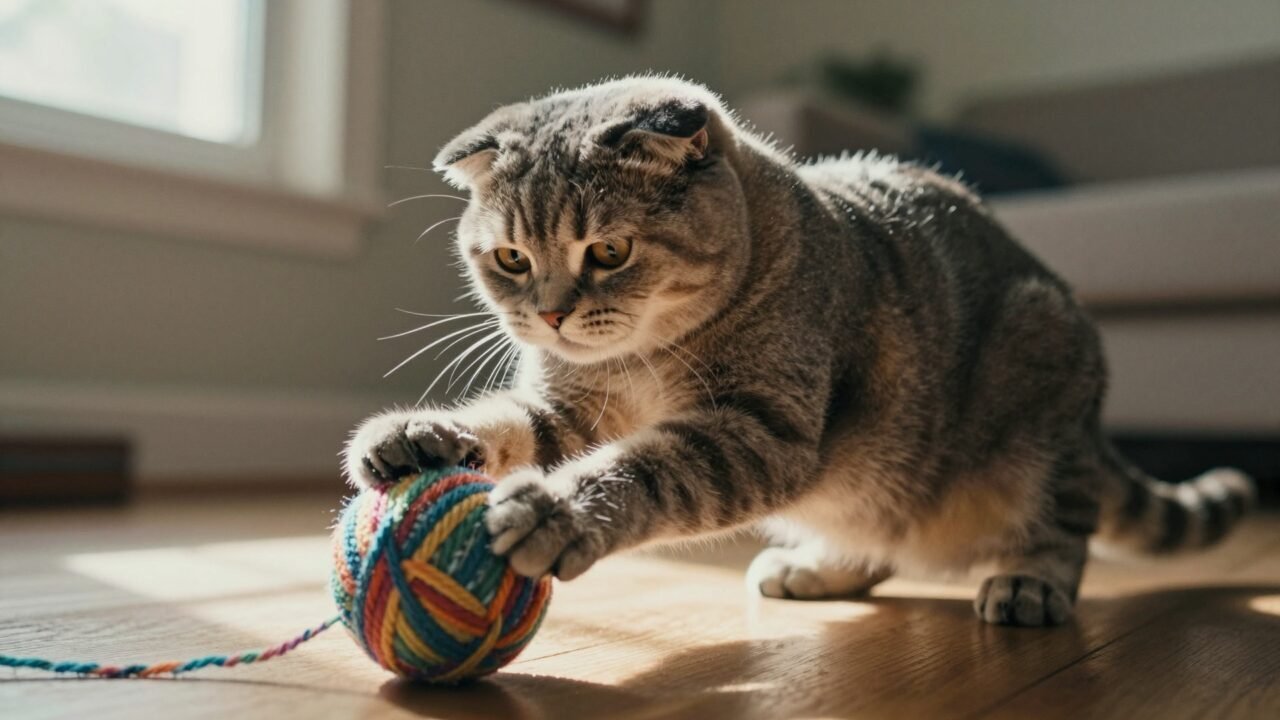
Scottish Fold. The folded ears, the round face, the most viral cat on the internet.
And this is what almost no "15 popular breeds" article tells you:
🚫 MYTH: "The folded ears are just an aesthetic trait, like the Persian's long hair."
✅ REALITY: Those ears are the visible symptom of a cartilage disease. The exact same gene that folds them alters the cartilage throughout the entire body.
It is called osteochondrodysplasia. It is hereditary, degenerative, and incurable. It causes deformities in the joints, spine, and tail, resulting in chronic pain that worsens with age.

And here is the part that was hard for me to digest: the gene is dominant. It is not a matter of "some cats just have bad luck." If a cat has folded ears, it has the mutation. X-rays can detect it as early as 7 weeks of age.
The cat in the adorable photos is, in all probability, living with inflamed joints.
If you already own a Scottish Fold—signs of joint pain:
- Stops jumping to spots it used to reach without hesitation
- Tail feels rigid or thicker than normal at the base
- Walks strangely, sits in unusual postures
- Moves less and sleeps much more than usual
It is not just "getting old." Ask your vet for X-rays and a pain management plan.
I am not writing this to make you hate the breed. I am writing this because if you are going to adopt one, you deserve to know what you are committing to: regular checkups, weight management, and a vet who understands the condition.
The Remaining Ten, Unfiltered
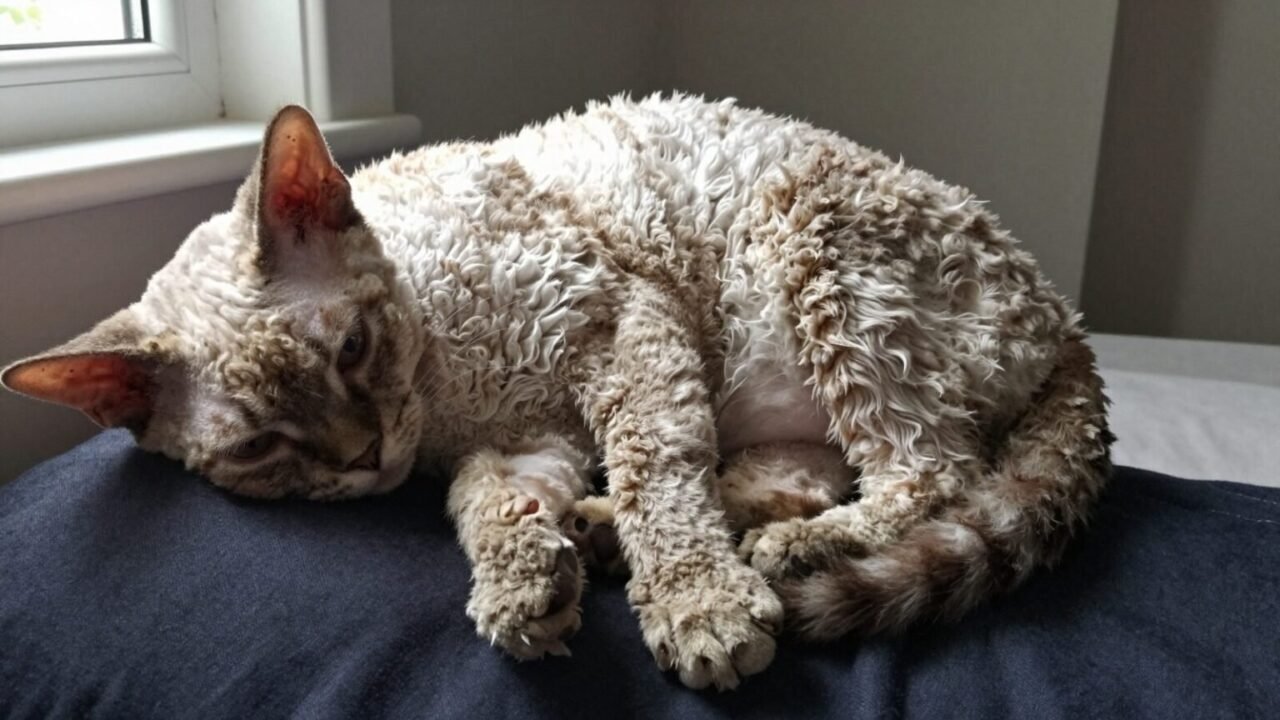
6. Oriental Shorthair. A Siamese in more colors with the exact same vocal range. Extremely attached.
7. Ragdoll. They go limp in your arms like a rag doll, hence the name. So trusting they do not know how to defend themselves: strictly an indoor cat.
8. American Shorthair. The balanced choice. They do not talk too much, demand too much, or break easily. The sensible option if this is your first cat.
9. Sphynx. Hairless does not mean low maintenance: they need regular baths because the oils a coat would normally distribute stay right on their skin. They get cold easily and sunburn.
10. Bombay. A pocket panther, pitch black with copper eyes. Social in reality, not just on paper.
11. Cornish Rex. Curly, ultra-fine coat. Obsessed with warmth: they will sleep on top of you, never beside you.
12. Devon Rex. Pixie ears, elf-like face. One of the most playful cats on the list even past ten years of age.

13. British Shorthair. The compact teddy bear. Calm to the point of being boring, which in a cat is usually a virtue.
14. Birman. White gloves on their paws and deep blue eyes. The sweet spot between a Persian and a Siamese, without the extremes of either.
15. Exotic Shorthair. "A Persian without the daily brushing." They inherit the flat face and breathing issues, but the coat is easy to manage.
How to Actually Choose (Three Questions, Sixty Seconds)
Forget the list for a moment. Answer this:
👇 How many hours is your home empty?
More than 8 → rule out Siamese, Oriental, and Bengal. They get depressed alone.
👇 How much time will you give to grooming?
Zero → Shorthairs and Bombay. Fifteen minutes daily → Persian, Maine Coon, Ragdoll.
👇 How much noise can you handle?
Low → British, Exotic, Ragdoll. High → Siamese and Oriental will delight you.
The breed you choose matters far less than those three answers. A Bengal in the wrong household is a disaster; that same Bengal with a wall to climb is the best cat in the world.
The Most Popular Cat in the World: Who Knew We Were Being Lied To?
When people ask about common cat breeds or the "world's most popular cat," we all picture pedigree felines, right? The elegant Siamese, the grumpy-faced Persian, the giant Maine Coon. But the truth—the one that might chill you—is that the popular cat breeds flooding our homes are not the ones you see at cat shows. No, my friend, the reality is much simpler and, for some, a bit sobering.
The true king of domestic cat types, the undisputed winner that you almost certainly own or know, is the mixed-breed cat. Yes, the one you adopted from the shelter or received from a friend. The one with no papers and no pedigree to brag about. They are the most abundant, often the healthiest (genetic mixing is a genetic lottery that usually pays off), and cause the fewest headaches regarding breed-specific health issues.
The pet industry sells us the idea that we need specific traits, certain "labels" to own a "real" cat. But if you look around your neighborhood or park, you will see that the vast majority of felines roaming around are a mix of everything and nothing. It is the uncomfortable truth nobody tells you when searching for "top 15 breeds" lists. So the next time someone talks to you about the most popular cat, smile and think of all those mixed rescues that conquered the world without even trying.
What I Learned After This List
The pretty breed catalog is comforting because it does not force you to make hard decisions. They all sound perfect when you only read "elegant and affectionate."
But a cat lives for fifteen years. Fifteen years translates to roughly 5,500 mornings where that animal will be in your home, asking for food, demanding attention, or curling up on your chest.

Choosing based on a photo is a gamble. Choosing based on your schedule, your apartment, and your noise tolerance is a decision.
And if you fell in love with the Scottish Fold: adopt one if you wish, but do it knowing what you know now. That cat is going to need more veterinary care than the other fourteen on this list.
Why My Cat Isn’t Purebred and Why That’s the Best Thing Ever
One of the greatest reliefs I discovered is that many of the common cat breeds we see around the house—that ball of fluff waiting for us on the sofa—don't even have a mile-long pedigree. And honestly, thank goodness! Because my mind initially thought I needed to search through the most popular cat breeds in the world to find a great companion, but the reality is that the cat who adopted me—the one from the rescue shelter—is absolute gold.
The truth is that most cats living with us are a wonderful mix, what we call domestic mixed-breed cats. They don't have a fancy name like "Maine Coon" or "Persian" on their ID card, but so what? They are the ones quietly inhabiting almost every home. And I won't lie, I always thought if it wasn't one of the popular cat breeds with names seen on TV, it couldn't be a good cat.
And here comes the reality check: the most popular cat breed in the world, by far, isn't any of those sold as exotic. It's the domestic shorthair and longhair. Yes, those genetic lottery winners that surprise you with every quirk and are tough as nails because their diverse genetics give them ironclad health.
So if you're considering cat breeds to keep at home, drop the pressure of finding the rarest or most expensive one. The cats no one "advertises" usually give you the most love, fewer health issues from inbreeding, and a truly unique personality. There is no "best breed" for a home—there is only "your cat," the one that chooses you and changes your life without demanding a purity certificate.
Frequently Asked Questions
What is the most popular cat breed in the world?
The Maine Coon and Persian battle for the top spot in international cat registries year after year. The Ragdoll has surged in popularity over the past decade, especially among those looking for a calm, strictly indoor cat.
Which cat breed is best for beginners?
American Shorthair, British Shorthair, and Ragdoll. All three tolerate beginner mistakes well, require no complex grooming, and have stable temperaments. The Siamese and Bengal, while stunning, punish inexperience.
Is it cruel to buy a Scottish Fold?
It is an ongoing debate among veterinarians and feline organizations. The verifiable fact is that the mutation folding their ears affects cartilage throughout the entire body, causing osteochondrodysplasia, a degenerative and painful incurable condition. Several countries have restricted their breeding for this reason. Adopting an existing one is not the issue; sustaining the demand for new litters is.
Which cat breeds require the least maintenance?
Shorthairs and standard body types: American Shorthair, British Shorthair, Bombay. A weekly brush is enough. At the opposite end are the Persian and Sphynx: the former needs daily brushing, the latter regular baths and thermal protection.
Does a breed determine a cat's personality?
It sets a trend, not a guarantee. Early socialization and environment weigh just as much as genetics. You can find a silent Siamese or a restless British Shorthair. The breed indicates the probability; the individual cat decides the rest.
If you are deciding which cat to bring home, there is another calculation almost no one makes before adopting that later weighs heavily: how long cats live according to their breed and care.
🔍 Looking for something else?
If you want to read other articles similar to 15 Popular Cat Breeds: The Honest List (And #5 That No One Warns You About) you can visit the category Cat breeds.
Leave a Reply
More cat breeds!