

The best automatic wet cat food feeder is one that keeps the food inside a preservation system designed for that purpose, rather than a dry feeder with an improvised tray. If you want to automate one or more meals, the practical choice comes down to two approaches: active cooling, like the PETLIBRO Polar, or programmed trays with ice packs, like the Catit PIXI Smart 6-Meal. The Polar is designed for three meals and uses refrigeration; Catit offers six compartments and two ice packs. For short absences, nighttime schedules, or cats that reject dry kibble, that difference matters more than the number of app features.
Buy in Italy/EU: price, stock, seller, and warranty may vary between Amazon Italy, European stores, and the manufacturer's website. Always check the current product listing and avoid assuming that a US version includes a European plug, warranty, or support.
Active cooling or ice packs: the first decision before buying
The answer is simple: if you want the device to actively control the temperature, you need a refrigerated model; if you only need to delay spoilage for a few hours, a tray with ice packs may suffice.
The common mistake is putting both products in the same category just because they both "serve wet food." They do not solve the exact same problem. PETLIBRO describes the Polar as a refrigerated feeder for three meals that keeps food fresh for up to three days under their usage conditions. The Catit PIXI Smart 6-Meal uses six compartments and two ice packs to help keep food fresh.
Action: decide first how many hours you want to cover without human intervention. If your need is for a single day or multiple meals within the day, the six-meal tray may be enough. If you are looking for more controlled preservation and less reliance on ice, active refrigeration deserves more attention.
PETLIBRO Polar vs. Catit PIXI Smart 6-Meal: What really changes
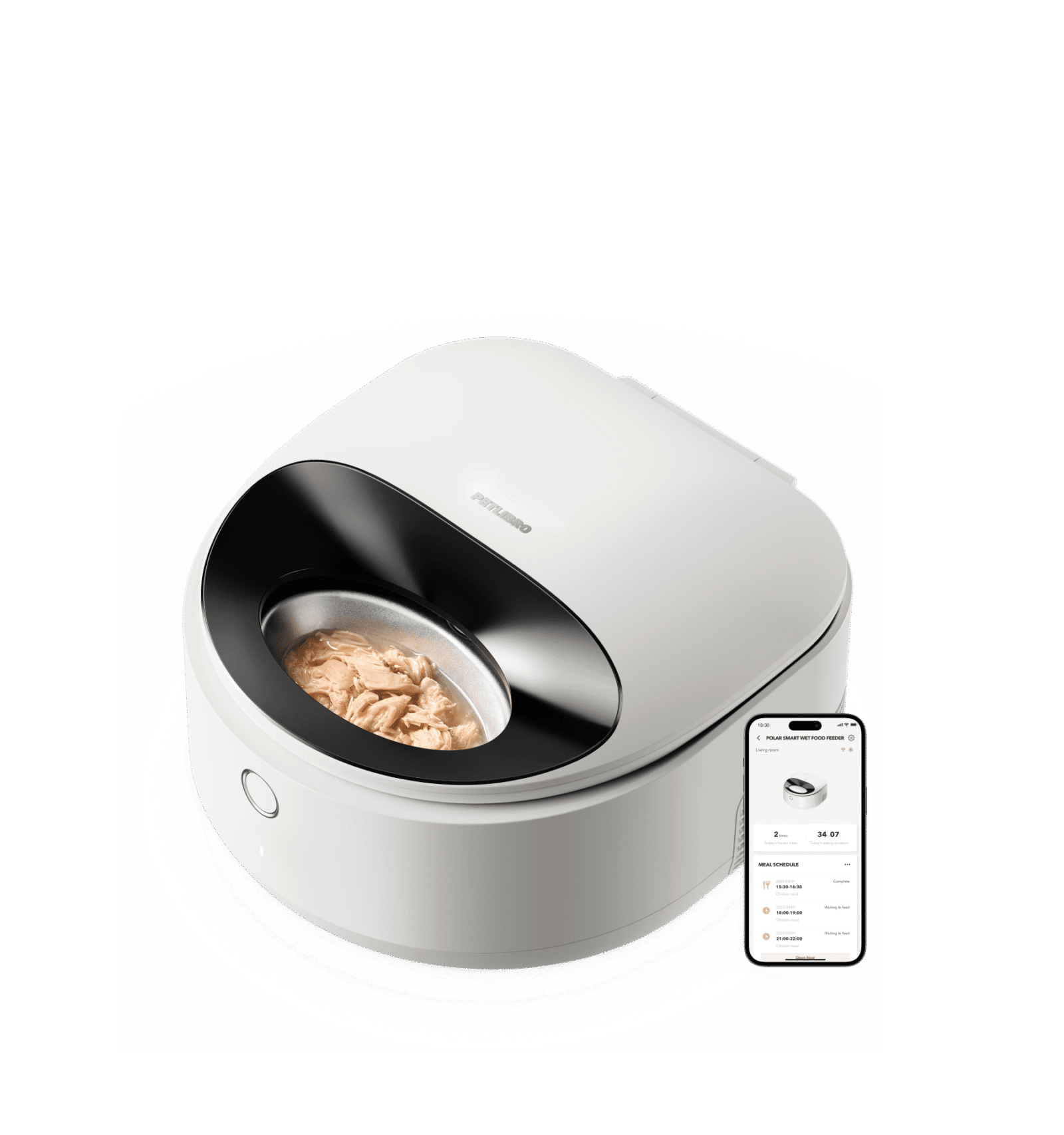
| Criteria | PETLIBRO Polar | Catit PIXI Smart 6-Meal |
|---|---|---|
| System | Active refrigeration | Rotating tray + 2 ice packs |
| Meals | 3 compartments | 6 compartments |
| Food type | Wet; specifically designed for refrigerated food | Wet or dry according to manufacturer |
| Programming | App / Wi-Fi depending on version | App + device controls |
| Main advantage | Active thermal control | More meals in a single cycle |
| Key point to check | EU availability and support for the specific version | Effective cooling duration in your environment |
There is no universal winner. Polar makes sense if food preservation is your main concern; Catit makes sense if the number of meals and mechanical simplicity matter more. The twist is that no spec sheet replaces the actual temperature of your home.

Room temperature can change your purchase
An ice pack doesn't behave the same way in a cool kitchen as it does in a hot apartment in August. That is the mistake that turns a correct spec sheet into a poor household decision.
With ice-pack systems, the right move is to run a controlled test before relying on the device: freeze the ice packs completely, set up a portion as you normally would, and check for several hours how the food holds up in the actual room where the feeder will be placed. If you have doubts about food safety or a specific veterinary diet, check with your vet on how long that specific food can safely sit out of refrigeration.
Useful rule: do not buy "X hours of freshness" as a universal promise. Room temperature, food type, portion size, and tray opening all change the result.
How many meals you need: three large or six small are not equivalent
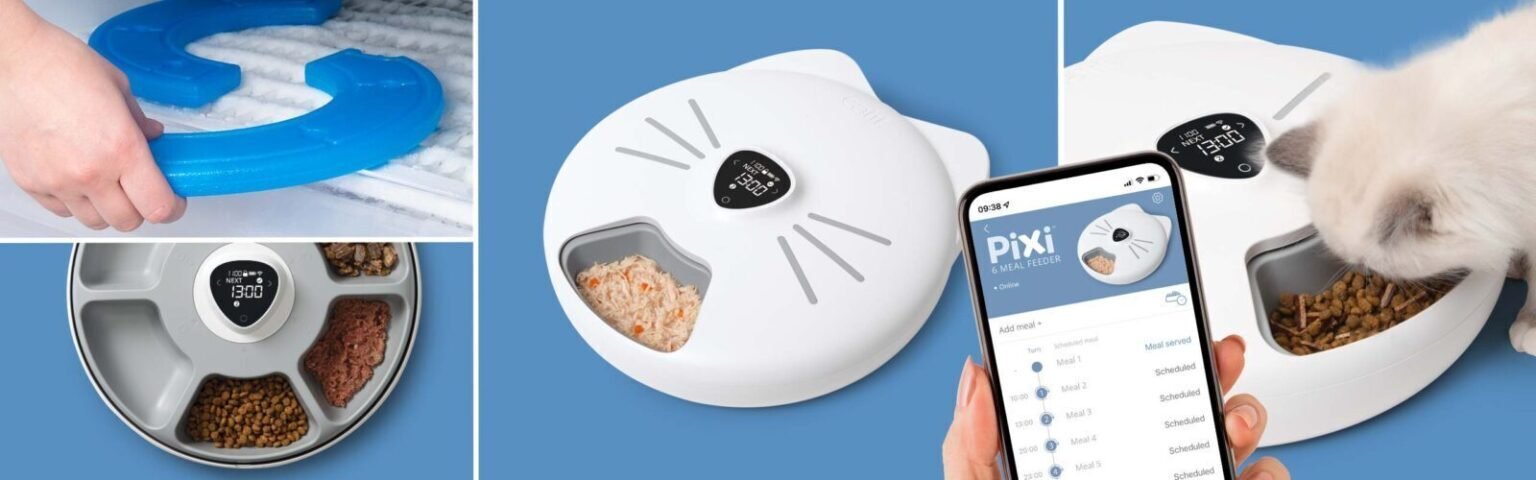
Catit's six compartments can be appealing for cats that eat frequent small portions. Polar, on the other hand, structures the day around three refrigerated spaces.
The mistake is counting compartments without looking at the portion size. A tray with more slots doesn't help if each one can't hold the amount your cat needs; a three-meal system isn't enough either if your schedule requires six small openings.

Action: before buying, divide the daily amount you already use by the desired number of meals and confirm the usable capacity per compartment in the current spec sheet. If your cat is on a prescribed diet, stick to the schedule provided by the professional and use the device to execute it, not to redesign it.
Cleaning: the feature you notice most after the first week
Wet food leaves grease, odors, and residue that dry mechanisms rarely deal with. That's why removable parts and easy-to-wash surfaces matter much more than a fancy phone animation.
Check which parts are detachable, what the manual says about dishwashers, and how to clean the area near the opening or cooling mechanism. If a part that touches food can't be cleaned without wrestling with the device, the product is much less automatic than it seems.
The next twist is power: a refrigerated system depends on electrical power in a way that an ice pack tray does not.
What happens if the power or Wi-Fi goes out?
In a refrigerated wet feeder, a prolonged power outage affects more than just the schedule: it can also affect the cooling. With an ice pack tray, the thermal cycle depends on the ice packs and the opening mechanism.

Don't assume that "smart" means everything will keep working without the internet. Check the manual for the specific version and test the device at home: schedule a feeding, cut the Wi-Fi, and see what it retains; then test a power outage when the manufacturer indicates it is safe to do so.
Action: if you're going to be away, combine the feeder with a backup person who can check in on the house. Automating a meal doesn't cover vomiting, lack of water, a prolonged outage, or a health change.
Decision matrix: what to buy based on your scenario
| Your situation | Most logical approach | What to check |
|---|---|---|
| You need to preserve 2-3 wet meals with active cooling | PETLIBRO Polar | Version, support, and power supply in Italy/EU |
| You want up to 6 programmed openings | Catit PIXI Smart 6-Meal | Capacity per compartment and ice pack performance |
| Very warm home during part of the year | Prioritize refrigeration and real thermal testing | Ambient temperature and food behavior |
| Specific veterinary diet | The device must adapt to the schedule | Recommended storage for that food |
| Extended absences | No feeder as the sole safety system | Backup person, water, and supervision |
Checklist before paying on Amazon Italy
- European version: Confirm plug, voltage, warranty, and service.
- Seller: Identify who sells it and who handles returns.
- Type of cooling: Active refrigeration or cold packs; don't confuse them.
- Number of feedings: Compare it with your actual feeding schedule.
- Cleaning: Check removable parts and the manufacturer's recommendations.
- Test beforehand: Use it for several days while you're at home.
- Plan B: Make sure someone can check on the cat if it fails.
Frequently asked questions before automating wet food
Can I leave wet food in a regular feeder all day?
An automatic container without temperature control does not by itself make wet food stable for hours. Follow the food manufacturer's storage instructions and, if it's a medical diet or you have safety concerns, consult your veterinarian.
Are cold packs equivalent to a refrigerator?
No. They can help delay warming, but they don't actively regulate a temperature like a refrigerated system. Their performance depends on the environment, how well they were frozen, and how the feeder is designed.
Which is better for a cat that eats many small portions?
A six-compartment system offers more programmable openings within a single cycle, provided that the capacity of each section is adequate and the preservation method is sufficient for your home.
Verifiable sources before buying
After solving wet food, another problem arises: if the cat drinks little, automating feeding without checking which water fountain you can keep clean leaves half the system unresolved.
🔍 Looking for something else?
If you want to read other articles similar to Best Automatic Wet Cat Food Feeder: Real Cooling vs. Ice Packs you can visit the category Nutrition.
Leave a Reply
More cat breeds!