

Your cat is hungry, you've run out of cat food, and the dog's bag is right there a meter away. You think what anyone would think: one kibble won't hurt them.
And you're right. One won't. The problem is that phrase isn't said just once: it's repeated often over months, and at some point, it stops being an exception and becomes their actual diet.
That actually can cause blindness. This isn't an exaggeration to scare you: it's a documented chapter in the history of veterinary medicine, and it has a date attached.
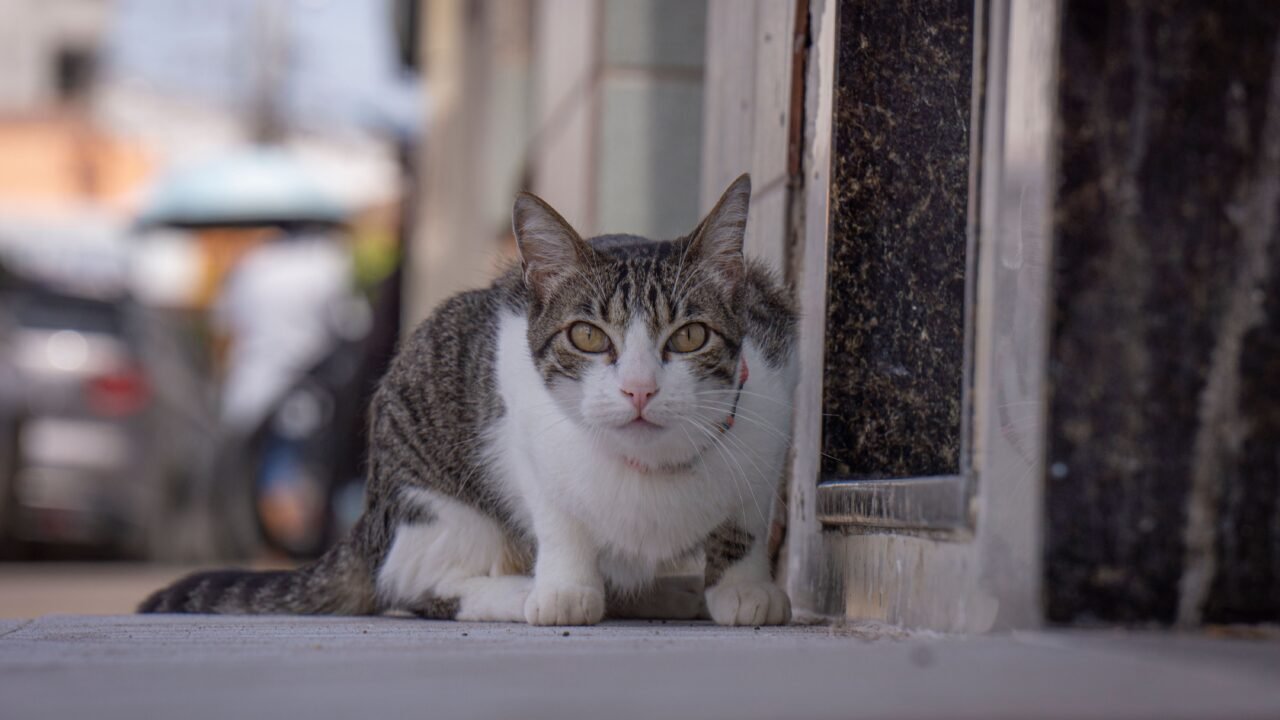
First, relax: a single bite is no big deal
If your cat stole a few kibbles from the dog's bowl, nothing is going to happen. There's no need to rush to the vet. Their stomach can handle it without drama; at most, they might experience some minor, temporary digestive upset.
What causes harm isn't the accident. It's the substitution. The day that "just a kibble" turns into "I'll feed them dog food because it's what we have," a countdown begins that you won't even see.
The word that explains it all: taurine
Taurine is an amino acid found in meat and fish. Almost all mammals manufacture it on their own from other amino acids. Cats barely can.
That's why it's an essential nutrient for them: it has to come from their food, no exceptions. And there's another detail that makes it worse — a cat's body doesn't store it in large amounts either. There's no reserve to draw from. They need taurine continuously, practically on a daily basis.
Dogs synthesize it effortlessly from methionine and cysteine. That's why dog food doesn't have taurine added to it: it would be a waste of money. It's not that the manufacturer slipped up. It's that the bag is formulated for an animal that handles this on its own.

That's the fundamental mistake: dog food isn't just "lower-quality cat food." It's food designed for an entirely different metabolism.
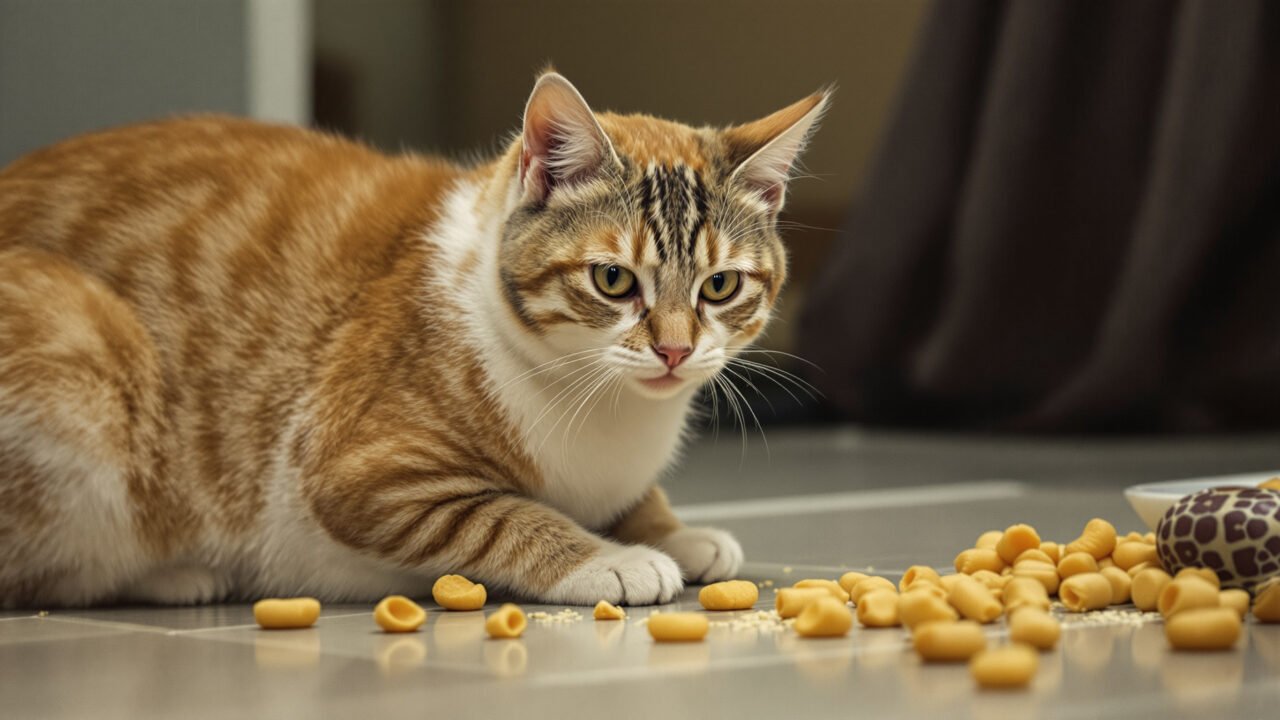
What happens on the inside, and why you won’t see it
The word vets use for this deficiency is insidious, and it's well-chosen. The signs take several months to appear. During all that time, your cat will eat, play, and purr normally while two organs quietly deteriorate.
The eyes. The retina progressively degenerates, starting in a specific area in the center. This is known as feline central retinal degeneration. By the time you notice your cat misjudging jumps or bumping into furniture, the injury has already been there for a while.
The heart. The heart muscle weakens, the chambers dilate, and pumping loses strength. This is dilated cardiomyopathy. Signs of heart failure can appear suddenly after months of quiet decline: exhaustion from minimal effort, labored breathing, pale gums, fainting.
The detail almost no one talks about that changes the urgency
These two types of damage don't behave the same way, and this distinction is the most important part of this article.
The heart can recover. If taurine-deficiency dilated cardiomyopathy is caught in time and the diet is corrected, many cats improve remarkably within weeks or months. It's one of the few reversible heart conditions that exist.
The retina cannot. Once formed, retinal damage cannot be reversed with supplementation. Restoring taurine stops the progression and saves what's left, but what's gone is gone. Destroyed vision doesn't return.

That's why you don't wait for symptoms. By the time symptoms show up in the eyes, you're already too late for that part.
The 1987 event that changed food for all cats
This isn't laboratory theory: it already happened, on a large scale.
Throughout the 1970s and early 1980s, veterinarians detected an abnormal wave of cats with dilated hearts. At the time, it was the most frequent feline heart disease. No one knew why.
In 1987, the connection was made: commercial cat foods of the era were lacking taurine. The industry reformulated its products, and that epidemic plummeted into a clinical rarity. Today, the most common feline heart condition is a different one entirely.
In other words: the taurine in your cat's food today is there because thousands of cats died before anyone figured out why. That bag doesn't contain taurine for marketing. It contains it because of history.
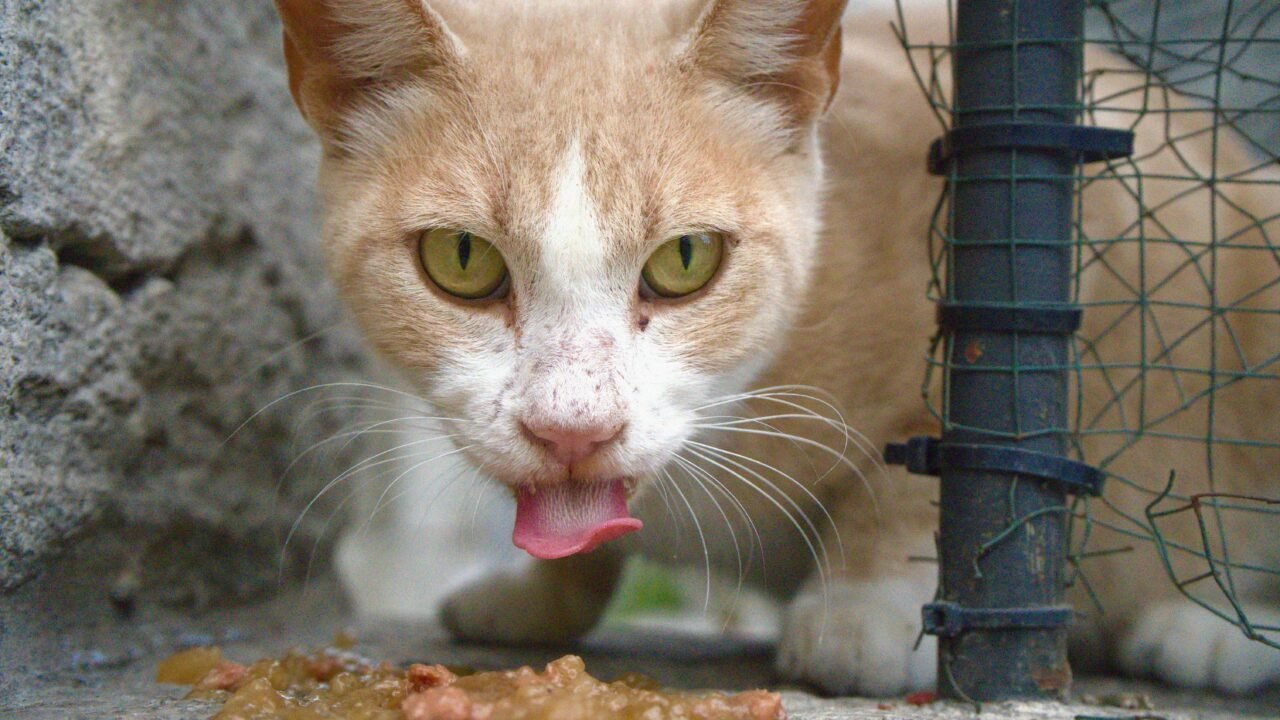
What to do if you’ve run out of cat food today
To get through a single night, much better than the dog's bag: plain boiled chicken without salt or seasonings, boiled egg, or a little canned tuna in water. These are animal proteins, which is precisely where taurine lives.

With two warnings. Tuna should be occasional only: it's not a complete diet, and in excess, it brings its own problems. And none of this is balanced long-term — it's a one-night patch, not a plan.
And if you suspect your cat has been eating dog food for weeks or months, don't fix it by just changing the bag and hoping for the best: schedule a vet visit. A blood taurine test exists, and the vet can check their retina and heart. The heart issues might still be reversible in time.
Since we're talking about uncomfortable truths almost nobody talks about, there's another one that will surprise you: the world's ugliest cats and the health secret hidden in their little faces.
Frequently Asked Questions
What happens if my cat accidentally eats a dog kibble?
Nothing serious. Sporadic bites cause no harm. The risk only appears when dog food consistently replaces cat food over the course of months.
How long does a taurine deficiency take to appear?
Several months, depending on the cat's life stage. It's a slow and silent deficiency: by the time it manifests, the deterioration has been progressing for quite a while.
Can a cat recover from a taurine deficiency?
It depends on the organ. Heart damage typically improves significantly when taurine is restored, provided it's caught early. Retinal damage that has already occurred is permanent: supplementation halts the progression but does not restore lost vision.
What about the reverse? Can a dog eat cat food?
It's still not ideal, though for a different reason: cat food is much richer in protein and fat than a dog needs, which over time promotes weight gain and can upset their stomach. It doesn't cause the deficiency syndrome that cats suffer the other way around.
Sources: VCA Animal Hospitals on taurine as an essential nutrient in cats, its failure to accumulate in the body, and the months it takes to show signs · Merck Veterinary Manual on feline nutritional requirements · veterinary literature on feline central retinal degeneration, which is irreversible with supplementation, and on the 1987 discovery linking feline dilated cardiomyopathy to taurine deficiency.
At Los Gatos Baby we are not veterinarians: we compile what the sources say and let you know when it's best to consult one.
🔍 Looking for something else?
If you want to read other articles similar to Your Cat Ate Dog Food: The Truth That Could Cost Them Their Sight you can visit the category Nutrition.
Leave a Reply
More cat breeds!