

For years I believed purring was proof I was doing everything right. My cat would climb onto my chest, fire up its little motor, and I would think: mission accomplished, this animal is happy.
Until a veterinarian asked me a question that still makes me uncomfortable: "And does he purr when he's alone, hiding under the bed?"
I was speechless. Because yes. He did. And I had interpreted it as happiness.
What nobody tells you: purring doesn't mean "I'm happy." It means "I'm trying to calm myself". Sometimes those two things are the same. Sometimes they're not.
No one knows for sure how they do it
Let's start with the most uncomfortable part: Purring is still a partly unresolved scientific mystery.
For decades it was thought to come from blood flowing through the vena cava. Then it was proposed that it was the vocal cords. Today the accepted explanation is even stranger: a neural oscillator in the brain sends rhythmic impulses to the laryngeal muscles, which open and close between 25 and 30 times per second.
Translated: your cat has a brain metronome that vibrates its throat thirty times per second, and it can do it both while inhaling and while exhaling, without pause. No other animal sound works like that.
And it does it without thinking. It's as automatic as your blink.
The frequency that gives your cat away
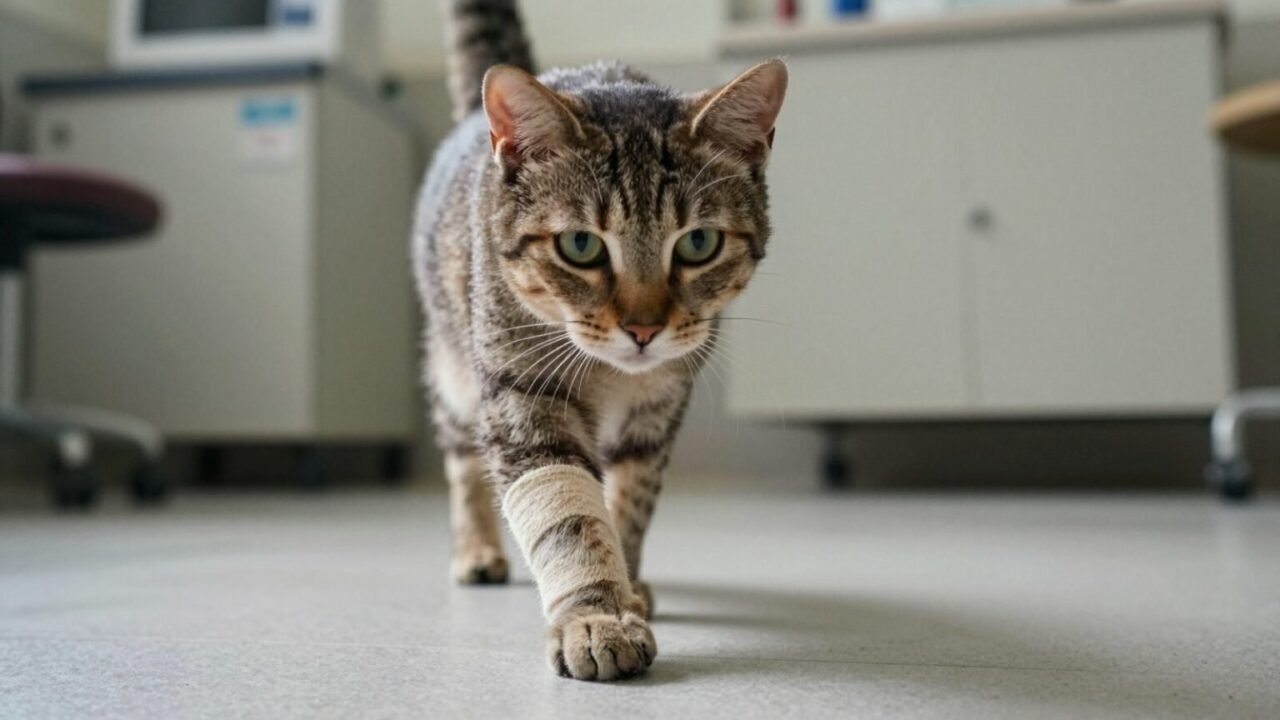
Purring occurs between the 25 and 150 hertz. That fact sounds like dinner-table trivia until you discover what those exact same frequencies are used for in human medicine: bone regeneration and tissue repair therapies.

Read that again. Your cat has a built-in mechanism that might be accelerating the healing of its own bones.
Veterinarians even have a phrase for this, half joking, half serious: "if you put a broken bone and a cat in the same room, the bone will knit". It's an exaggeration, of course. But it was born from a real observation: feline fractures heal remarkably well, and cats suffer significantly less osteoarthritis and osteoporosis than dogs of similar size.
And here comes the part that made my stomach churn: if purring is a self-healing tool, a cat that purrs a lot may be a cat that needs a lot of healing.
🚫 MYTH: "It purrs, so it's happy."
✅ REALITY: Purring is self-regulation. It is used for pleasure and for pain. The sound is almost identical; what changes is the context.
The purr that manipulates you (and always works)
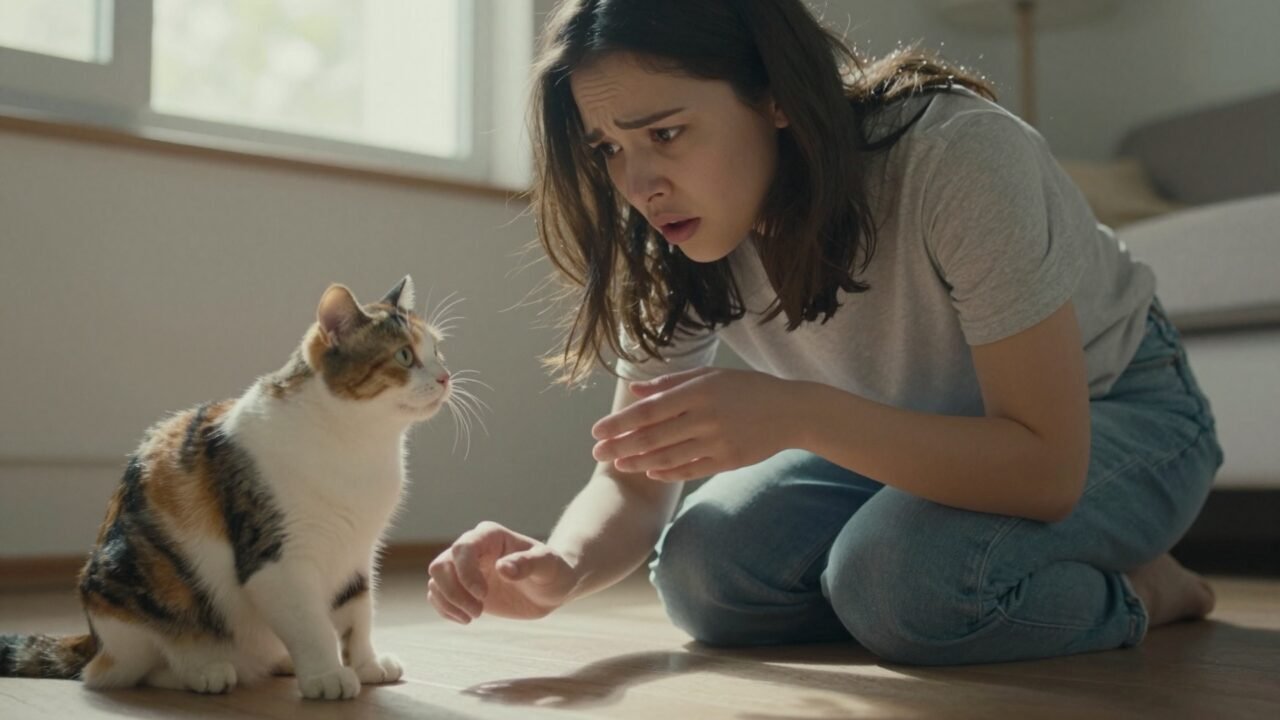
There is a specific purr that ethologists call solicitation purring. Your cat mixes the normal purr with a high-pitched meow hidden inside.
Do you know what that hidden frequency sounds like? To a human baby's cry.
Dr. Karen McComb, from the University of Sussex, studied this after noticing that her own cat woke her up every morning with a sound impossible to ignore. She recorded solicitation purrs and normal purrs, and played them for people who had never owned cats.
The result was unsettling: even those who couldn't tell a Siamese from a Persian rated the solicitation purr as more urgent and much more unpleasant. They couldn't tune it out mentally. It is built to bypass your reasoning and directly trigger your caregiving instinct.
Your cat didn't learn that in a class. They figured out, through trial and error, which frequency breaks your will. And every time you get up at 6 a.m. to fill the bowl, you are confirming that their experiment works.

👇 What most people can’t tell apart
- Contentment purr: steady, low-pitched, constant. Half-closed eyes, relaxed body, sometimes kneading with paws.
- Solicitation purr: has a high-pitched cry layered on top. It happens near the kitchen, close to your face, or at suspiciously punctual hours.
- Self-soothing purr: the most important one. It happens when the cat is alone, hiding, tense, or motionless. That is not love. It is a survival mechanism.
The signs that turn a purr into an alarm
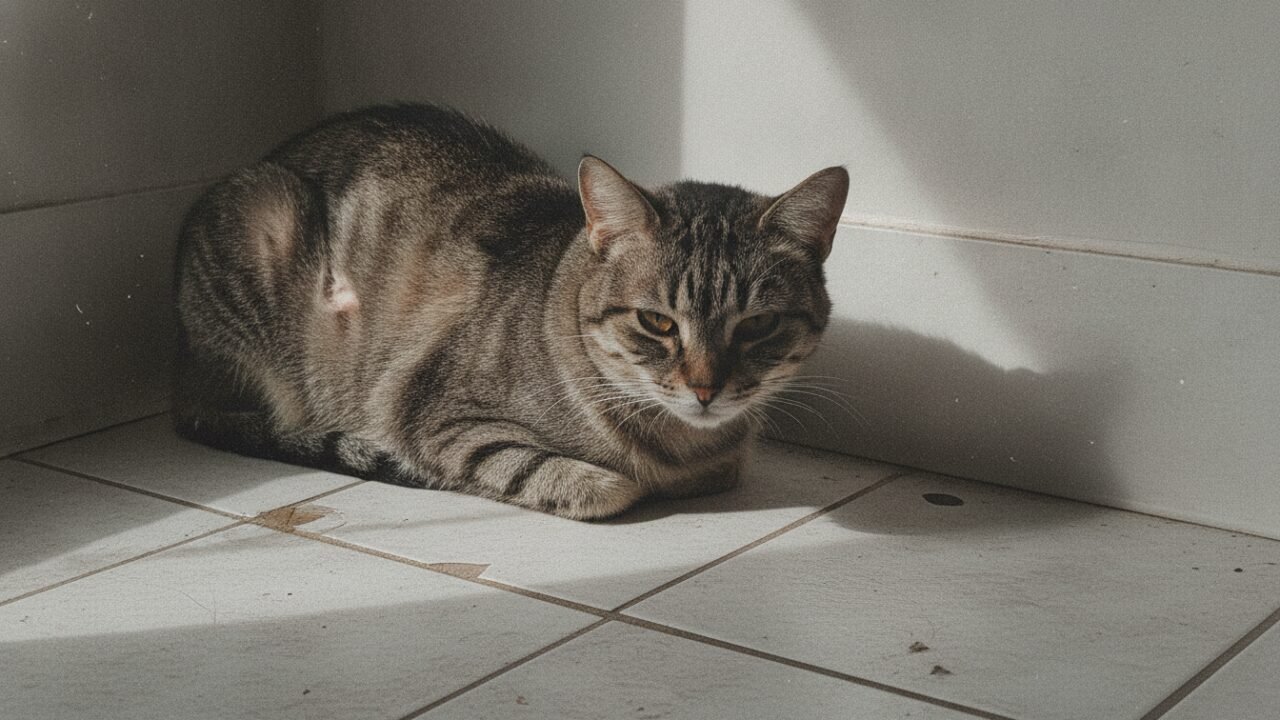
The purr by itself is never the symptom. What turns that sound into a red flag is what accompanies it:
Purr + any of these = vet, not Google:
- Hiding in places they didn't use to go
- Eating less, or eating but leaving half
- Breathing faster than normal while resting
- Stopping jumping up to high spots they used to conquer without a second thought
- Neglects their fur, or obsessively licks a specific area
- Hunched posture, with paws tucked under the body, staying still for a long time
Cats are animals that instinctively hide their pain. In the wild, a visibly limping feline is a feline announcing to predators that it can no longer defend itself. That instinct remains intact in the animal sleeping on your sofa, and it is the reason why so many feline illnesses are detected only when they are already advanced.
Purring is often the only thing that slips out.
Before anything else existed, there was the purr
Kittens purr two days after birth. They still cannot see. They still cannot hear well. But they already vibrate.
Think about what that means. A newborn animal, blind and practically deaf, in a world that is only temperature and smell. The mother purrs, and that vibration travels through the floor and through the body. The kittens don't hear it: they feel it. And they move toward it.
When they arrive and start nursing, they respond with their own tiny purr. They cannot meow while suckling—their mouth is busy—but they can vibrate. It is a single-line message, repeated endlessly: I'm here, I'm alive, everything is fine.
It is the first thing a cat learns to do in its life. Before walking, before seeing, before meowing: telling another living being that it is still there.
And here is what left me thinking for days. When your adult cat climbs onto your chest and starts up the engine, it is using the exact same language it used with its mother in the first 48 hours of its life. It didn't invent a new one for you. It brought you into the only one it already knew.

How I listen to my cat now
I didn't become paranoid. I just changed a habit: I stopped listening to the purr and started watching the purring cat.
If it's stretched out, relaxed, with half-closed eyes and kneading paws: it's happiness—enjoy it without guilt. That's the case most of the time.
If it's hunched, tense, hiding, or unusually still: that's not a lullaby, it's a first-aid kit. That's when you need to look for other signs and, if something doesn't fit, call the veterinarian instead of waiting until tomorrow.
The purr is still the best sound in my house. It's just that now I know it doesn't always mean what I wanted it to mean. And strange as it may sound, knowing that made me a better owner: I stopped hearing what I wanted to hear and started listening to what he was trying to tell me.
Frequently asked questions about feline purring
Do cats purr when they're sick or in pain?
Yes. Purring works as a self-soothing mechanism and its frequencies (25-150 Hz) are associated with tissue repair. A cat can purr at the veterinarian's office, after an injury, or while hiding. The key is always context: purring combined with isolation, loss of appetite, or a hunched posture warrants veterinary attention.
How do I distinguish a happy purr from one of alarm?
Look at the body, not the sound. A relaxed body, half-closed eyes, kneading with the paws, and voluntary contact with you indicate well-being. A hunched body, tension, hiding, prolonged immobility, or rapid breathing point to distress.
What is a solicitation purr?
It's a purr with an embedded high-pitched peak, at a frequency similar to a baby's cry. Researcher Karen McComb of the University of Sussex found it sounds urgent and is hard to ignore even for people without cats. Cats use it to ask for food or attention.
How is the purr produced exactly?
A neural oscillator in the brain sends rhythmic impulses to the laryngeal muscles, which open and close 25 to 30 times per second. It's involuntary and can be maintained during both inhalation and exhalation, which explains why it sounds continuous.
At what age do kittens start to purr?
Around two days old. It's their first form of communication: blind and practically deaf, they locate their mother by vibration and respond by purring while nursing.
Do all cats purr?
Almost all domestic cats, and also some small wild felines like cheetahs and pumas, do. The big cats (lions, tigers) don't purr continuously: the structure of their hyoid bone allows them to roar instead. It's practically an evolutionary choice: either you roar or you purr.
If this reading left you looking at your cat differently, there's another sound you're probably misinterpreting every day: the 5 signs your cat is sick that almost no one notices in time.
🔍 Looking for something else?
If you want to read other articles similar to The Hidden Secret of PURRING: Your Cat Might Be Asking for Help While You Think It's Love you can visit the category Curiosities.
Leave a Reply
More cat breeds!