

A mother cat gives birth to three kittens: one orange, one black, and one calico. Same mother, same litter, same day. How is that possible? The answer is written in an invisible code inside every single kitten, and once you understand it, you can even guess a cat's sex just by its color. Seriously. Read on.
The color isn’t in the fur: it’s in the code

A cat's coat is like printed text: what you see on the outside are the letters, but the ones deciding which letters get printed are its genes. And in cats, one of the key color genes travels on the X chromosome, the very same one that determines sex. That's where all the magic begins.
That's why a cat's color isn't random or "just because": it's the result of a genetic lottery with very specific rules.
The trick to guessing a cat’s sex by its color
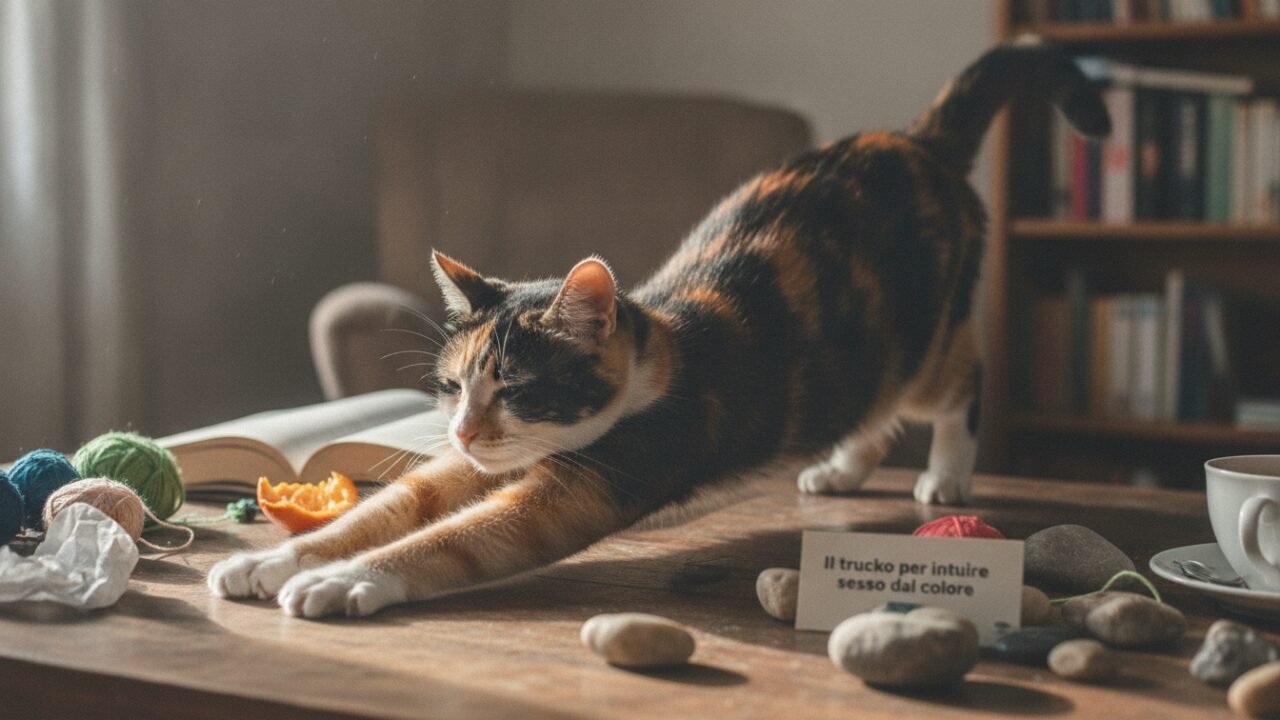
Here is the fact that blows everyone's mind. Tri-color cats (tortoiseshell and calico) are almost always female. The reason? They need two X chromosomes to show that mix, and females are the ones who carry two X chromosomes. A male tri-color cat is a rare exception of one in thousands.
And it works the other way around too: among orange cats, the vast majority are male. It's not breeder superstition: it's pure chromosome math. Next time you see a tri-color cat, you'll know: it's almost certainly a female.
The white cat case (and an important warning)

White is special: it's not a color, it's a "blackout" that covers all the others. And it hides a health fact many people overlook. White cats, especially those with blue eyes, are more likely to be born deaf.
Not all of them, but the white gene is sometimes linked to deafness. If you have a white cat with blue eyes that seems to "ignore" you, maybe it's not attitude: maybe it just can't hear you. It's worth a checkup, not a scolding.

Why this changes how you look at your cat
Every spot, every stripe, every patch of color on your cat is the visible signature of a genetic card game played before it was born. No two are identical because no two codes are identical.
That calico cat on the corner, that chunky orange cat next door, your very own pet: they all wear their genetics in plain sight, like a colorful ID card. And now you know how to read it.
If you are fascinated by how color reveals secrets, this case is the most extreme of all: why tortoiseshell cats are almost always female and a male is a 1-in-3,000 impossibility.
Frequently Asked Questions
Why do kittens from the same litter have different colors?
Because each kitten inherits a different genetic combination from its parents. The color genes (several of which are linked to the X chromosome) are dealt out like a lottery, meaning a single litter can feature kittens with vastly different coats.
Is it true that calico cats are female?
Almost always, yes. The tri-color pattern requires two X chromosomes, which are characteristic of females. Male calico cats do exist but are extremely rare (roughly 1 in 3,000) and are usually sterile.
Why are some white cats deaf?
The gene responsible for white coats can be linked to deafness, especially in white cats with blue eyes. It doesn't happen to all of them, but it's common enough to warrant a veterinary checkup.
🔍 Looking for something else?
If you want to read other articles similar to Why Cats Are Born with Different Colors: The Secret Code of Their Fur you can visit the category Colors.
Leave a Reply
More cat breeds!