

There is a scene that repeats itself in veterinary clinics everywhere. Someone walks in with a cardboard box, a tiny kitten inside, and a phrase: "I was told it's already protected at three months old". And the vet has to explain, yet again, that this kitten has been vulnerable for weeks just when it needed protection the most.
The problem isn't people. It's that the circulating information is outdated. Feline vaccination guidelines have changed, and much of what is still repeated online describes a protocol that international organizations left behind years ago.
The window when your kitten is on its own
When a kitten nurses, it receives more than just food. It gets maternal antibodies: borrowed defenses passed down through the mother's colostrum during the first hours of life. For a few weeks, this loan protects them.
And here is the catch that is rarely explained well: these same borrowed antibodies block the vaccine. As long as they are still circulating, the kitten's own body cannot produce its own defenses, because the mother's protection neutralizes the stimulus before it can take effect.
The problem is that this loan doesn't expire on the exact same day for every kitten. In one, it might run out at 8 weeks; in another, it might last until 14 or 16. And there is no way to know just by looking. There is a period — different for every animal — where the mother's antibodies are already too weak to protect, but still strong enough to ruin the vaccine.
This is known as the window of susceptibility: the kitten is not protected by its mother, nor by the vaccine. It is entirely on its own. And that is precisely where panleukopenia strikes.

That’s why it’s not a single shot: it’s a series
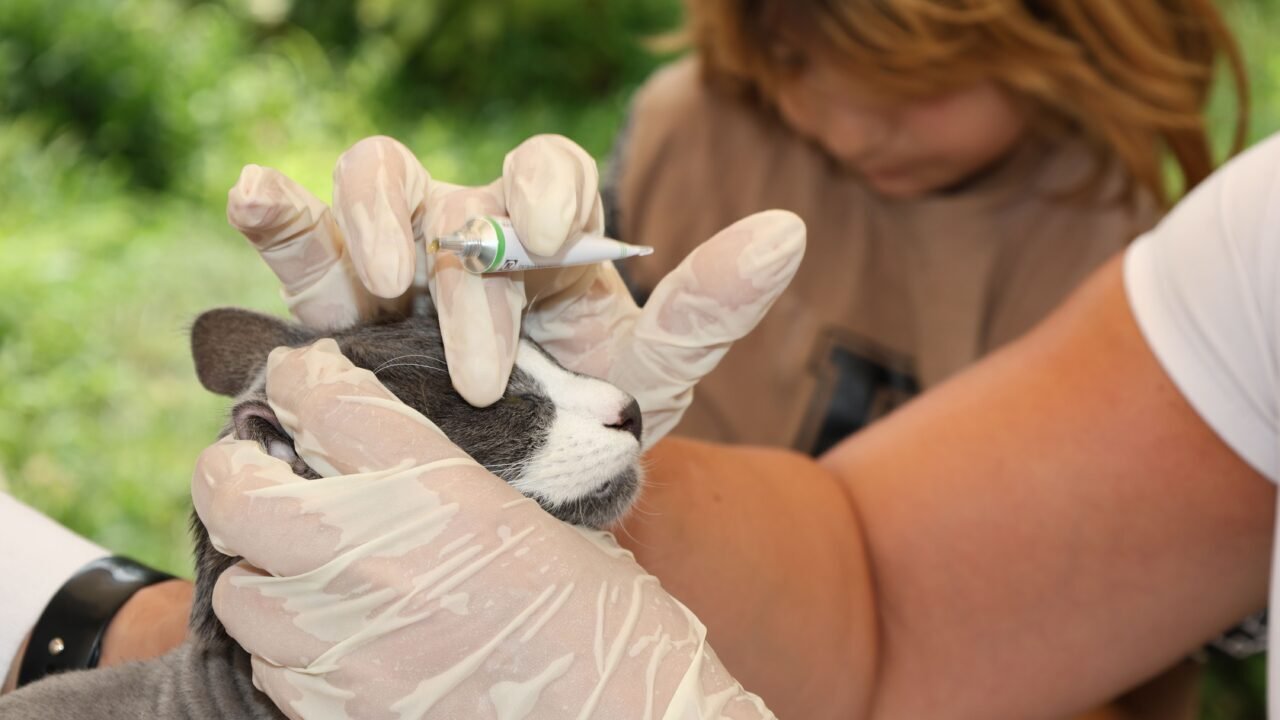
Since it is impossible to guess the exact day that window closes for a specific kitten, veterinary medicine didn't look for a single perfect date. Instead, the solution is: repeat.
Current guidelines from WSAVA (World Small Animal Veterinary Association) and AAFP outline the schedule as follows:
- First dose: between 6 and 8 weeks of age. Not at 9 weeks, not at 3 months. Earlier than almost everyone believes.
- Revaccination every 3 to 4 weeks until past 16 weeks. The most recent guidelines extend that final dose up to 20 weeks in many cases, precisely because some kittens have exceptionally persistent maternal antibodies.
- A booster between 6 and 12 months, which wraps up the initial protocol.
Every dose is an attempt. If the first one landed when maternal antibodies were still blocking, it fails; the next one tries again. What protects isn't the needle: it's the complete series. A kitten with only a single dose is not a vaccinated kitten. It's a kitten that just started.
What the FVRCP vaccine actually contains
The core vaccine is called FVRCP — often referred to as the feline distemper combo shot — and covers three major diseases:
- Feline panleukopenia. The main reason for all of this. It is a parvovirus that destroys the intestinal lining and white blood cells. In unprotected kittens, mortality is extremely high, and the virus survives for months in the environment: your cat doesn't need to go outside or meet other cats to catch it. It can hitch a ride on the bottom of your shoes.
- Feline viral rhinotracheitis (feline herpesvirus type 1). It is rarely fatal, but it stays with them for life: the virus remains dormant and flares up during any stressful episode.
- Feline calicivirus. Mouth and tongue ulcers, limping, and respiratory infections. Some strains are particularly aggressive.
Separately, there is the rabies vaccine, which is legally required in many regions and typically necessary for travel or boarding. Then there are non-core vaccines, determined by the actual risk profile of that specific cat — the feline leukemia virus (FeLV) vaccine is the most common for kittens with outdoor access or those living with cats of unknown health status. That part isn't decided by reading an article: it's decided with the professional who knows the animal.

The myth that needs to die: “vaccines weaken their immune system”
This is repeated often and is completely false. A vaccine does not weaken the immune system; it trains it. It introduces a harmless version of the enemy so the body learns to recognize it before a real attack.
What is true — and explains where the confusion comes from — is that a kitten midway through its vaccine schedule is not yet fully protected. Not because the vaccine took anything away, but because it hasn't finished building its defenses yet. Hence the sensible recommendation to avoid exposing them to unfamiliar cats or high-traffic areas until the series is complete.
It is also normal for kittens to be a bit sluggish, sleep more, or have a sensitive injection site for 24 to 48 hours afterward. That's just the immune system hard at work. What is not normal: repeated vomiting, facial swelling, difficulty breathing, or severe lethargy. If that happens, don't wait and see; call your vet right away.
Boosters: the other outdated piece of advice
"Annual boosters for everything, forever" is another relic from the last century. Current guidelines separate things out: after finishing the initial series and the one-year booster, core vaccines are administered every three years or more in low-risk adult cats, while some non-core vaccines maintain a higher frequency as long as the risk persists.
This doesn't mean vaccinating less to save money. It means vaccinating based on that specific cat's actual lifestyle: an indoor apartment cat doesn't face the same risks as one that roams a garden and crosses paths with neighborhood strays. That is precisely the conversation to have during your visit, and why an article can give you the roadmap but not sign off on the exact calendar.

Frequently Asked Questions
What if I adopted a kitten and don't know its vaccination history?
Without written proof, the standard practice is to assume they are unvaccinated and start the series over. Giving an "extra" dose to a cat that was already vaccinated won't harm them; skipping the schedule under the assumption they were covered definitely will.
My cat never goes outside. Are vaccines still necessary?
Yes, at least the core ones. The panleukopenia virus is extraordinarily hardy in the environment and travels on the soles of shoes, clothing, and objects. Your cat doesn't need to go outside—you just need to come back in.
Can a kitten with diarrhea or parasites be vaccinated?
Standard practice is to deworm first and vaccinate once the animal is healthy. A body busy fighting off another illness will mount a poorer response to a vaccine. This requires a clinical assessment, not a rule you can apply yourself at home.
How long does it take for the final dose to take effect?
Protection doesn't happen the exact day of the injection. It generally takes about a week after the final dose in the series to establish solid immunity. Until then, exercise caution with outside contact.
What really matters
If you take away just one takeaway: start earlier (6-8 weeks) and finish later (16-20 weeks) than you were probably told. That gap of a few weeks is precisely the loophole through which preventable diseases slip in.
And since we are talking about well-intentioned myths passed down by word of mouth, there is another classic waiting in almost every kitchen: the real list of foods a cat should never eat — and what to do in the first few minutes if they already took a bite.
This article is for informational purposes and is based on WSAVA and AAFP vaccination guidelines. It does not replace a veterinary consultation: your cat's final schedule must be determined by the professional examining them.
🔍 Looking for something else?
If you want to read other articles similar to A Kitten's First Vaccine: Why the Age Everyone Repeats Is Wrong you can visit the category Health & Care.
Leave a Reply
More cat breeds!