

The idea is irresistible: the plush toy face of a Persian, without the long coat. All the charm, none of the daily brushing. The Persian with the fluff chapters cut out.
And it’s true. The Exotic Shorthair — the Exotic Persian — solves exactly that problem, and it does it well.
What they don’t tell you is that the coat was the easy problem. Everything else that comes with a Persian is still included, intact, in the package.
What exactly is an Exotic Shorthair?
It’s a Persian with a short coat. It was developed by crossing Persians with shorthaired breeds — notably American and British Shorthairs — to keep the round head and squashed face but get a body that doesn’t demand daily grooming.
It keeps the large, rounded head, small ears, widely set huge eyes and the compact, heavy build. Its coat is short but very dense, with a double layer, and a velvety texture that makes it look genuinely like a stuffed toy.
Temperament-wise it’s notably placid: less active than a classic Persian, devoted to its people, and soft‑voiced. It’s not the kind of cat that wakes you at five a.m. demanding action. It’s a sofa cat with opinions.
Grooming: where you do win, and significantly
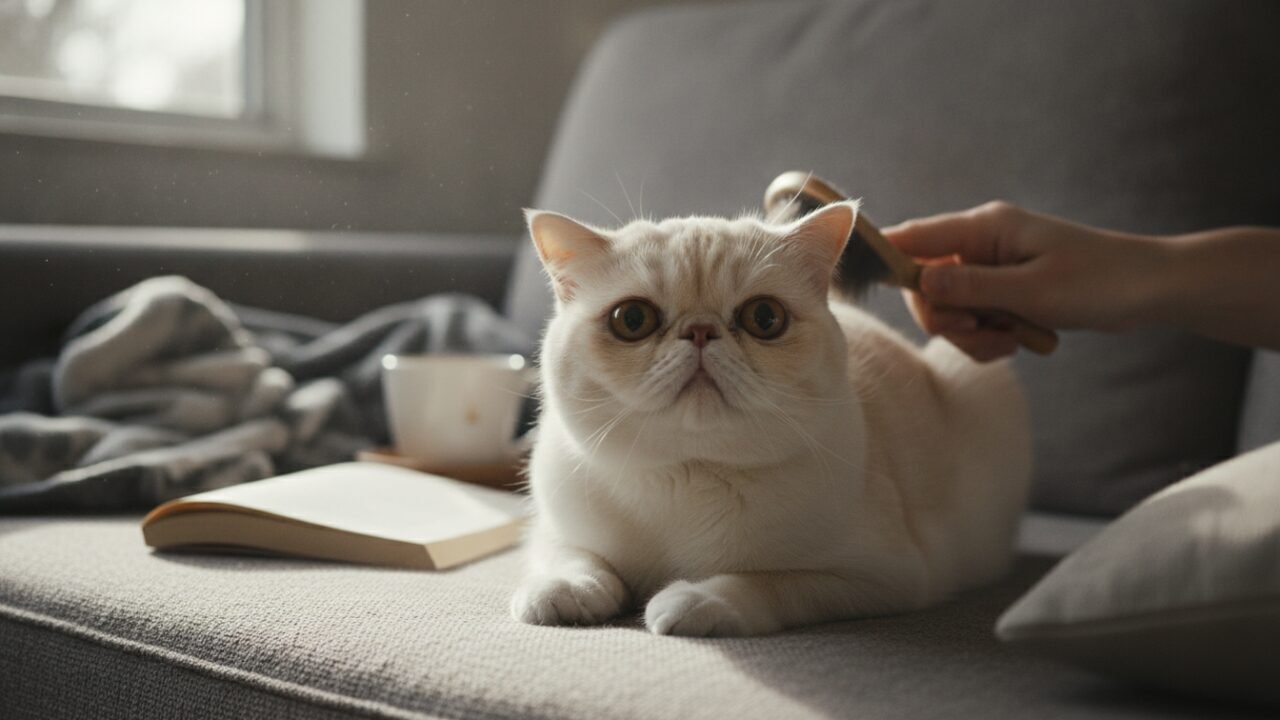
Two to three grooming sessions a week are plenty. No daily marathon brushing like longhaired Persians, and no drama from matted tangles in the armpits and back legs.
A steel comb and a soft‑bristle brush will do. Work neck, back, legs and finish with the belly — the area they usually dislike being touched the most. Their dense coat still sheds dead hair, so brushing remains useful to reduce hairballs from grooming.

So far, the promise holds. Now the fine print.
What is daily: the eyes
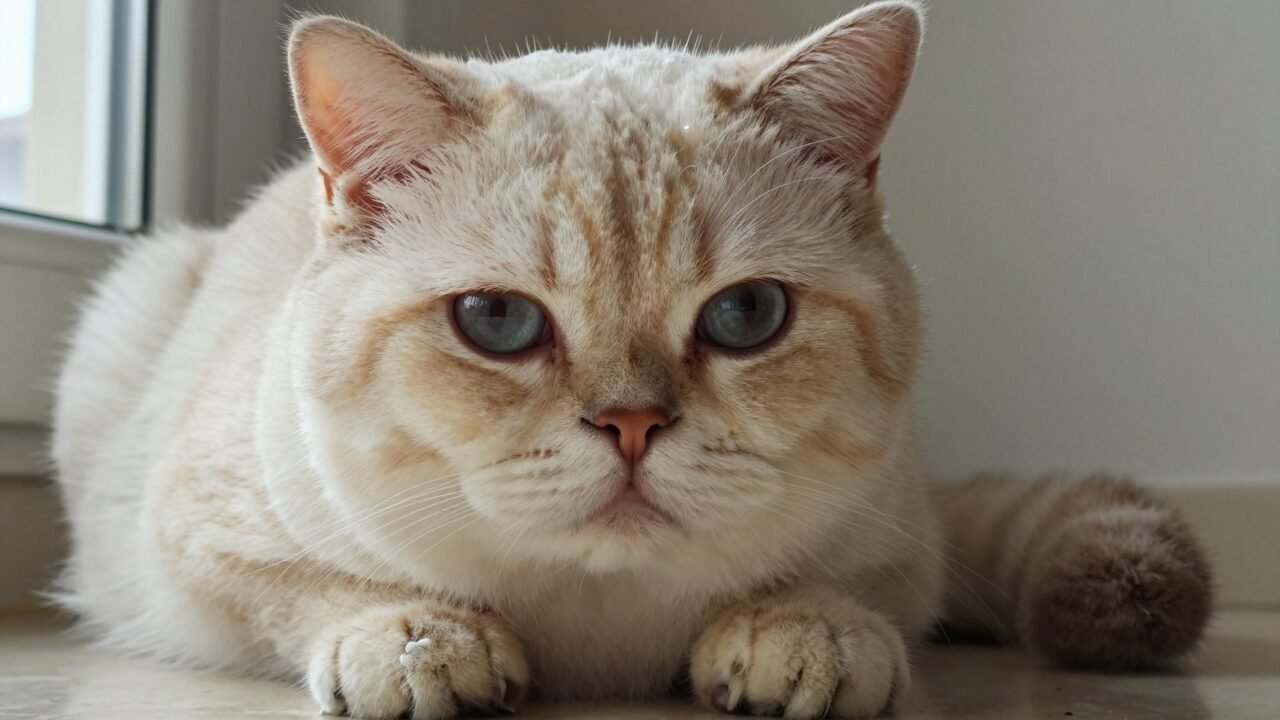
Swap the brush for a cloth. Their flattened face shortens and distorts the tear ducts, so the eyes water constantly and that moisture runs along the nasal fold.
If that area stays damp day after day, the skin macerates, develops a reddish‑brown staining and can become irritated or infected. The routine is simple but non‑negotiable: a soft cloth, warm water, and thoroughly dry the fold afterward. Every day, for life.
You won’t see this on the sales listing. It’s the care that replaces daily brushing, not the care that’s eliminated.
The flat face is not just cosmetic
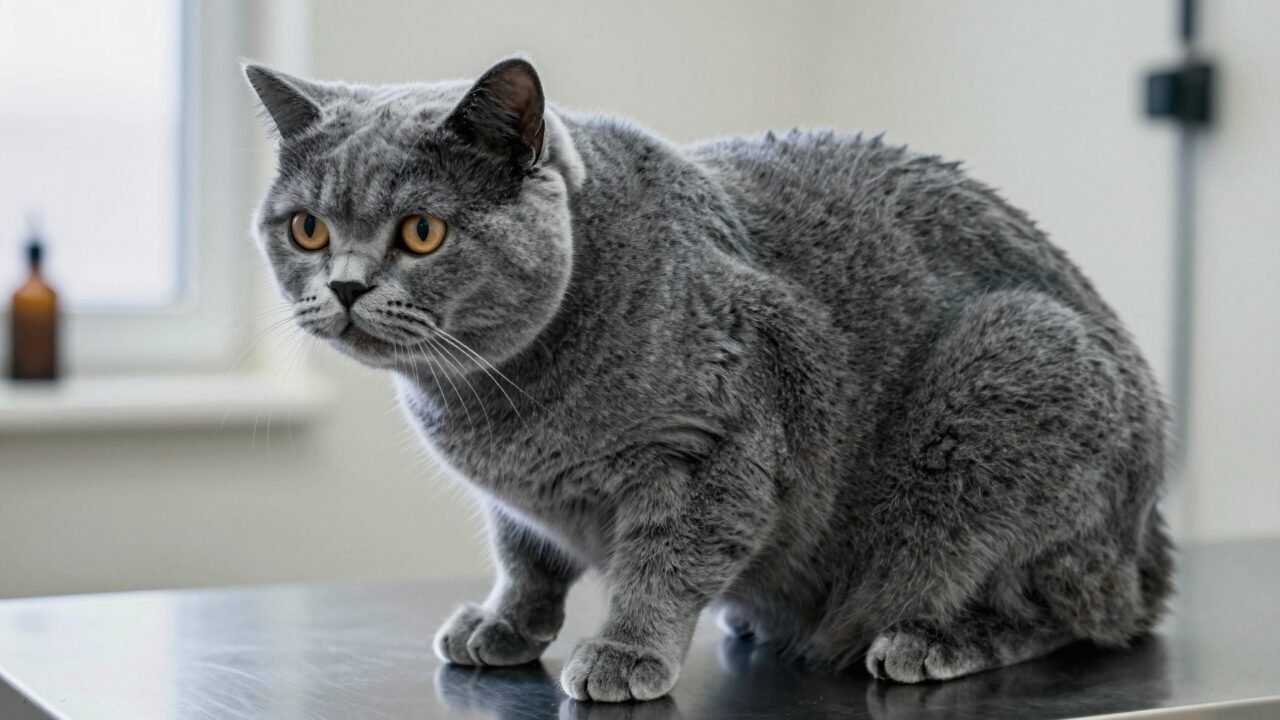
The Exotic Shorthair is a brachycephalic cat: its skull is shortened while the internal soft tissues don’t shorten proportionally. That compresses the airways and explains snoring, noisy breathing and poorer tolerance for heat and exercise.
It’s not a charming quirk — it’s the structural result of decades of breeding for progressively flatter faces. The eyes are also more exposed and prominent, raising the risk of corneal ulcers. A shortened jaw often leads to misaligned teeth.
A cool, well‑ventilated environment helps, sure. But understand this well: that manages a problem, it doesn’t prevent it. The issue is built in and won’t go away.

The disease that should really influence your purchase
It’s called polycystic kidney disease (PKD), it’s hereditary and affects Persians, Himalayans and Exotics alike. Ultrasound studies in these breeds have found renal cysts in figures close to 40% of the cats examined.
It is autosomal dominant: a single altered gene inherited from just one parent is enough for the cat to have it. Cysts can form very early — often before one year old — but the kidney compensates and clinical disease typically appears around seven or eight years. By then you’ve had the cat for a long time.
And here’s the actionable part that turns this fact into a decision: there is a genetic test. It detects the PKD1 mutation and gives a clear result. Responsible breeders do it and provide written proof; those who don’t are not unaware — they choose ignorance.
Ask for the parents’ PKD1 test results before you pay anything. If the breeder gets nervous about that question, you already have your answer.
The other condition that’s often misunderstood
There is facial idiopathic dermatitis, typical in Persians and Exotics: a buildup of dark, waxy material around the eyes, mouth and chin, often itchy and sometimes with secondary infection.
You will read that it’s caused by poor diet or lack of hygiene. The word idiopathic in the name means exactly the opposite: the cause is unknown. It wasn’t caused by you feeding it badly, and it doesn’t clear up by cleaning more. It needs a veterinary diagnosis, and blaming the owner only delays that visit.

So, is it worth it?
If you wanted the Persian face with much less brushing, yes: it delivers that and then some. It’s a calm, affectionate cat that fits well in quieter homes.
What it is not is a “no‑maintenance” Persian. It’s a Persian with different maintenance: daily eye care, lifelong respiratory monitoring, periodic kidney checks and a breeder who can show you paperwork.
The shortcut was real, but it only covered the coat. The rest is still on the bill — just printed in smaller type.
Frequently asked questions
Does an Exotic Shorthair need daily brushing?
No. Two to three brushings a week are enough because the coat is short though very dense. What is daily is cleaning and drying the fold under the eyes.
What’s the difference between a Persian and an Exotic Shorthair?
Mainly coat length: long in the Persian, short and dense in the Exotic. They share the rounded head, flat face, gentle temperament and the same health risks tied to brachycephaly and polycystic kidney disease.
What should I ask an Exotic breeder for?
The written PKD1 genetic test results for both parents, and the chance to see the mother and the environment where the kittens are raised. It’s the most direct way to lower the risk of the most common inherited disease in this line.
Is it normal for them to snore?
Snoring is common because of their brachycephalic anatomy, but “common” doesn’t mean you should ignore it. If your cat breathes with evident effort, tires quickly, keeps the mouth open, or handles heat poorly, see a veterinarian.
Sources: ultrasound prevalence studies of polycystic kidney disease in Persians and Exotics published in the Journal of Feline Medicine and Surgery (Italy and France), figures around 40% · UC Davis Veterinary Genetics Laboratory on the PKD1 test and its autosomal dominant inheritance · veterinary literature on the structural consequences of feline brachycephaly.
At Los Gatos Baby we are not veterinarians: we compile what the sources say. Adopt whenever you can.
🔍 Looking for something else?
If you want to read other articles similar to Exotic Shorthair: the low‑grooming Persian (but the costs remain) you can visit the category Exotic.
Leave a Reply
More cat breeds!