

If you have a tortoiseshell cat at home, there is one thing I can tell you almost without a doubt, even without ever having seen it:
It is a female.
And this isn't guesswork or weak statistics. The fact is that only 1 in every 3,000 tortoiseshell cats is male. And the few who are born come with a chromosomal anomaly that almost always leaves them sterile.
Your cat's coat is not just pretty. It is the visible proof of something happening inside every single one of her cells.
First, the basics: tortoiseshell is not a breed. It is a color pattern that can appear in a stray mixed-breed or a pedigree Persian. When someone offers you a "tortoiseshell breed cat," you already know something doesn't add up.
Why almost all of them are female
The explanation is genetic and stands as one of the most elegant in feline biology.
The genes that produce orange fur and black fur both live on the X chromosome. In the exact same spot, competing for the same position.
Now do the math:
- A female has two Xs. She can carry orange on one and black on the other. Both colors fit.
- A male has one X and one Y. There is only one seat available. Either orange, or black. Never both.
This is why torties are female territory: it takes two X chromosomes to paint two colors.
The detail almost no one explains: why the patches are where they are
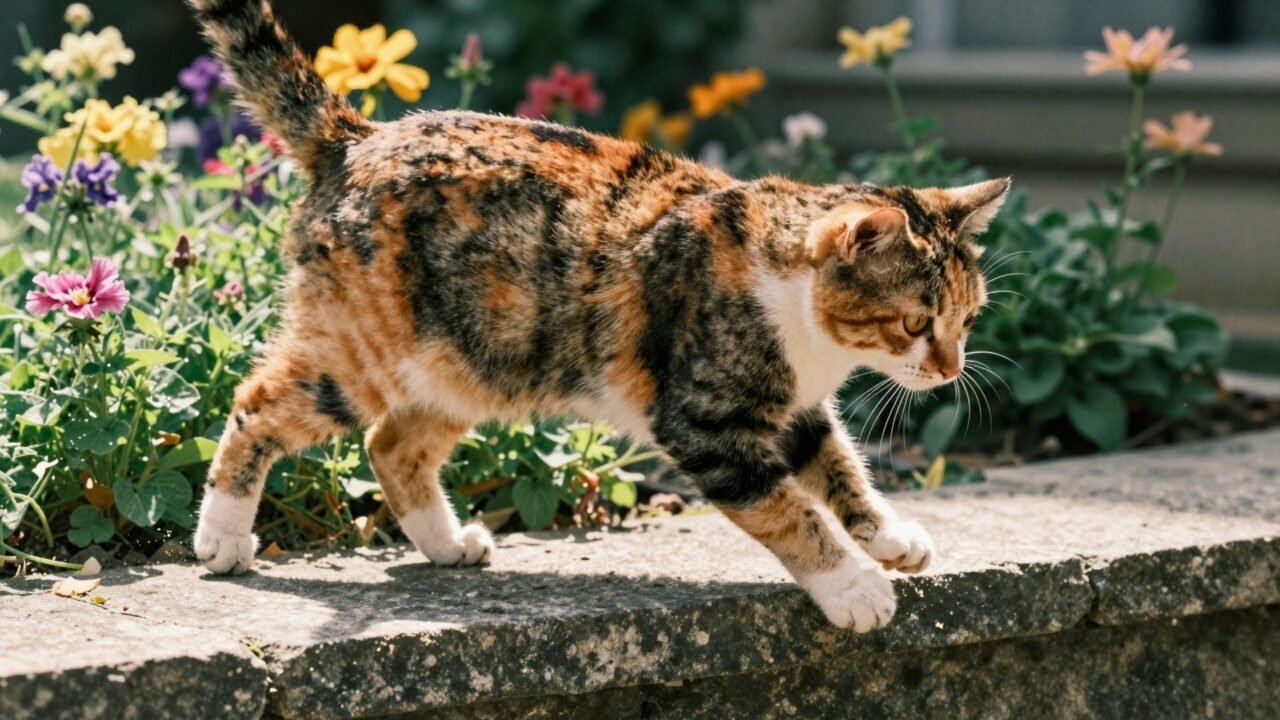
Here is the cool part, and it's what makes every tortoiseshell cat a truly unique specimen.
 Why Cats Are Born with Different Colors: The Secret Code of Their Fur
When a female embryo begins to develop, each cell does something astonishing: it turns off one of its two X chromosomes. Completely at random.
It is called lyonization, and it's what creates the mosaic.
👇 What everyone thinks: "The patches appear wherever, like on any spotted cat."
👇 What actually happens: in every single cell of the embryo, one X is turned off at random. If the orange one turns off, that cell will be black. If the black one turns off, it will be orange.
👇 What science says: those cells multiply and form patches. The coat pattern is the map of a cellular lottery that took place before birth.
👇 What nobody tells you: that is why no two tortoiseshell cats are alike, not even twin sisters. It's a fingerprint made of fur.
When you look at your cat, keep this in mind: that pattern was decided cell by cell, on a coin flip, weeks before she was born.
The males: one in three thousand
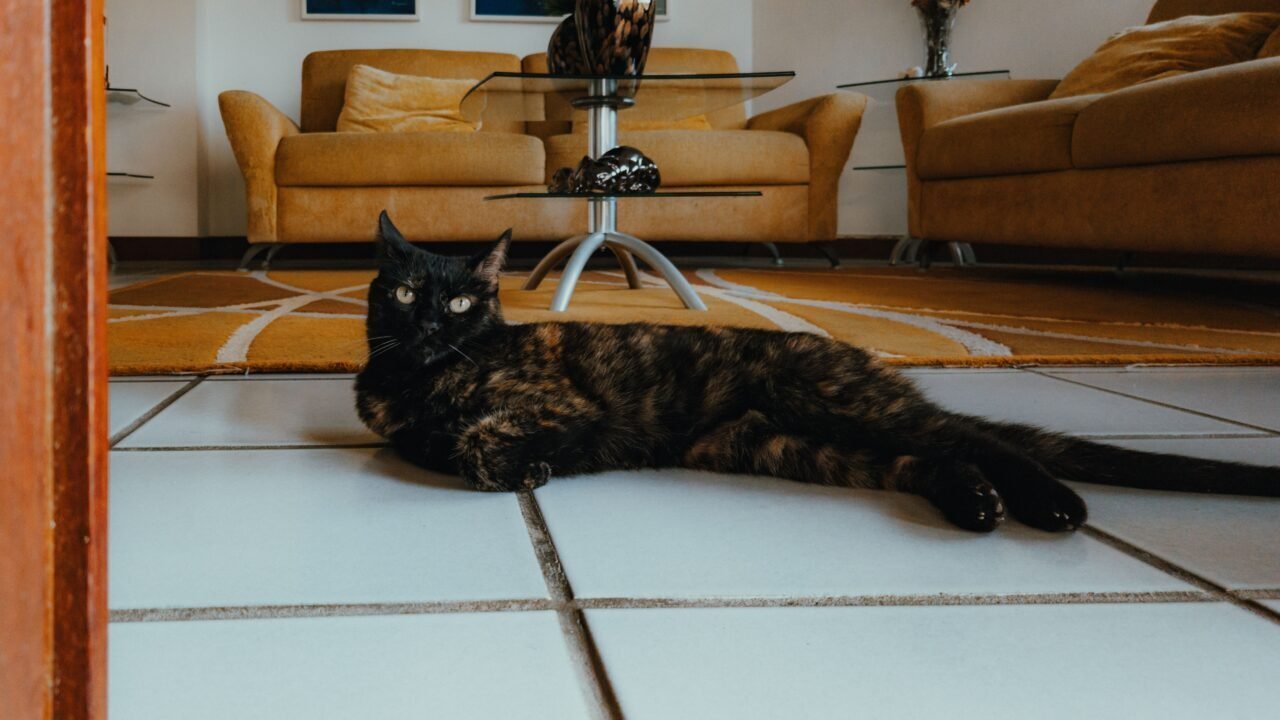
So what happens when a male is born? An exceptional event has occurred: the kitten inherited an extra X chromosome. Instead of XY, he is XXY.
In humans, this exact condition is called Klinefelter syndrome. And it brings real consequences, not just aesthetic ones.
If you have a male tortie, this concerns him:
- He is almost always sterile. He will not be able to reproduce—and that is normal, not a defect to fix.
- Higher risk of aortic valve problems: cardiac auscultation is recommended during checkups.
- Bone fragility has been reported in some individuals.
- He requires closer veterinary monitoring than a regular cat.
He is not a sick cat. He is a cat that deserves a veterinarian who understands his karyotype.
And if anyone offers you a male tortie "for breeding," you already know they don't know what they're talking about.
Tortoiseshell or calico: the most common confusion
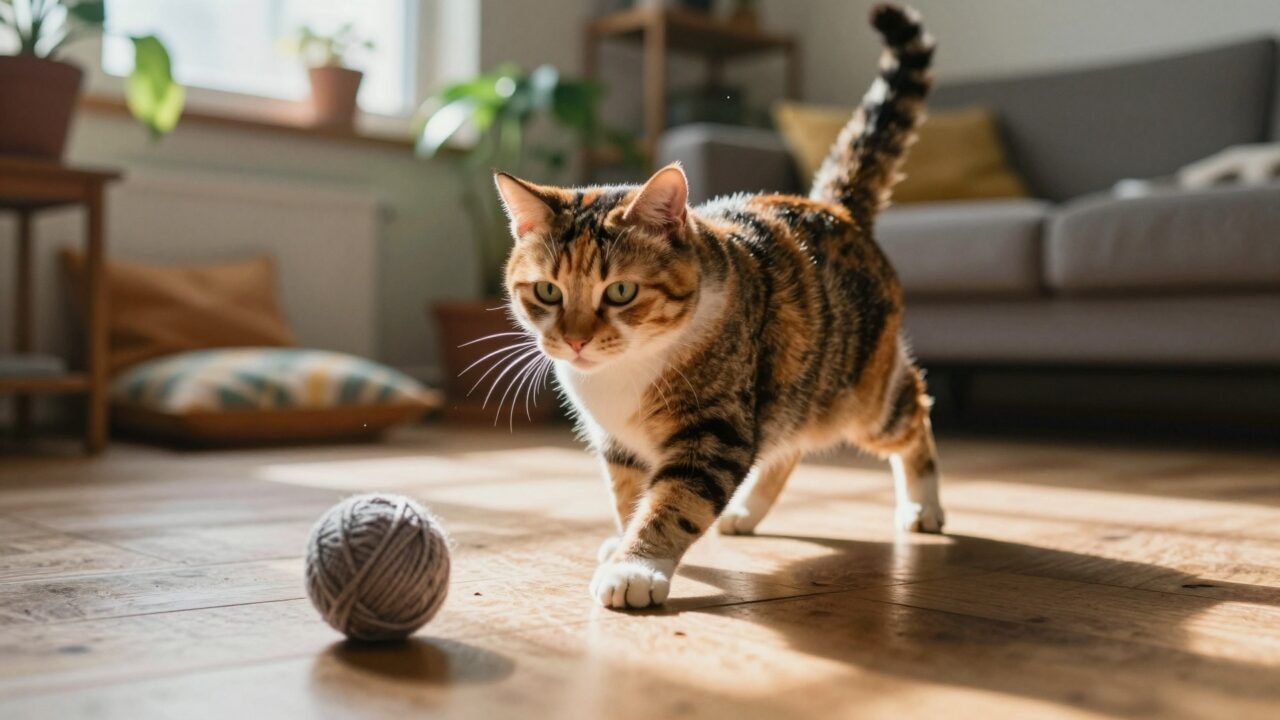
They are often used as synonyms, but they aren't. The difference is absurdly simple:

| Tortoiseshell (tortie) | Calico (tricolor) | |
|---|---|---|
| Colors | Black and orange | Black, orange, and white |
| Distribution | Blended, brindle | Separate, defined patches |
| White | Absent or minimal | Large areas |
| Genetics | X-linked | X-linked + white spotting gene |
A foolproof rule: if there is true white, it's calico. If it's an interwoven mosaic of black and orange, it's tortoiseshell.
And there is a third type: the torbie, which is a tortoiseshell with tabby stripes overlaid.
Tortitude: myth or reality?
In the feline world, there is a specific word for this: tortitude. The blend of tortoiseshell and attitude.
Belief has it that tortoiseshell cats are more territorial, more vocal, and possess stronger personalities.
🚫 MYTH: "Coat color determines a cat's personality."
✅ REALITY: There is no solid scientific evidence supporting this. What does exist is an observational bias: because torties are so striking, owners remember every mischief better and attribute it to their color. Socialization and environment matter far more than coat genetics.
That said, there is a kernel of truth behind it: almost all of them are female. And there are behavioral differences between sexes. Perhaps "tortitude" isn't about color at all, but rather the fact that we are comparing female cats to male cats.
Care: the boring answer
There are no secrets here. A tortoiseshell cat needs the exact same things as any other cat: complete food, fresh water always available, annual veterinary checkups, spaying, and brushing suited to her coat type.
The tortoiseshell coat does not predispose them to any illnesses. The only care that changes is for the XXY male, for the reasons we already covered.

One final fact to wrap up
There is a documented case that puts things into perspective: a tortoiseshell cat named Tiffany Two lived to be 27 years old.
Twenty-seven. Nearly three decades of an unrepeatable mosaic walking around a house.
And that, more than any legend about good luck, is what makes these cats truly special: they carry written in their fur the story of how they were formed. A cellular lottery that happened once and will never be repeated in any other animal.
Frequently Asked Questions
Is a tortoiseshell cat a breed?
No. It's a color pattern that can appear in any cat, whether mixed-breed or purebred. It is seen in Persians, Maine Coons, domestic shorthairs, and many others. If someone tries to sell you a "tortoiseshell breed cat," be suspicious.
Why are almost all tortoiseshell cats female?
Because the genes for orange and black fur both reside on the X chromosome. A female has two Xs and can carry one color on each; a male only has one X, so he expresses one or the other but never both. Only 1 in 3,000 tortoiseshell cats is male.
Are male tortoiseshell cats sterile?
Almost always, yes. They are born with an extra X chromosome (XXY), an anomaly equivalent to Klinefelter syndrome in humans, which generally prevents reproduction. They also face a higher risk of aortic valve issues and bone fragility, meaning they need more attentive veterinary care.
What is the difference between tortoiseshell and calico?
White. Tortoiseshell blends black and orange in a brindle mosaic, with little to no white. Calico features the same colors but with large white patches and much more distinct markings. If you see true white, it's a calico.
Is it true that they have strong personalities?
It's called "tortitude," but there is no solid scientific evidence to back it up. Observational bias plays a role—a striking coat makes people remember every bit of mischief better—along with the fact that almost all of them are female, which can easily confuse sex-based differences with color-based ones.
Why are no two tortoiseshell cats alike?
Because of lyonization: in every cell of the embryo, one of the two X chromosomes is deactivated at random. That lottery, cell by cell, determines which areas will be black and which will be orange. The outcome is completely unique and unrepeatable, even among sisters from the same litter.
If you are fascinated by how genetics paint cats, there is another case that goes far beyond tortoiseshells and explains why kittens in the same litter can turn out completely different colors: why cats are born with different colors.
🔍 Looking for something else?
If you want to read other articles similar to Tortoiseshell Cats: Why They Are Almost Always Female (1 in 3,000 are Male) you can visit the category Colors.
Leave a Reply
More cat breeds!