

I opened the closet and the nest was empty.
The box I'd prepared with clean towels, in the quietest corner of the house, the one that had been working perfectly for three weeks. Empty.
I found the cat half an hour later, under the bed, with the four kittens huddled on the bare floor. She had traded clean towels for the cold hardwood floor.
My first reaction was to put them back in the box. It was exactly what I shouldn't have done.
The first thing to understand: when a cat moves her kittens she's not confused or a bad mother. She's following a survival program that's been running for thousands of years. And that program completely ignores your opinion about the decor.
The instinct that remains intact in your living room
In the wild, a nest has an expiration date. Kittens soil it, and soiling means smell. Smell means predators.
That's why the feline manual says: move the litter every few days, always to a new place, always before the scent builds up.
Your cat doesn't know there are no foxes in your house. She doesn't make that calculation. The only thing she registers is this place has been the same place for too long, and she moves them.
🚫 MYTH: "Some breeds are more likely to move their kittens."
✅ REALITY: They do all of them.Siamese, Persians, strays, mixed breeds. It's not a breed trait: it's a species instinct. What does change is how long each cat takes to decide, and that depends on her temperament and the noise in the house.
The four real reasons for the move
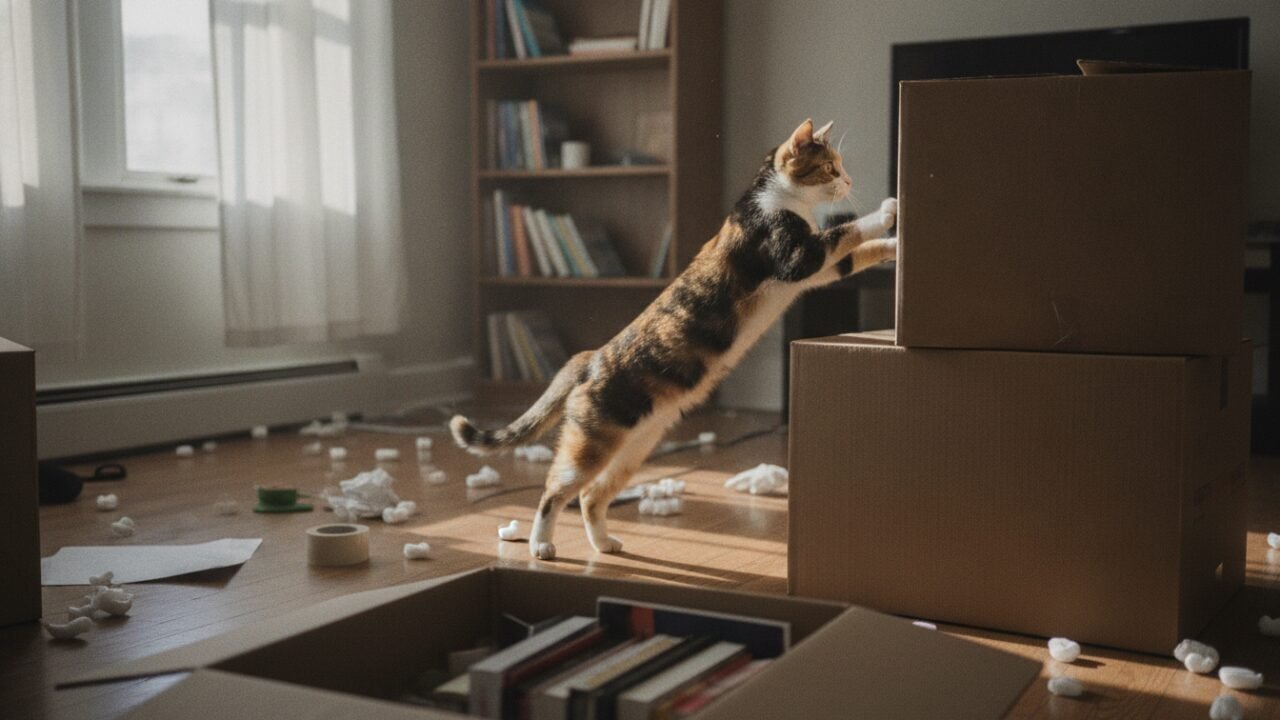
1. Noise or foot traffic. By far the most common. A nest next to the washing machine, near the front door, or in a high-traffic room is doomed from the start.

2. Too much light. Kittens are born blind, and the mother cat looks for dim lighting. A well-lit corner might look cozy to you, but to her, it feels exposed.
3. Temperature. Here is the answer to my cold hardwood floor: hard flooring doesn't generate heat, but it doesn't trap it either like a blanket dampened by the litter's cleaning. She prioritized something else.
4. Your overwhelming scent. If you've handled the kittens too much, the nest smells like you. To her, that's a sign that the spot is already compromised.
👇 What almost no one knows about the relocation
- She carries them one by one, grasping them by the scruff of the neck, leaving the others alone with every trip. That is why the process makes her so tense.
- The kitten doesn't feel pain in the neck area: a reflex makes it motionless and relaxed when grabbed there. It is the only time in its life that this reflex works.
- It can take her hours to decide on the final destination. It is normal for her to test two or three spots before settling down.
What I did wrong (and what you should do)
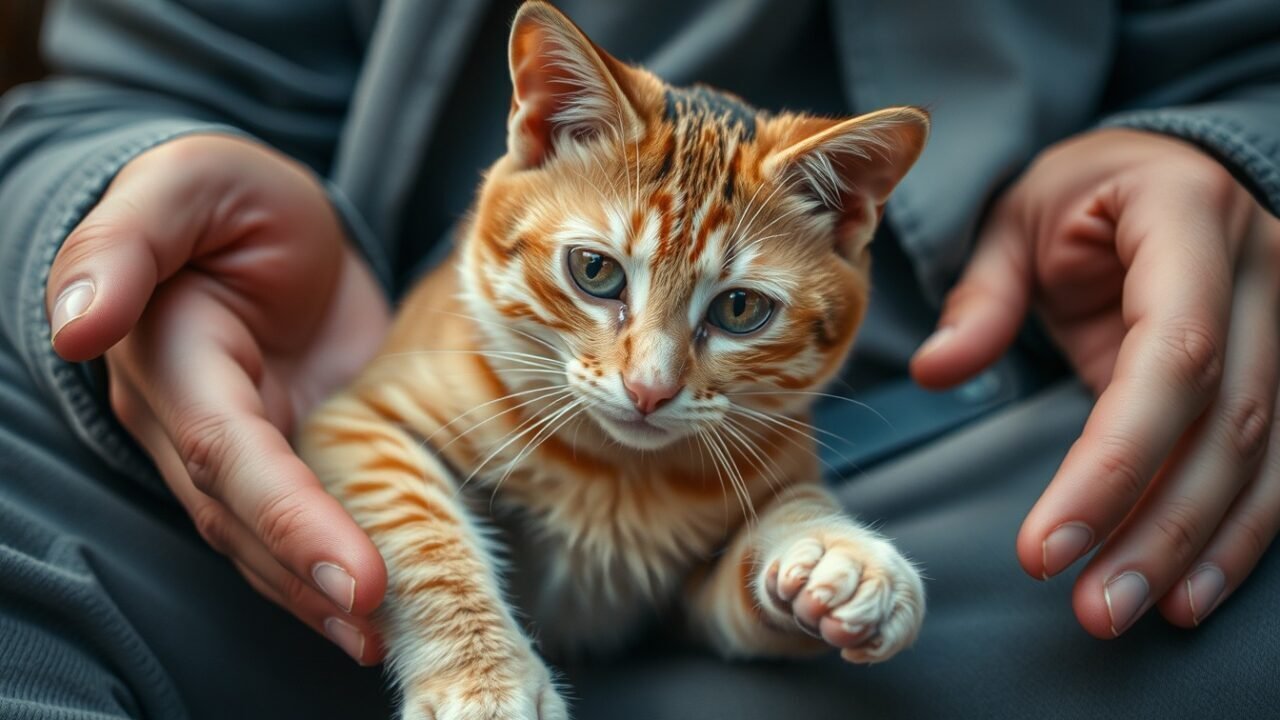
I put the kittens back in the nice box. She moved them out again in twenty minutes. I insisted one more time, and that's when she hid them in a place I couldn't reach for two days.
Every time you undo her decision, you confirm to her that the spot is not safe — because someone knows where it is and messes with it. Her instinct's logical response is to hide better.

👇 What everyone does: return the kittens to the prepared nest.
👇 What actually happens: the mother cat moves them again, to a worse and more hidden spot.
👇 What works: accept the new spot and improve it — a blanket, dim lighting, quiet surroundings.
👇 What nobody tells you: if the spot is truly dangerous, do not move the kittens. Move the mother cat first and let her take them.
When you actually need to intervene
Almost never. But there are real exceptions:
Legitimate reasons to relocate:
- The chosen spot is genuinely dangerous (behind an appliance, near cables, a gap they cannot get out of)
- She repeatedly leaves a kitten behind — this is not carelessness, it usually means that puppy has a problem and she has detected it
- She moves the litter multiple times a day, nonstop, for days
- The kittens feel cold to the touch or cry continuously
The last three cases are veterinary matters, not logistics problems.
How to prepare a nest she won’t want to leave
You cannot prevent the move. But you can make the original spot so good that it takes her longer to leave:
- Dark and enclosed. A cardboard box with a cut-out entrance beats any store-bought bed. Dim lighting is the number one factor.
- Far from foot traffic. A rarely used room, not the living room.
- Handle as little as possible. For the first ten days, look yes, handle no.
- Food, water, and litter box nearby — but not inside. She shouldn't have to walk far to eat.
- Offer a second box in another quiet corner. If she's going to move, let her move to a spot you chose.
That last trick was the most helpful for me. The second time she decided to move, her destination was my alternative box and not the impossible gap behind the sofa.
Never use a carrier to "prevent" her from moving the kittens. Confining a new mother cat skyrockets her stress, and a stressed cat may neglect the litter or stop producing milk. The goal is for her to choose to stay, not to trap her.
How my closet situation ended
I stopped fighting. I put a blanket under the kittens where she had taken them, turned off the light in that room, and closed the door.
She didn't move them again.
And that's when I understood what I had been blind to for three weeks: I had designed the nest for myself — visible, accessible, with pretty towels so I could peek at the kittens whenever I wanted. She designed it for them.
One of us knew what they were doing, and it wasn't the one with the towels.
Is your cat hiding her kittens? The “why” is a cry for help
When you see your cat picking up and relocating her kittens, it's not because she's being whimsical. Nor is she bored with the decor. Actually, it's as if she's sending you a text message with exclamation points everywhere.

Most of the time, when a cat relocates her kittens, she is looking for something she lacks: security. Her instinct tells her that the corner you chose for her, or where she gave birth, isn't safe. And there's no arguing with a mother's instinct—it's law. It could be that it's too noisy, there's too much foot traffic from people or other pets, or even that direct light is overwhelming her.
A stressed mother cat moves her kittens because she senses a constant threat. And that, friend, is awful for her and for the babies. You might think a cat hides her offspring to protect them from predators, and in her mind you or the household dog could be predators if you get too close or don’t leave her alone. It’s normal for a mother cat to move her kittens. What’s not normal is doing it again and again without finding peace.
What does that mean? You need to be her private bodyguard. Give her a super-hidden, quiet, dark place where no one bothers her. Not even you. Only go in for feeding times and quick checks. Otherwise she’ll keep relocating and that will wear her out, even jeopardizing nursing. And then, friend, things get ugly.
Frequently asked questions
Why does my cat move her kittens?
It’s a survival instinct: in the wild a nest builds up scent and that scent attracts predators, so the evolutionary solution is to change location every few days. At home, the triggers are usually noise, too much light, people passing by, or excessive handling of the kittens.
Should I put the kittens back in the nest I prepared?
No. Every time you undo her choice you confirm that spot has been identified as unsafe, and she responds by hiding them better. Accept the new location and improve it with a blanket, dim lighting and silence. If the place is truly dangerous, move the mother first and let her carry the kittens.
Are there cat breeds that move their kittens more?
No. It’s an instinct across the species, not a breed trait. What varies is each mother’s individual threshold: a more nervous cat or one in a noisier home will decide to move sooner than a calm cat in a quiet environment.
Does it hurt the kitten when it’s grabbed by the scruff?
Not when the mother does it. Kittens have a reflex that makes them go limp and relaxed when picked up by the scruff, precisely to make moving them easier. That reflex disappears with age, so it shouldn’t be used with adult cats.
What does it mean if she always leaves the same kitten outside?
It’s usually a sign she’s detected a problem with that kitten: weakness, a deformity or illness. It’s not neglect or cruelty, it’s an instinctive decision to allocate resources. It’s a reason to consult a veterinarian immediately, because that kitten will need assisted feeding.
If your cat has just given birth or is about to, there’s another moment when most owners get unnecessarily nervous: how long does a cat’s labor actually last and when should you worry.
🔍 Looking for something else?
If you want to read other articles similar to Why Mother Cats Move Their Kittens (and the Mistake Most Owners Make) you can visit the category Behavior.
Leave a Reply
More cat breeds!