

Your cat descends from animals that ate the whole bird. Feathers and all. Bones and all. No silverware required.
They have been doing it for millions of years. A wild cat catches a bird, eats it entirely, and is completely fine.
So why does the internet keep telling you that a chicken bone can kill your cat?
Because of fire.
And that is the part almost no article tells you, because most simply say "no" and leave it at that.
Cooked vs. Raw: The Only Difference That Matters
A raw bone is flexible. It has moisture and elasticity. It bends, flattens, and breaks into blunt pieces.
Cooking a bone turns it into something else. Heat draws out the moisture and makes it brittle, like a cracker. And when a brittle bone breaks, it doesn't just snap: it shatters into razor-sharp shards.
That is what hurts your cat. Not the bone. The oven.
Leftovers from rotisserie chicken are the absolute worst. Cooked, dry, sharp — and on top of that, they smell amazing, which is precisely why your cat goes digging through the trash for them.
What Happens Exactly When They Swallow a Shard
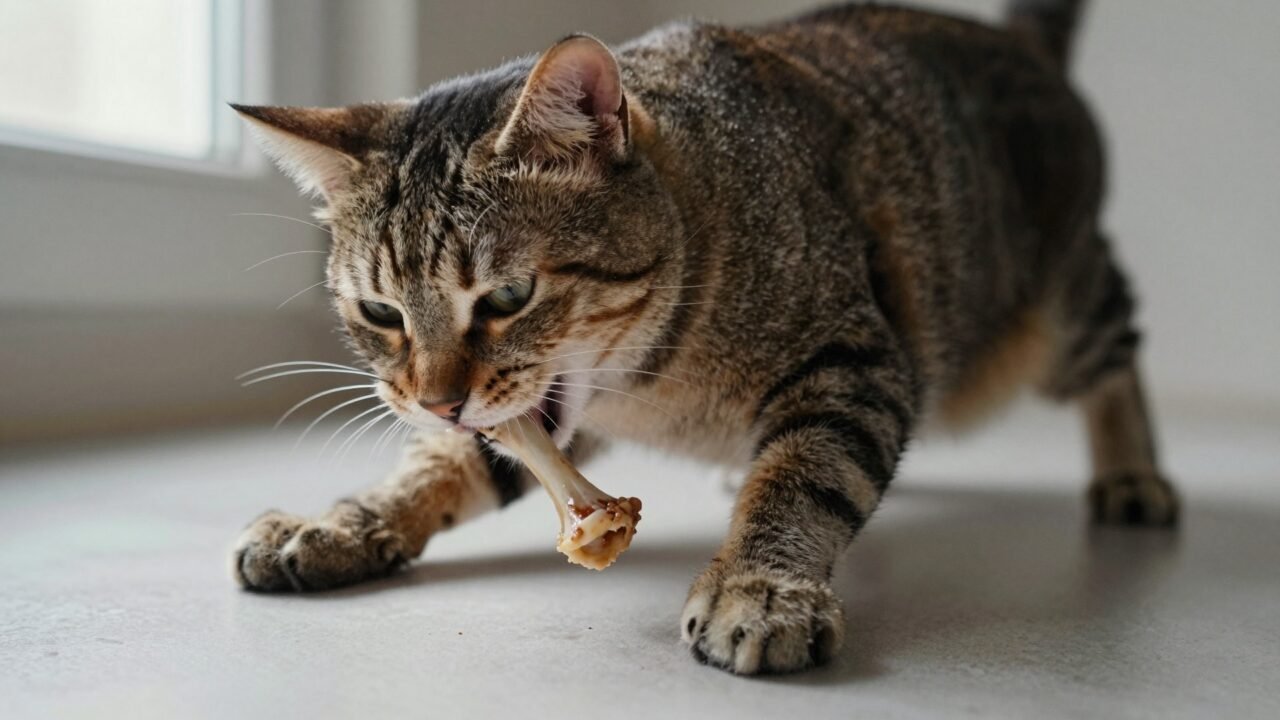
Three things happen, and none of them are good:

It gets stuck. A sharp fragment gets lodged sideways in the throat. The cat can neither swallow it nor spit it out. This is a matter of minutes, not hours.
It cuts them from the inside. Shards cut wherever they pass: mouth, throat, stomach, intestines. And the worst part is that you won't see it. An internal cut does not bleed outwardly.
It causes a blockage. Multiple fragments accumulate and form a blockage. That requires surgery, and sometimes not even that is enough.
What About Raw Bones, Then?
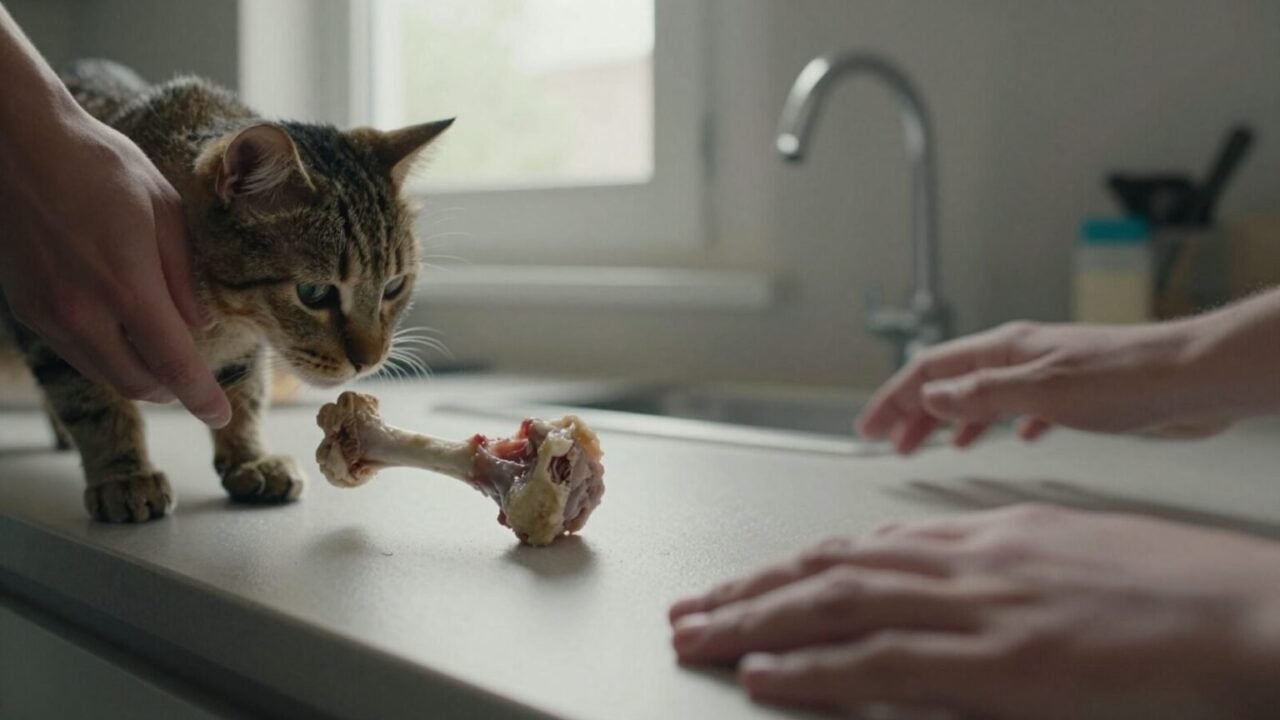
This is where we need to be honest instead of taking the easy way out.
A raw bone does not splinter the same way. That is true, and that is why some people feed their cats a raw diet including bones, and they do fine. It is not a myth.
But it is not risk-free either. Raw chicken carries bacteria — like Salmonella and Campylobacter — that can make your cat sick and, in turn, make you sick because you touch that bowl and then touch your kitchen. A bone that is too hard can crack a canine tooth. And one that is too large can block the intestines just like a cooked one.
Our stance, straight up: unless you are following a raw diet designed by an expert, with a trusted meat supplier and veterinary supervision, giving bones is simply not worth the risk. It provides nothing they cannot get in a much safer, simpler way.
They Ate One. What Do I Do?
Do not stick your fingers in their mouth. If the bone is stuck sideways, pushing it will make it worse. And a scared cat bites.

Do not induce vomiting. A shard that went down cutting will cut again on the way back up. Double the damage.
Do not feed them bread "to push it down." That advice circulates all over the internet and has zero basis in fact. All you achieve is wasting precious time.
Call the vet. Right now. Even if your cat seems totally fine. Internal cuts and blockages take hours to show symptoms, and by then the situation is much more expensive and much more serious.
Red flag signs over the following hours: excessive drooling, dry heaving, pawing at the mouth, refusing to eat, hiding, or blood in their stool or mouth.
Chicken Is Good. Bones Are Not.
Let's make this crystal clear, because this is where many articles confuse people: chicken is excellent for your cat. It is meat, it is natural for them, and it is exactly what their body knows how to process.
The safe way is the plainest way: cooked chicken breast, boneless, skinless, salt-free, unseasoned, with zero garlic or onion (which are actual poisons — we cover this in foods toxic to cats). Shredded into pieces the size of your fingernail.
And if what you want is for them to chew and work for their food — which is a real instinct, not just a whim — that is what dental treats and puzzle toys are for. They give your cat the same mental stimulation without the broken glass effect.
Frequently Asked Questions
I gave my cat rotisserie chicken leftovers and they seem fine. Is the danger over?
No. A fragment can take days to cause trouble as it moves through the digestive tract. Monitor them for a week: if they stop eating, vomit, or hide, go to the vet.

What about thicker bones, like drumstick bones?
Worse. Larger, harder, longer shards. Size doesn't help; it makes it worse.
My grandmother used to give bones to her cat and it lived to be twenty.
Maybe so, and I don't doubt it. There are also people who don't wear seatbelts and live to be ninety. Just because someone gets lucky doesn't make Russian roulette a good plan.
What about bone broth?
Strained broth, bone-free, salt-free, and free of onion and garlic, is fine. However, almost all store-bought broths contain onion, which destroys their red blood cells. Read the label or make it yourself.
Sources for this article: the FDA guidelines on cooked bones and raw pet diets · the ASPCA animal poison control center · and veterinary literature regarding gastrointestinal foreign bodies in cats.
This content is for informational purposes only and does not replace professional veterinary advice. If you think your cat swallowed a bone, call your veterinarian immediately.
🔍 Looking for something else?
If you want to read other articles similar to Is It Safe to Give Chicken Bones to My Cat? Raw vs. Cooked Changes Everything you can visit the category Nutrition.
Leave a Reply
More cat breeds!