

It's nine o'clock and your cat is staring at you.
Not at the TV. At you. Or rather: at what's on your plate. It has been staring for six minutes without blinking, sitting there with that offended dignity only cats — and certain in-laws — can carry.
And you, being human and therefore fallible, think: 'well… one little bite won't hurt'.
That thought. That exact one. It fills veterinary emergency rooms.
Because most poisoned cats didn't find the toxin hidden somewhere. Someone who loved them gave it to them.
The list of foods cats should never eat is shorter than you might think but very serious: onions and garlic, chocolate, coffee, grapes, alcohol, and raw bread dough. And one item that isn't even food and tops them all: over-the-counter pain pills.
Oh, and there's an eighth item that shows up on every internet list and that does absolutely nothing to your cat. I'll leave that one for last because it's the most interesting.
Did your cat already eat something?
Do not induce vomiting. Do not wait for symptoms. Go straight to what to do now.
If it already ate: the next 10 minutes
If you got here with the cat at your side, this is the no-fluff version.
Remove whatever’s left. Keep the packaging or a sample. That helps the vet estimate how much was ingested.
Do not make it vomit. Not with salt, not with hydrogen peroxide, not with advice from a forum. Some substances burn going down and again coming up. And salt can itself be toxic. Vomiting should only be done under veterinary guidance.
Call even if your cat seems fine. This is the most costly mistake. Many toxins take hours or days to show signs. By the time the cat looks sick, internal damage may already be done.
Have three facts ready: what it ate, how much, and when. With that the clinic can tell you over the phone whether to rush in or monitor.
If you can't reach your regular vet: look up '24-hour veterinary emergency' or an animal poison control center in your city or country and save that number on your phone right now. Not the day you need it.
And if it helps: the ASPCA handled 180.639 poisonings in one year. You're not the first to make this mistake. Calling quickly is the only thing that changes the outcome.

The real list of foods cats should never eat
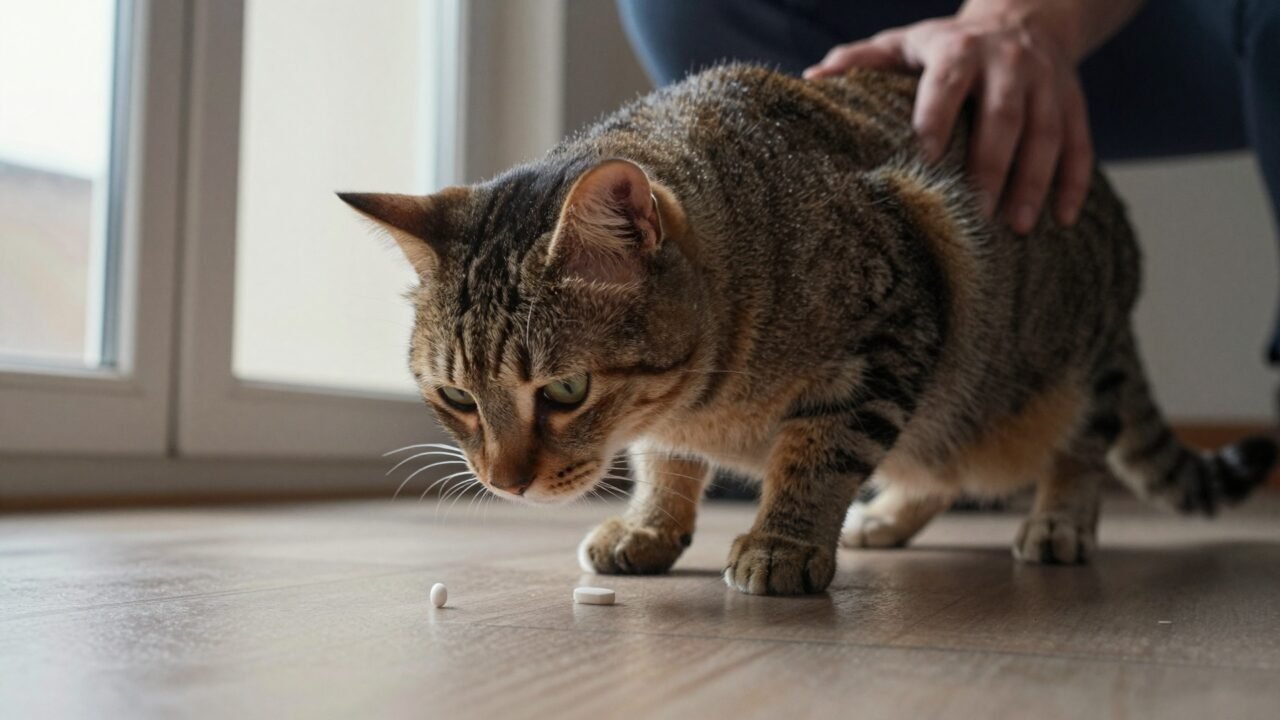
1. Over-the-counter pain pills
Your cat can fall from a third story and land on its feet. It can see in the dark. It can hear a mouse through a wall and judge a two-meter leap without missing.
And it can't handle half a paracetamol tablet.
Evolution gave it precision whiskers, gymnast balance, and night vision. But when it comes to metabolizing some drugs, it’s missing the tool needed to break down that pill, so the substance stays in its system doing harm. Half a tablet can put it into a coma.
So no: don't give 'something for the pain' from your medicine cabinet. Not paracetamol, not ibuprofen, not aspirin. If your cat is in pain, see the vet. Your home medicine kit is literally the worst place to look.
2. Onions, garlic, leeks, and chives
Nobody hands a clove of garlic to their cat. Nobody.
But 'just a little bit of broth, it's sick, poor thing'— that happens. And broth often contains onion. Baby food can include onion. Leftovers from stews have onion. And powdered forms are even more concentrated.
Here's the trap: the toxin doesn't sneak in through a hidden door. It comes served on a plate, offered with love.
Onion compounds steadily destroy red blood cells from the inside. The cat becomes weak because it loses healthy blood needed to carry oxygen. Cats tolerate this far less than dogs.
What to watch for: lethargy, pale gums instead of pink, dark urine, rapid breathing. It can take days to show.
3. Grapes and raisins
Here’s the strange part: nobody knows why grapes are toxic.
Seriously. Decades of research and we still don’t know what component destroys kidneys. We know it happens. We don’t know why. It’s the only item on this list with its own mystery.
That’s why the safe amount is zero: you can't dose something you don't understand. Watch out for homemade muffins and cereals with raisins.
4. Chocolate
Milk chocolate is mostly sugar with a faint trace of cocoa. An 85% dark bar is real cocoa. One is a treat; the other can be dangerous.
What harms them is the same thing that makes chocolate taste like chocolate: it speeds up the heart and nervous system. The darker the chocolate, the worse. Your cat won't tell the difference between a milk bar and a baking bar. You can.

What to watch for: vomiting, tremors, racing heart, restlessness, seizures.
5. Coffee
Your cat won't sip your coffee cup. It will rummage the trash and chew a used pod — coffee concentrate without the water.
Coffee grounds and capsules are a blind spot for many owners. Energy drinks also pack more caffeine than almost anything else in your kitchen.
6. Alcohol and raw bread dough
These go together for a quite remarkable reason: the dough keeps rising inside the stomach.
That means your cat can effectively become a bakery. And like yeast, as the dough expands it produces alcohol, so it becomes a bar at the same time. A cat that’s both bloated and intoxicated. It sounds like a joke until you’re paying the ER bill.
7. Things that don’t poison but can block the airway or gut
Chicken bones, avocado pits, corn cobs, peach or cherry pits. None of these are toxic; they just get stuck where they shouldn't.
And potato chip bags. I know what you're thinking. Think again: a cat can poke its head in, the bag can cling with each breath, and the cat may not know how to get it off. It sounds silly — and it happens in real kitchens while owners watch TV on the couch next door.
8. Sugar-free gum: the 'poison' that isn't
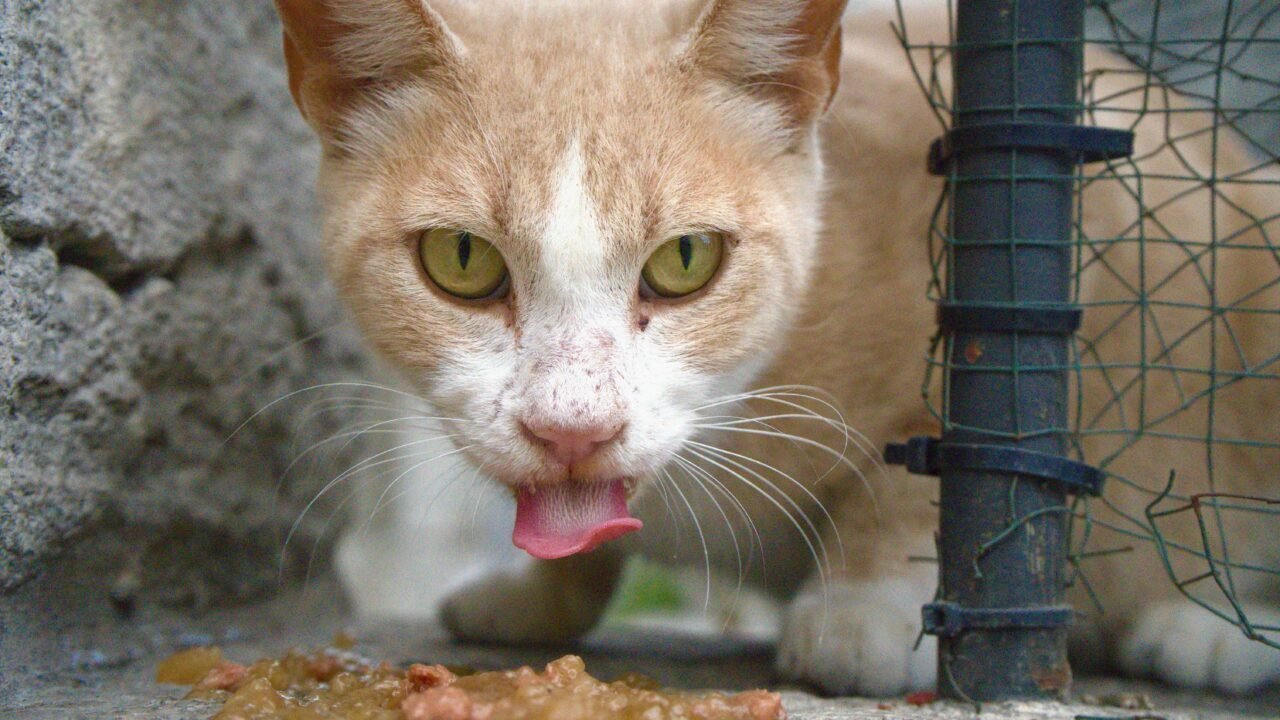
If you have a dog, you know that sugar-free gum can kill one. That is true, and it's one of the worst emergencies there is.
That same warning appears on nearly every list for cats. It was even on the first version of this article.
And it's wrong.
The ASPCA states plainly: 'people, cats, and ferrets are not adversely affected'. The FDA says the same. And the leading veterinary reference records cats given progressively larger amounts without ill effects.
So why does it keep appearing everywhere? Because someone copied the dog list, slapped 'cats' on the title, and since then every blog copies the previous one. No one checked the source. Not even us, until today.
There’s a lovely detail behind this: your cat can’t even taste sweet. It doesn’t have the receptor. Sugar-free gum tastes to it like a rock. It’s the one in the house for which that sweetener makes no difference.
That said: there’s no reason to give it gum. And if you have a dog at home, lock away gum and sugar-free peanut butter — for the dog those are a real danger.

So… should I give it human food or not?
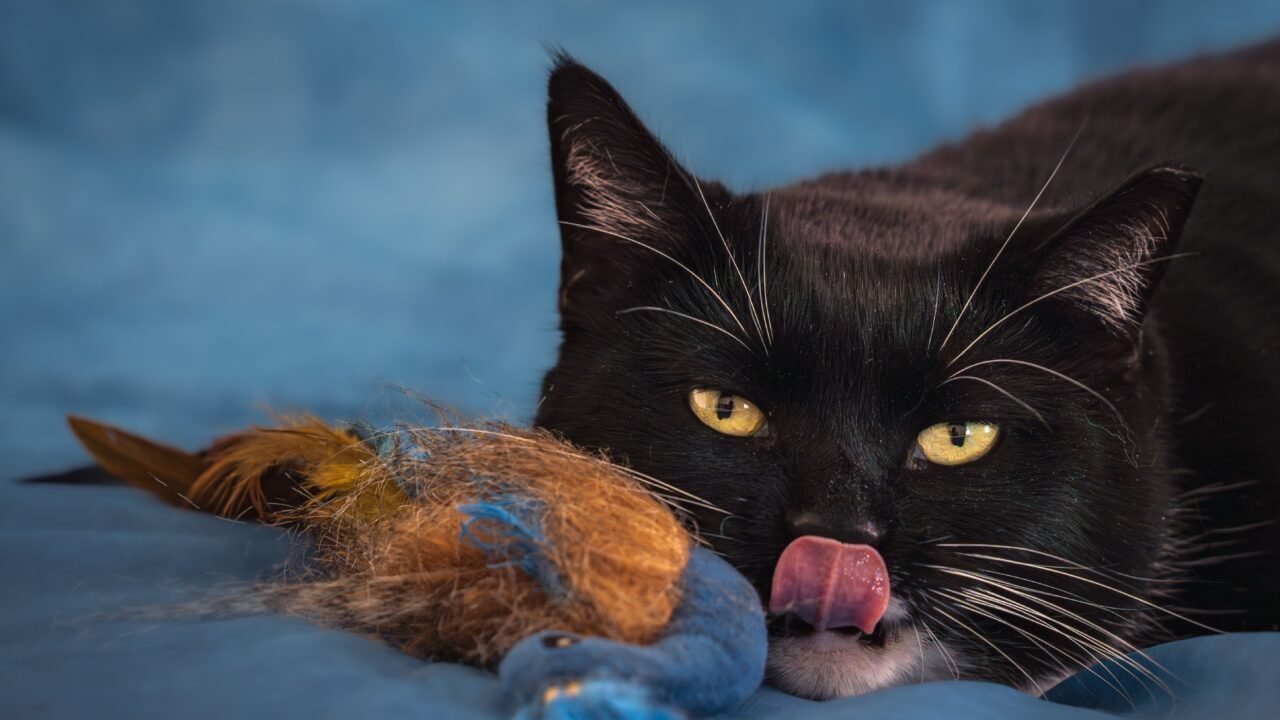
I get it. The problem was never the list of poisons: it's that nine o'clock look. Telling you 'don't give treats' doesn't work, because the cat will keep staring and you will keep being human.
So the trick isn't resisting. It's having something safe on hand. Cat treats exist exactly for this: they're inexpensive, made for their stomachs, and thrill your cat just as much as your scrap of chicken. The same gesture, the same happy face, without the roulette.
Keep a small pouch in the kitchen, right where the temptation to give table food usually is. It's the dumbest solution and the one that works best.
Frequently asked questions about foods cats shouldn’t eat
It ate a little onion and seems perfectly fine. Should I worry?
Yes. Onion damage can take days to appear. Just because it's chasing a fly now doesn't mean nothing happened.
How much onion is dangerous exactly?
There is no single number. It depends on weight, whether it was powdered or raw, and that particular cat. If someone gives you an exact figure, they're making it up. That's why the rule is zero: it's the only one that doesn't require math.
What about a little milk?
The image of a kitten licking a saucer of milk is the best ad campaign ever — and it's a lie. Most adult cats don’t digest milk well. It won’t kill them: it will give them diarrhea. Which is also not ideal.
Canned tuna?
One day, sure. Every day, you unbalance their diet. It's like you eating fries for dinner: you survive, but it's not recommended.
If this article helped — or made you run hide the chocolate — share it with someone who has a cat. Onion in broth still causes more poisonings than you'd guess, and almost always out of misplaced affection.
Sources: the FDA and its official list of pet hazards · the ASPCA Poison Control center (case data and their note on sugar-free gum) · the Merck Veterinary Manual · and 'Household Food Items Toxic to Dogs and Cats' (Cortinovis & Caloni), published in Frontiers in Veterinary Science from the Department of Animal Science and Food Safety at the University of Milan..
This is general information, not a consultation. No article can examine your cat. If you suspect poisoning, call your vet.
🔍 Looking for something else?
If you want to read other articles similar to Foods Cats Should Never Eat: The Real List and What To Do you can visit the category Nutrition.
Leave a Reply
More cat breeds!