

Your cat has been shaking their head for days as if trying to get something out. You look inside the ear and see it: a dark, dry, grainy residue. Coffee grounds.
It is not dirt, and it cannot be fixed with a cotton swab. That buildup is the signature of a parasite called Otodectes cynotis, and right now, there is a colony living inside your cat's ear canal.
It is the cause of most feline ear infections. And what bothers your cat the most is not the bug itself, but their own allergic reaction to it.
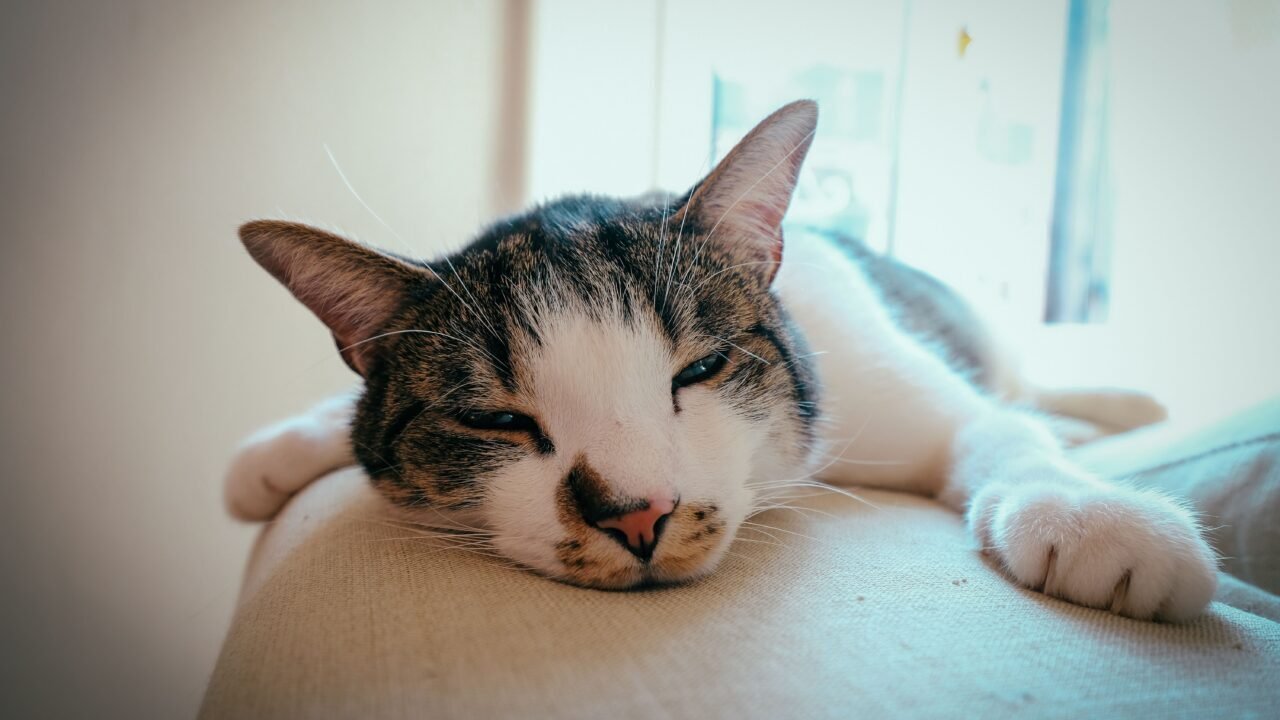
What exactly is this “coffee grounds” residue
It is a mixture of wax, dead skin cells, and mite waste accumulated in the canal. The adult mite measures less than half a millimeter: it is right at the limit of what the human eye can see, just a tiny white dot that moves if you look at it under bright light.
Unlike mange mites, they do not burrow into the skin. They stay on the surface of the canal feeding on debris. And here is the interesting part: the brutal irritation your cat suffers does not come from the bite, but from a hypersensitivity reaction to the substances the mite produces while feeding.
This explains something very confusing: there are cats with plenty of mites who barely scratch, and cats with very few who are desperate. The number of parasites doesn't dictate the severity. How much that specific cat reacts to them does.
It is more common than you think
Between 50% and 80% of feline outer ear infections are caused by this mite. In European surveys, it has even ranked as the most commonly recovered external parasite in cats, surpassing fleas.

It mainly strikes those under one year old, and most noticeably between three and six months of age. The primary route of transmission is direct: from mother to litter. That is why a newly adopted kitten, especially if coming from the street or a colony, is a prime candidate almost by default.
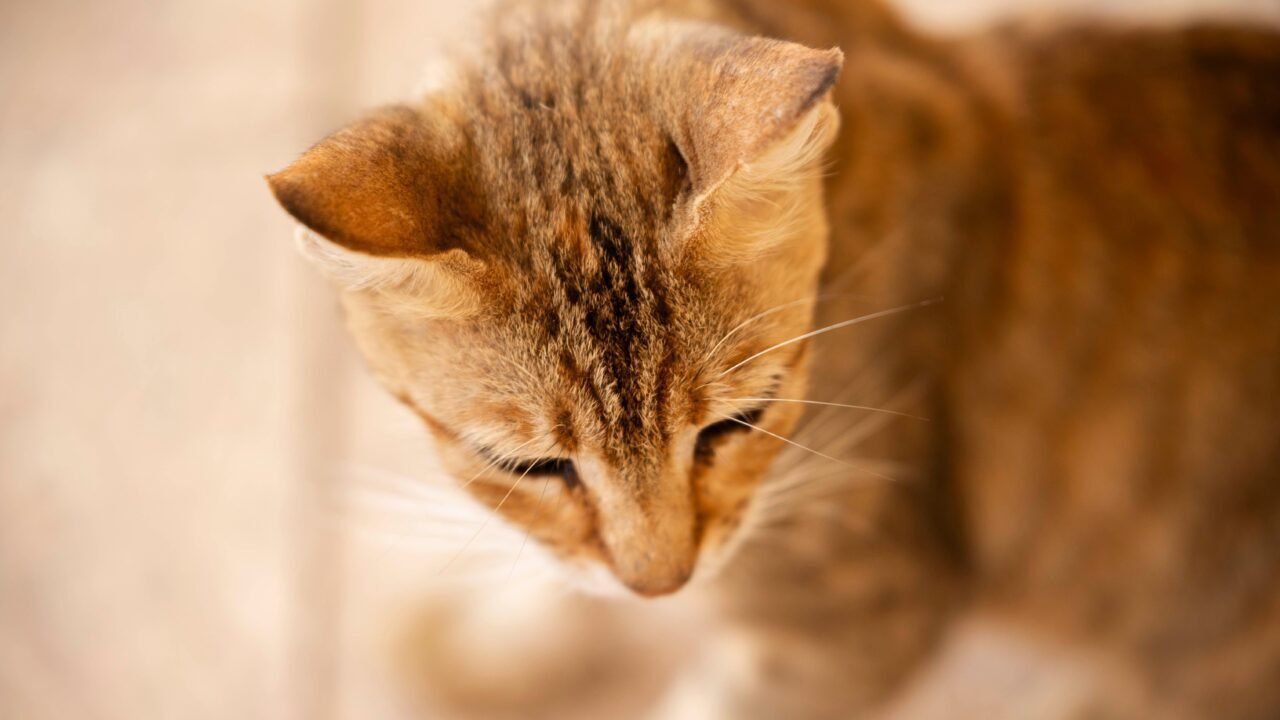
The signs your cat is giving you
They scratch their ears incessantly and shake their heads forcefully. They tilt their neck toward the side that itches the most. The ears are red, warm, and sometimes covered in self-inflicted scratches. A foul odor may also appear.
And there is a complication you should know about before it happens: aural hematoma. From so much shaking and scratching, blood vessels inside the ear flap rupture and fill with blood, making the ear swell up like a soft balloon. It requires veterinary intervention and is pure self-inflicted damage. The sooner you stop the itching, the less likely you are to reach that point.
Watch out outside the ear too: although their home is the ear canal, these mites can appear on the head, neck, rump, or tail, causing patches of irritated skin or thin hair. If your cat has mites and is also scratching the back of their neck, it could be the same issue.
Why you should not treat it on your own
This is the mistake many people make with the best of intentions: watching a video, buying some drops, and getting started.
The problem is that a yeast or bacterial ear infection looks almost identical from the outside, and the treatment is completely different. In fact, mites often bring secondary infections by Malassezia or staphylococcus along with them, so sometimes two things need to be treated at once.

And there is an even heavier reason: if the eardrum is perforated, certain products applied inside the ear are dangerous. No one can know that without looking with an otoscope. That is the real reason why this cannot be solved via the internet.
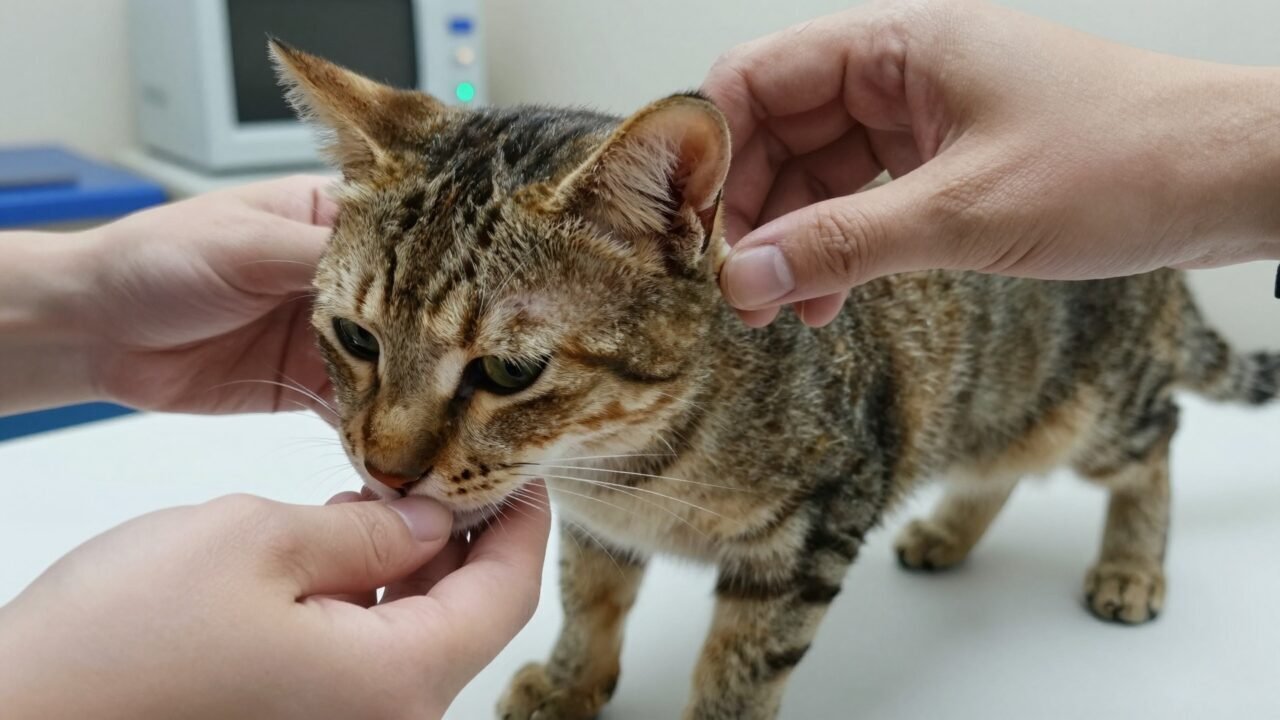
How it is truly cured
When properly treated, it resolves without drama. The vet confirms the diagnosis—often by seeing the mites move with an otoscope or under a microscope—thoroughly cleans the canal, and applies the appropriate antiparasitic.
The initial cleaning is not cosmetic: removing all that accumulated wax allows the medication to actually reach the skin. With the canal full of debris, the treatment just stays on the surface.
Today, there are single-application spot-on treatments applied to the skin of the neck that clear up the infestation, alongside traditional ear drops. Which one to use is decided by the vet based on the cat's age, weight, and whether there is a secondary infection.
The two rules that prevent relapse
One: treat all pets in the household, even if only one is scratching. Transmission is extremely direct and also travels via shared items like blankets, beds, and brushes. If you only treat one, the mites will just return from the one that seemed healthy.
Two: complete the entire treatment even if your cat already seems cured. The full life cycle of the mite, from egg to egg, lasts between 18 and 28 days. Eggs already laid do not die with the first application: if you stop because your cat stopped scratching, the next generation hatches and you start all over again.

A helpful fact that explains why bedding is cleaned too: away from the animal, the mite can survive for up to twelve days.
And to catch any other issues in time, you will find this useful: signs that your cat is sick that almost no one notices in time.
Frequently asked questions
How do I know if my cat has ear mites?
Key signs include dark coffee-ground residue, intense scratching, head shaking, redness, and sometimes a foul odor. Confirmation is provided by a veterinarian viewing the mites with an otoscope or under a microscope.
How long does it take to heal?
It depends on the chosen treatment, but you must cover the parasite's complete cycle, which lasts between 18 and 28 days. Stopping when the itching stops is the most common cause of relapse.
Can they spread to other pets or humans?
Among pets, absolutely: all household animals must be treated simultaneously. In humans, it is exceptional, with only isolated cases of temporary skin irritation reported rather than a feline-like infestation.
Why did their ear swell up like a balloon?
It is an aural hematoma: from shaking the head and scratching so much, blood vessels inside the flap rupture and blood accumulates. It requires veterinary attention and is a sign that the itching has gone untreated for too long.
Sources and references: review by Veterinary Dermatology on treatments for Otodectes cynotis in cats (50–80% of feline outer ear infections, hypersensitivity reaction, secondary infections by Malassezia and staphylococcus) · Companion Animal Parasite Council on the 18–28 day cycle and ectopic infestations · parasitological literature on mite survival off the host.
At Los Gatos Baby we are not veterinarians: we compile what the sources say. No ear product should be applied without a professional having examined the eardrum first.
🔍 Looking for something else?
If you want to read other articles similar to Cat Ear Mites: The "Coffee Grounds" That Are Torturing Your Cat you can visit the category Health & Care.
Leave a Reply
More cat breeds!