

There is one detail about meowing that catches almost everyone off guard the first time they hear it: adult cats do not meow at each other.
Between themselves, cats communicate with their bodies, scents, and the position of their ears and tails. They hiss, growl, and purr. But that high-pitched, persistent meow with an air of infantile complaint is reserved almost entirely for one single species: ours.
A kitten does meow—a lot—but only during its first few weeks and exclusively toward its mother. It is a cry for help: I am cold, I am hungry, I am lost. As they grow up, that repertoire fades among peers. With us, it doesn't. With us, they keep it for life.
Why It Sounds Exactly Like a Baby
This is the interesting part: it's not a coincidence, it's efficiency.
The human ear is tuned by evolution to react immediately to a baby's cry. It's a sound we find impossible to ignore; it activates us before we even have time to think. And some feline meows—most notably the one they use to ask for food—fall into a frequency range that is disturbingly close to that infant cry.
Researchers who have analyzed solicitation meows described this exact pattern: embedded within the purr is a high-pitched component that echoes a human baby's cry. Listeners perceive it as more urgent and harder to ignore than a normal purr, and they respond faster. This phenomenon has been dubbed the "solicitation purr".
Translated: your cat found the button your brain cannot leave unattended, and they keep pressing it.

They Wasn’t Taught It, and Yet You Taught Them
Let's be honest here, because the internet loves to spread the idea that there is a "human-meow gene." There isn't, and claiming otherwise goes far beyond anything science has proven.
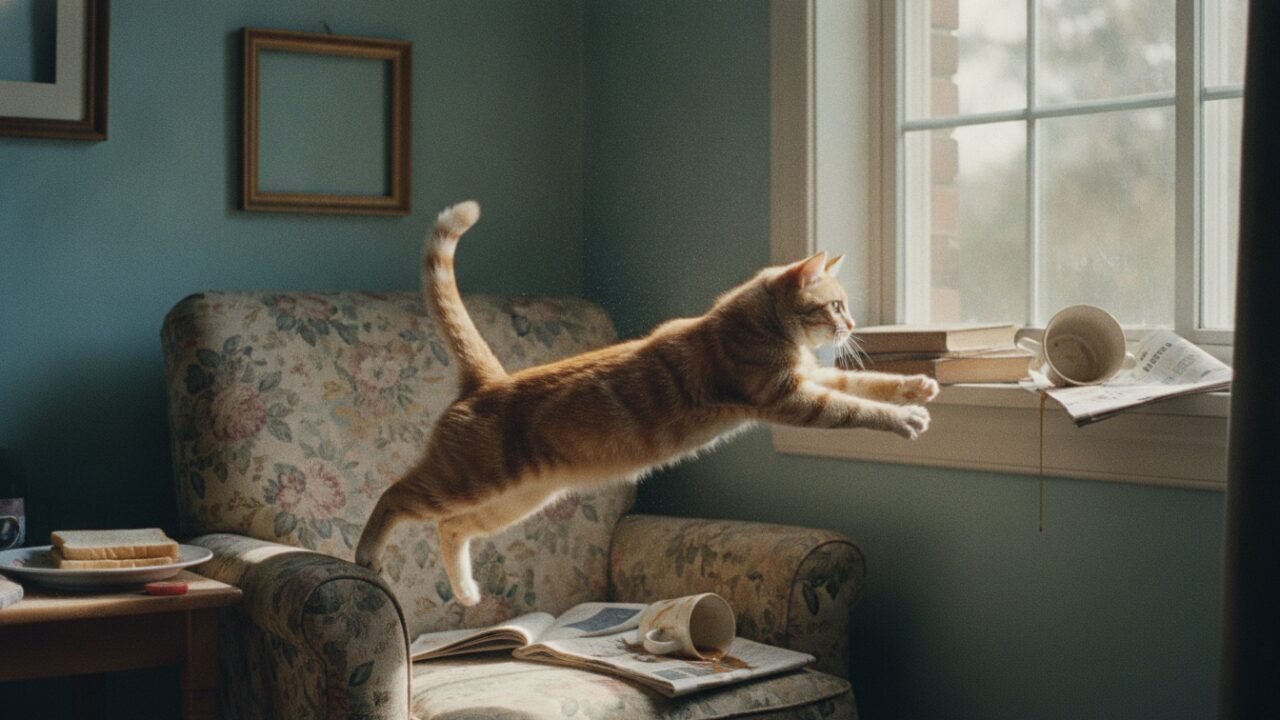
What does exist is learning straight out of a textbook. The cat tests sounds. Some get no reaction. Others make you get up off the couch. The ones that work are repeated and refined; the ones that don't are abandoned.
That's why something you might have already noticed happens: every cat develops a different vocabulary with their specific human. There is no universal feline language. There is a private dialect, negotiated between two individuals, built through trial and error over the years. Your cat doesn't talk to you the way they would talk to another human: they talk to you the way they learned that you respond.
And yes, domestication laid the groundwork—thousands of years of inadvertently selecting the animals that communicated best with us—but the fine-tuning of each specific meow was done by your very own cat, with you, in your home.
The Other Sounds That Aren’t Meows
Not everything that sounds like a baby actually is one. It helps to tell them apart:

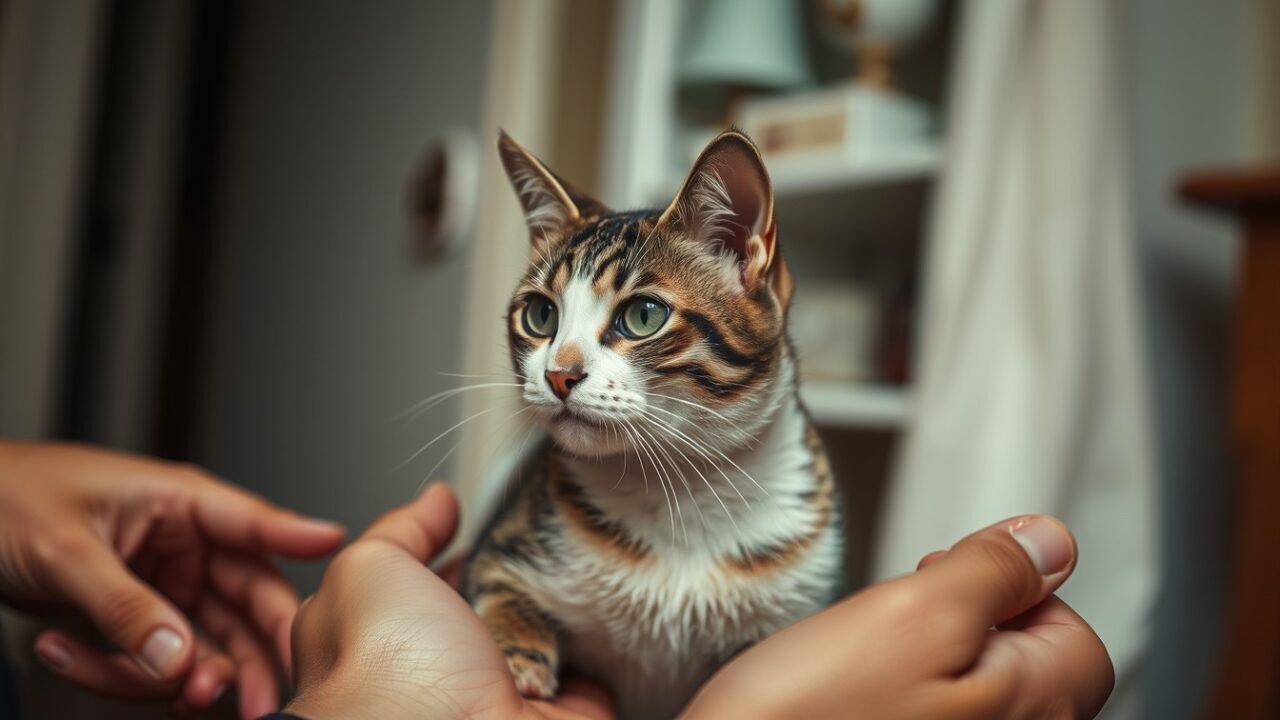
- Window chattering. That jaw tremor when looking at a bird. It has been interpreted as frustration over unreachable prey and also as a reflex of the bite mechanism they would use to finish it off. It's not a request: it's hunting instinct short-circuiting.
- The trill. A rolled, closed-mouth sound halfway between a purr and a meow. It's what mothers use to call their kittens, and if your cat directs it at you while walking toward another room, they are telling you to follow them.
- Persistent nighttime meowing. It could be boredom or a learned routine... or it might not be. In older cats, vocalizing at night is linked to hyperthyroidism, hypertension, and cognitive decline. It's the only entry on this list that warrants a vet visit.
When the Sound Stops Being Cute
A change in your cat's voice is clinical information. Pay attention if:
- A quiet cat suddenly starts vocalizing a lot, especially at night and if they are over ten years old.
- The voice becomes hoarse or disappears. This can point to laryngeal or respiratory issues.
- A different kind of meow appears, deeper or more distressed, alongside changes in litter box habits or posture. Cats hide pain: by the time they finally express it, it's usually been going on for a while.
Frequently Asked Questions
Are there cat breeds that "talk" more?
Yes, quite markedly. Oriental breeds—with Siamese at the top of the list—have a well-deserved reputation for being loud and talkative. On the flip side, breeds like the Ragdoll or British Shorthair tend to be remarkably quiet.
If I answer them, am I reinforcing the behavior?
Yes, and there's nothing wrong with that if the reason is reasonable. The problem arises when you reward 5:00 AM food meows: if you cave even once, you've just taught them that persistence pays off. Inconsistency is what creates a habit that's hard to break.
Do deaf cats meow differently?
They tend to be much louder because they can't hear themselves and cannot regulate their volume. This is common in white cats with blue eyes, where congenital deafness has a higher incidence rate.
Does my cat understand what I'm saying to them?
They recognize their name and can tell their owner's voice apart from a stranger's. What they catch isn't the meaning of the words, but the tone, rhythm, and learned association with whatever usually happens next.
The Uncomfortable Conclusion
That baby sound isn't an endearing accident. It's a tool your cat developed, tested on you, and perfected until they hit the exact version that gets you out of bed.
The wild part isn't that it works. It's that even knowing it, it still works just as well.
And if you've been hooked by the idea that a good portion of what your cat does has a much less romantic explanation than you imagined, there is an everyday behavior most people completely misinterpret: why cats move their kittens to different spots (and the mistake almost all of us make).
🔍 Looking for something else?
If you want to read other articles similar to Your Cat Doesn't Make Baby Sounds by Accident: They're Manipulating You (and It Works) you can visit the category Behavior.
Leave a Reply
More cat breeds!