

Two bags of cat food, the exact same price, and nearly identical pictures of a happy cat on the front. One keeps your cat healthy for years. The other slowly does not. And the difference is hiding on the back, in fine print almost nobody reads.
Because kibble isn't just "cat food"—it's a recipe. And like any recipe, it can be made with high-quality ingredients or cheap, disguised fillers. Learning to tell them apart is probably the most useful skill you can develop as a pet owner. Let's break it down in three minutes.
What’s Really Inside a Kibble
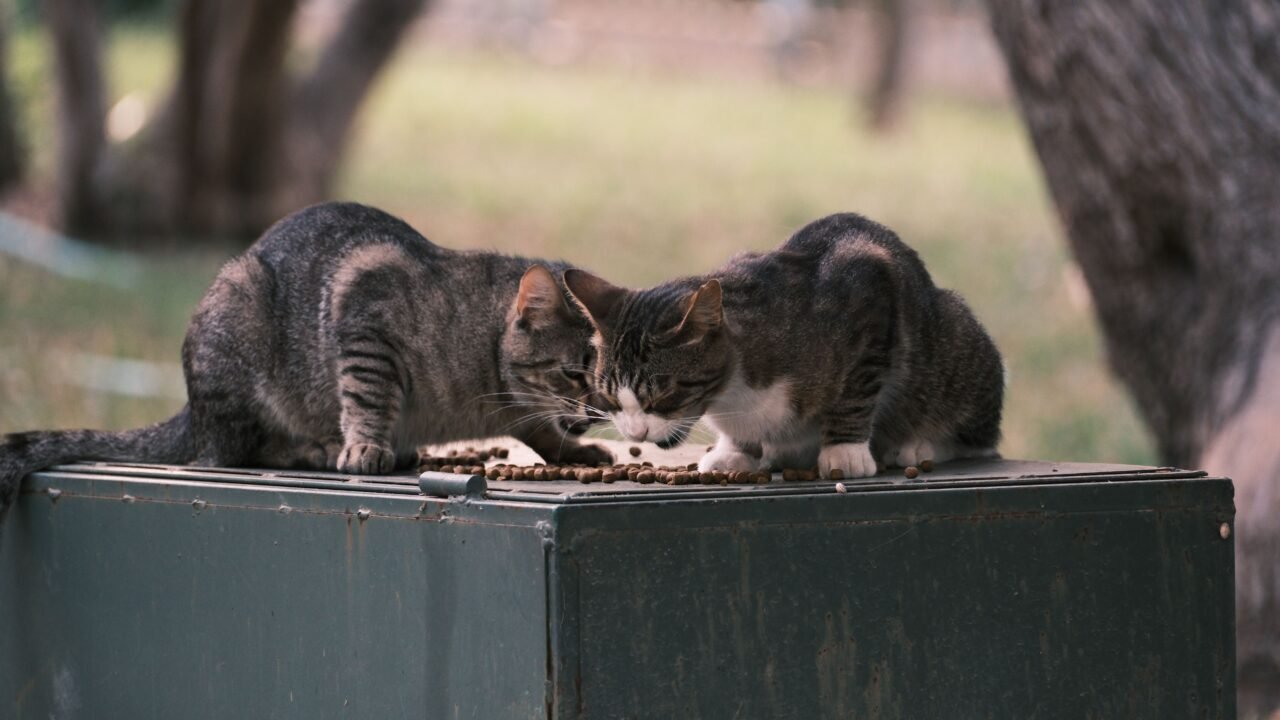
A typical kibble combines four key components. First, animal protein, which should be the star of the show: it's what a true carnivore actually needs. Second, fats, which supply energy and flavor. Third, carbohydrates (grains, corn, rice) used mostly to bind the kibble together and lower production costs—things a cat hardly needs. And fourth, added vitamins and minerals, including taurine, the essential amino acid vital for their heart and vision.
The real issue isn't the ingredients themselves, but their proportion and quality. That is where the ingredient label tells the whole truth… if you know how to read it.
The Label Trick That Changes Everything
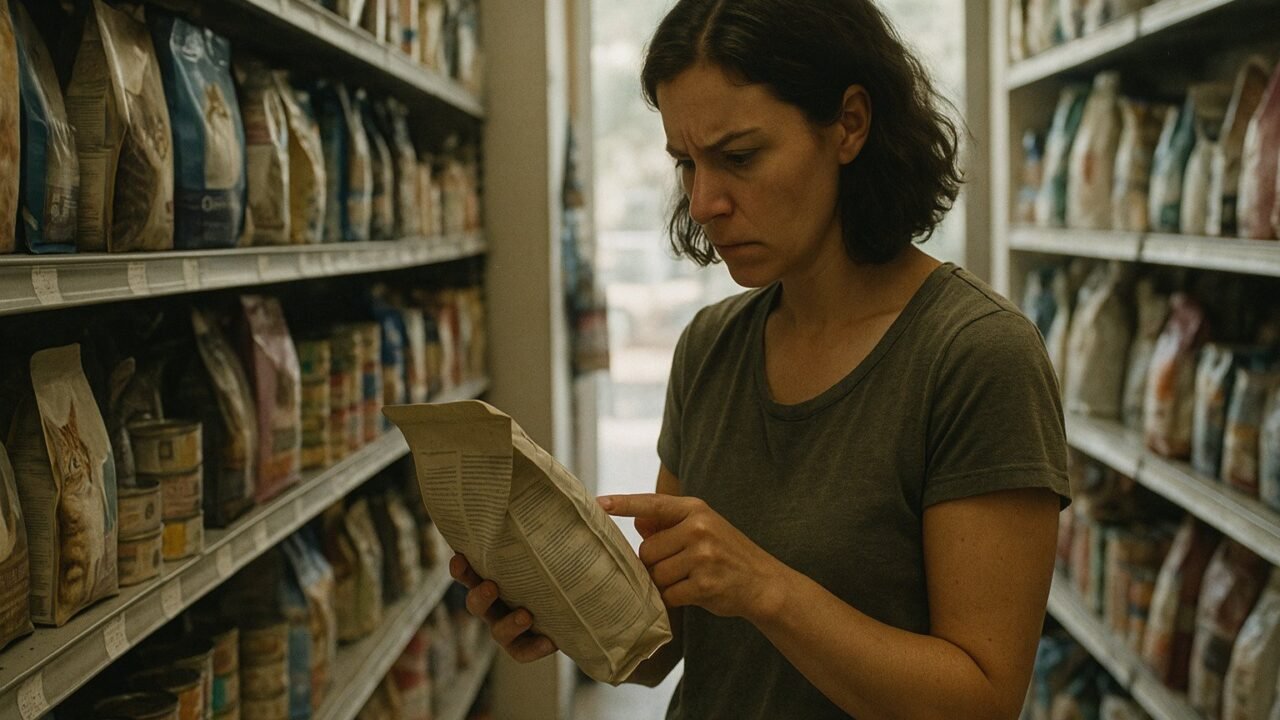
Here is the industry secret nobody highlights: ingredients are listed by weight, from most to least. That means the very first item on the list is what the food contains the most of. Therefore, you only need to check the first few ingredients.
Good sign: it starts with a specific, named meat ("chicken", "salmon", "turkey"). Bad sign: it starts with grains, corn, or vague terms like "animal by-products", "meat meal", or "derivatives", which fail to specify the animal or the cut. The higher up real meat is and the further down fillers are, the better the kibble. It's as simple as that: flip the bag over and within five seconds you'll know what you're actually feeding your cat.
Good Kibble vs. Filler Kibble
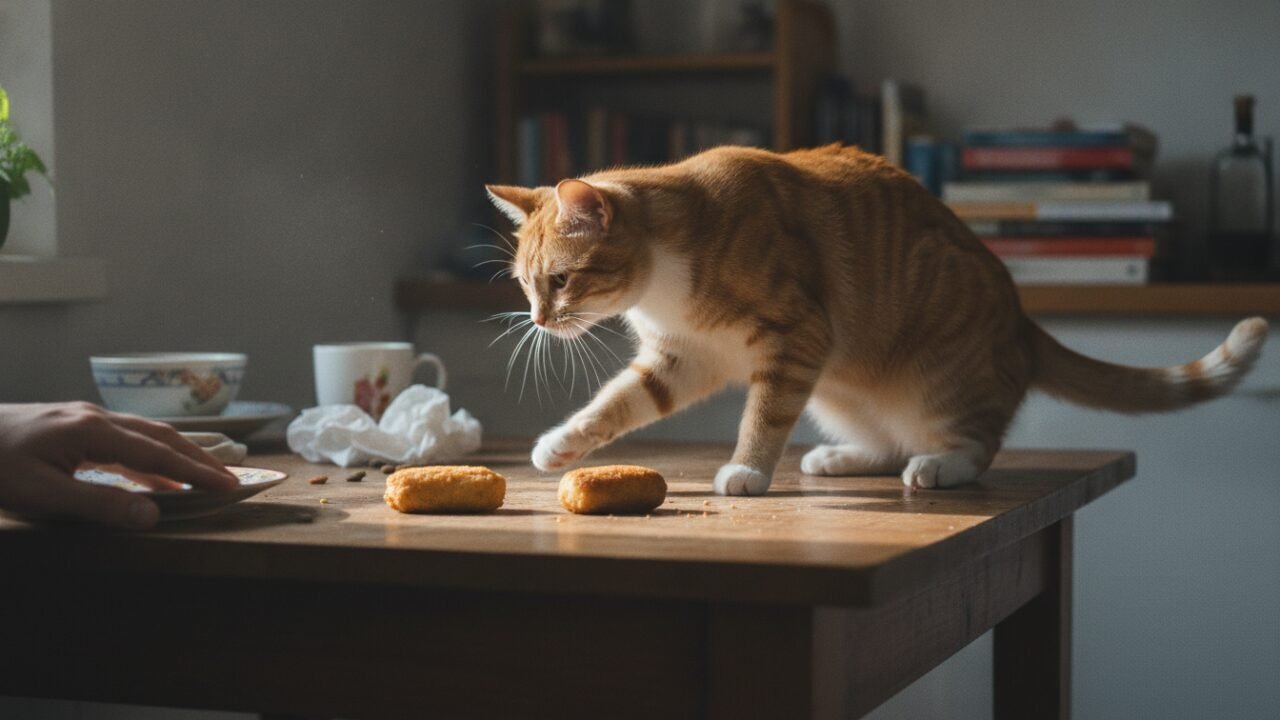
Filler kibble relies on cheap grains and generic proteins: it fills the belly, but offers poor nutrition. Quality kibble prioritizes named meat and high protein content, matching a carnivore's biological needs. The most expensive bag isn't always the best, but the label never lies: it is your most reliable tool, far more trustworthy than front-of-bag marketing.

One final note from veterinarians: no matter how good the dry food is, cats naturally drink very little water. Combining kibble with some wet food and always providing fresh water helps protect their kidneys. Good nutrition is just as much about what you feed them as how you do it.
The price and the photo on the front are designed to sell you. The ingredient list on the back tells you the truth. Learn to read it and you'll already know more than most pet owners.
And while we're on the subject of filling their bowls, there is a much more serious and common feeding mistake with severe health consequences: discover what really happens if your cat eats dog food.
Frequently Asked Questions About Cat Kibble
What is cat kibble made of?
It consists of animal protein, fats, carbohydrates (grains), and added vitamins and minerals like taurine. Quality depends heavily on proportions: the best options contain more named meat and less grain fillers.
How do I know if a cat kibble is high quality?
Read the label: ingredients are organized by weight, from most to least. If it starts with a specific meat ("chicken", "salmon"), that's a great sign; if it starts with grains or generic "animal by-products", it's lower quality.
What does "animal by-products" mean on a pet food label?
It's a vague term that doesn't specify which animal or which parts the protein comes from. It isn't always harmful, but it offers fewer guarantees than named meat. Generally, the clearer and more specific the label, the better.
Is dry kibble better than wet food?
Both have pros and cons. Dry food is convenient and great for teeth, while wet food provides vital moisture since cats rarely drink enough water. Many vets recommend combining both while keeping fresh water available at all times.
🔍 Looking for something else?
If you want to read other articles similar to What's Really in Your Cat's Kibble (And How to Read the Label) you can visit the category Nutrition.
Leave a Reply
More cat breeds!