

Your cat is pregnant, the due date is fast approaching, and you're pacing around the house as nervous as if you were the one having kittens. Take a deep breath. Cats have been doing this on their own for thousands of years, and most of the time everything goes smoothly without you needing to do much at all. Your job isn't to manage the labor—it's to know how to read the signs so you can be in the right place, and recognize the exact moment when you actually need to call the vet.
The Days Before: How Your Cat Lets You Know

Your cat's body and behavior change before labor actually starts. In the 24 to 48 hours beforehand, you'll usually notice the following:
She looks for a nesting spot. She sneaks into closets, drawers, and dark, quiet corners, picking out where she wants to give birth. She loses her appetite right before labor, after weeks of eating like a horse. She becomes restless and very clingy, or conversely, wants to hide from everyone. Plus, her body temperature drops slightly in the hours leading up to labor, which is one of the most reliable signs.
The Big Day: Setting Up the Nest, Not Running the Show
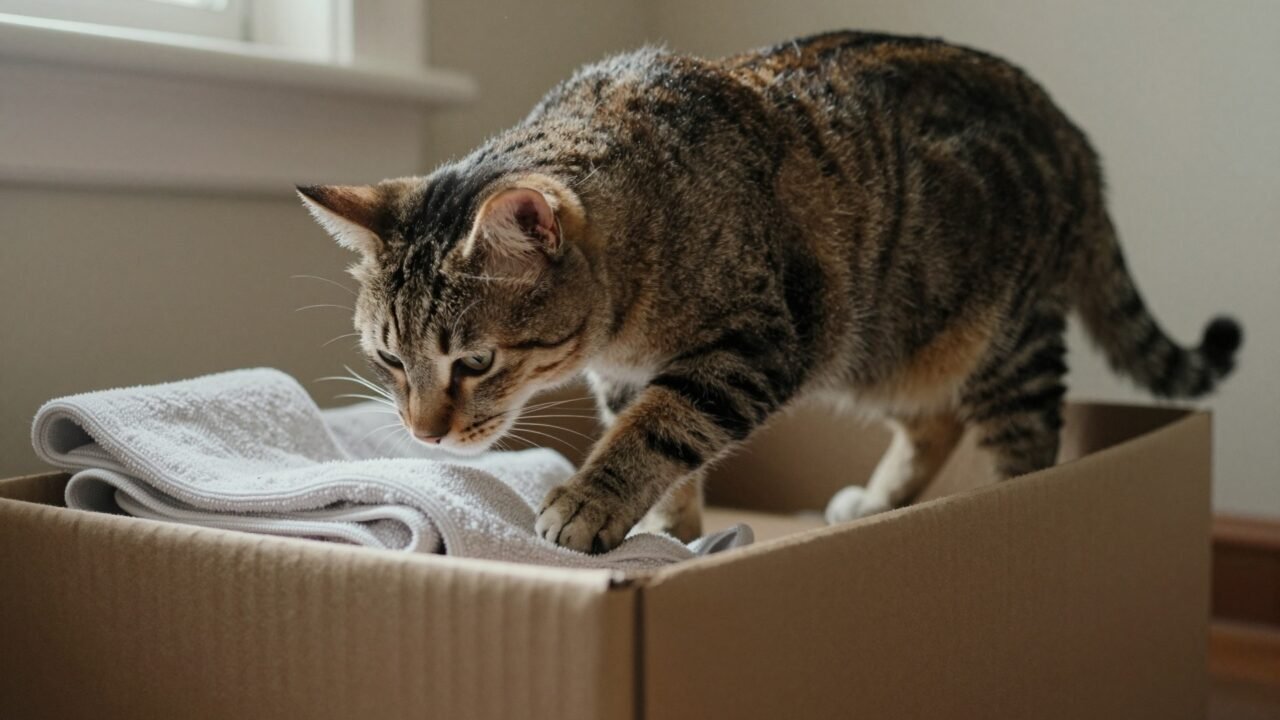
The most useful thing you can do is offer her a comfortable place before she improvises one behind the washing machine. A cardboard box with clean towels in a quiet, warm, dimly lit corner, far away from noise and other pets.
Show it to her calmly a few days in advance. If she likes it, she'll use it; if not, respect the spot she chooses. Don't force her or move her in the middle of labor—stress can stall the process.

Labor Has Begun: What Is Normal

When labor truly kicks off, you'll see visible abdominal contractions, meowing, panting, and perhaps a lot of grooming in her hind end. Kittens are born at intervals of 10 minutes to an hour, each in its own amniotic sac, which the mother breaks and cleans herself. She also eats the placentas: it's pure instinct, so don't be alarmed.
Your role here is pretty much nothing: observe from a safe distance, in silence, with the lights low. She knows what to do. Interfering too much will only make her nervous.
When You DO Need to Call the Vet (This Is the Important Part)
Here is the part you really need to memorize, because it can save lives. Call your vet immediately if:
She has been having strong contractions for more than 20–30 minutes without a kitten coming out. More than 2 hours pass between one kitten and the next and you know there are more inside. You see a kitten stuck halfway. There is heavy bleeding, or your cat is exhausted, extremely lethargic, or running a high fever. Any of these signs is a true emergency, not a wait-and-see situation.

Aside from those scenarios, your best help is staying calm, providing a quiet nesting box, and keeping the vet's phone number handy. Trust her: her body has been prepared for this for thousands of years.
And once the little ones arrive, you'll find this useful right away: at what age kittens stop drinking milk and why cow's milk is bad for them.
General information for educational purposes only. We are not veterinarians, and this text does not replace professional veterinary evaluation. Labor can become complicated in a matter of minutes: if you notice any of the warning signs described above, contact your veterinarian or an emergency animal hospital immediately.
Frequently Asked Questions
How do I know if my cat is about to give birth?
Typical signs in the 24–48 hours beforehand include: searching for a nesting spot in hidden corners, loss of appetite, restlessness or extreme clinginess, and a slight drop in body temperature. Labor usually starts shortly after.
Should I help my cat during labor?
Normally, no. Cats give birth on their own by instinct: they break the sac, clean the kittens, and sever the umbilical cord. Your role is to set up a quiet nesting area and watch from afar, without interfering unless there's a complication.
When is a cat's labor considered an emergency?
Call the vet if there are strong contractions for more than 20–30 minutes without a kitten being born, more than 2 hours pass between kittens, a kitten is stuck, there's heavy bleeding, or if the cat seems extremely weak. These are true emergencies.
🔍 Looking for something else?
If you want to read other articles similar to Signs Your Cat is Going to Give Birth (And When to Call the Vet) you can visit the category Health & Care.
Leave a Reply
More cat breeds!