

A three-week-old kitten is not just a small cat. It is an animal with an energy reserve that lasts for hours, not days. That is the detail almost everyone overlooks when asking how many times a day to feed one, and it is why the answer cannot be a single number.
Because the answer changes dramatically within a matter of weeks. Getting it wrong in the earliest stage doesn't just mean the kitten is eating a little less: it means it can slip into hypoglycemia, which in an animal of that size can become critical in hours.
The chart that actually answers the question
It all depends on age. Here is the standard guideline used in veterinary practice:
- 0 to 4 weeks (neonatal). Every 2 to 4 hours, including through the night, using specific kitten milk replacer. If the mother is present, she handles it. If it's an orphan, you do, and yes, that includes the middle of the night.
- 4 to 8 weeks (weaning). 4 to 6 meals a day. Solid food starts in the form of a mash: moistened specific kitten kibble to a soft consistency, or growth-stage wet food.
- 2 to 4 months. 4 meals a day. This is the period of the fastest growth rate in their entire life.
- 4 to 6 months. 3 meals a day. Feeding times begin to space out.
- 6 to 12 months. 2 or 3 meals a day, with a gradual transition toward adult feeding schedules.
Notice the pattern: it's not that kittens eat "more often just because they're small." It's that their stomach capacity is tiny and their energy expenditure is massive. They need to refuel constantly because they cannot store energy. As they grow, stomach capacity increases, urgency decreases, and meals become less frequent.
The bottle-feeding mistake: posture
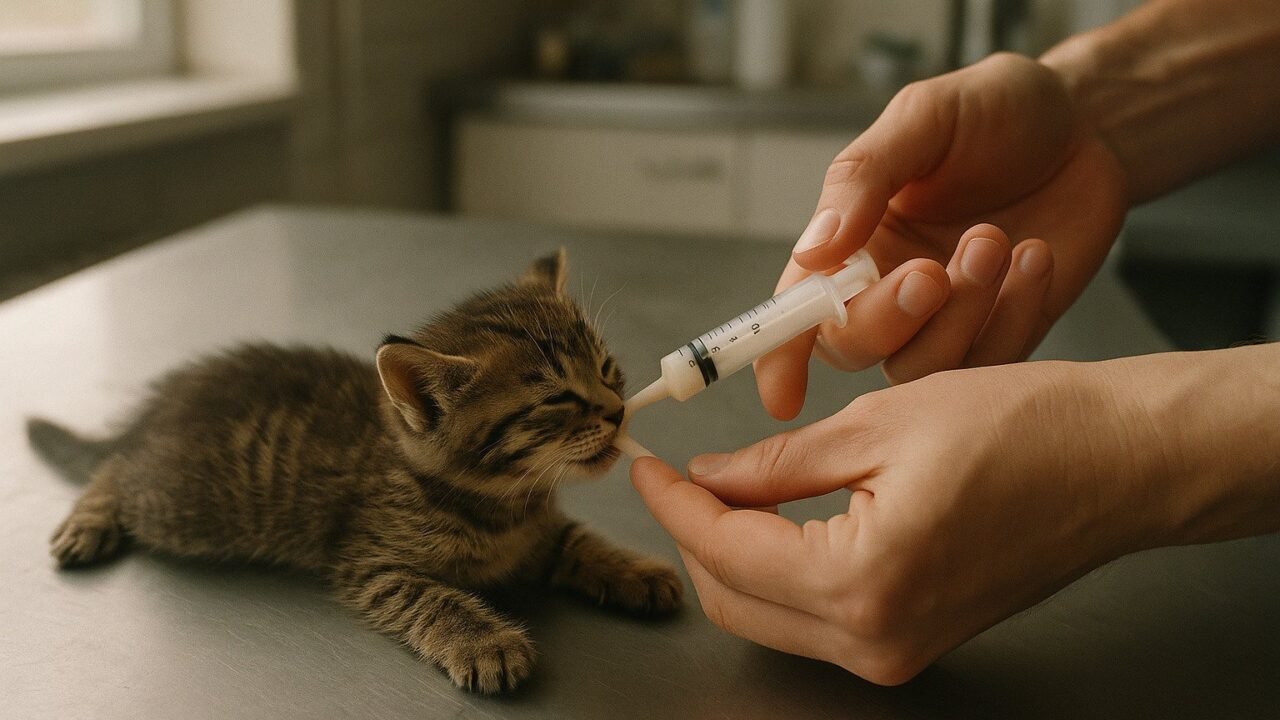
If you are raising an orphan, there is a crucial detail that is rarely mentioned and causes more fatalities than malnutrition itself: never feed a kitten on its back, the way human babies are fed.
Their anatomy is different from ours. In that position, milk easily enters the airway, causing aspiration pneumonia, which in an animal only a few weeks old is often fatal. The correct position is belly down, resting on their stomach, with their head aligned with their body—the exact posture they would take nursing from their mother.

And cow's milk won't work. Kittens digest lactose poorly in those proportions, and the usual result is diarrhea that dehydrates them within hours. Commercial kitten milk replacer exists precisely because no other substitute will do.
Full bowl vs. scheduled meals: the question that actually matters
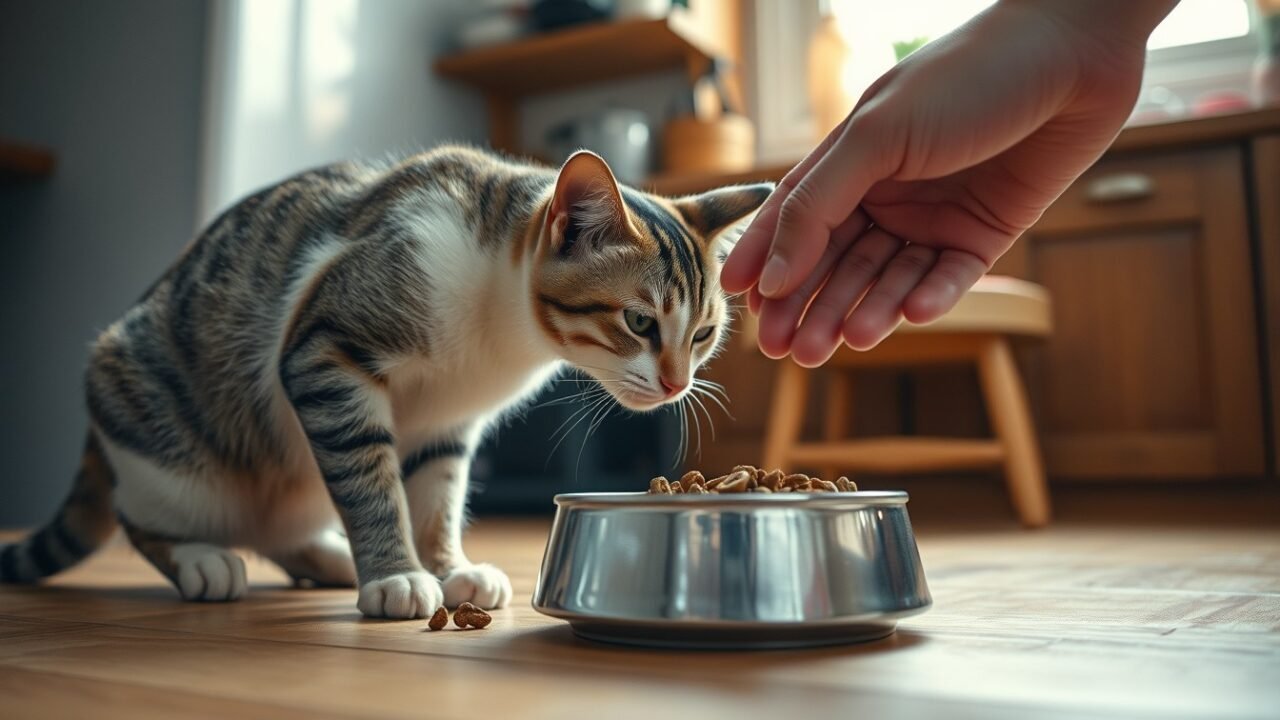
This is where conflicting advice online usually pops up, so it helps to separate the two stages.
While growing as a kitten, leaving dry food out at all times is a common and reasonable practice: the animal regulates its intake quite well because its energy demand is real and constant.
Once they reach adulthood, the approach changes completely. The modern domestic cat easily loses this self-regulation, especially after neutering or spaying, when energy expenditure drops but appetite doesn't. Leaving the food bowl full indefinitely is the fastest route to overweight cats, and feline obesity is not just cosmetic: it is linked to diabetes and joint problems.
The transition isn't an overnight switch. It should be done gradually, and the exact timing depends on the cat, its breed, activity level, and whether it has been spayed or neutered.

Signs that something is wrong
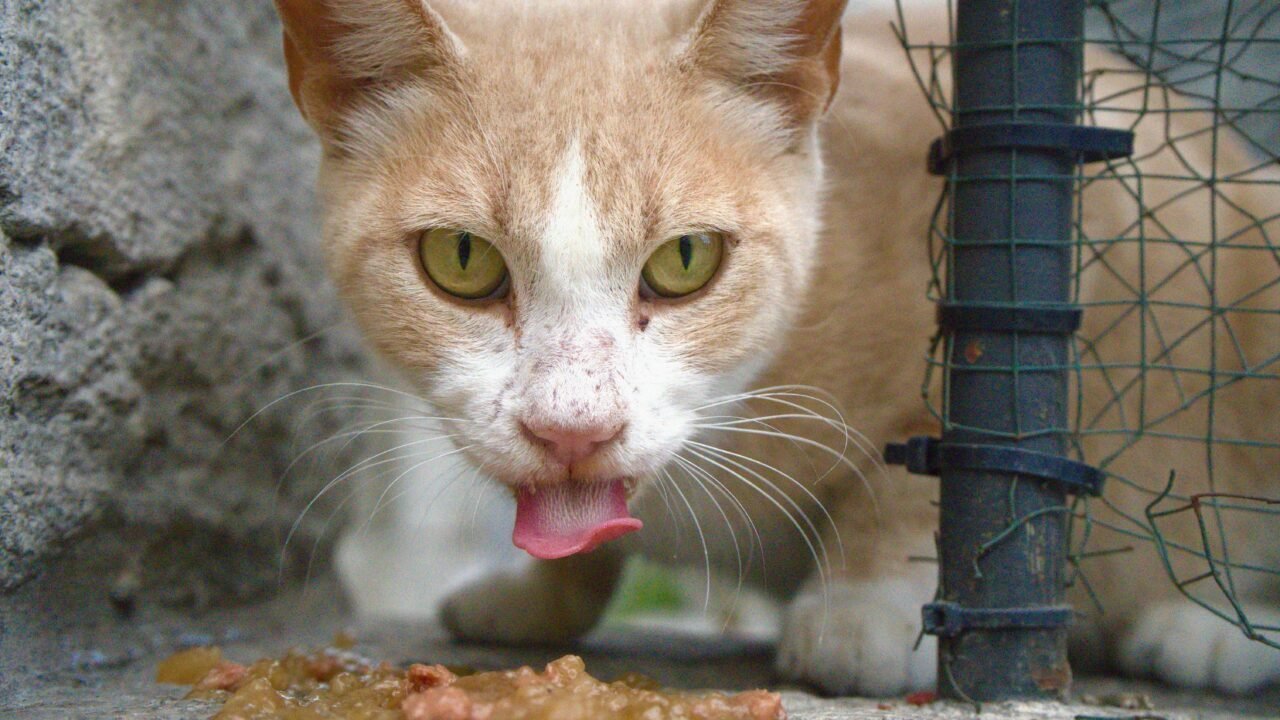
A healthy kitten eats eagerly, gains weight steadily, and stays active between naps. These are the warning signs that require immediate attention:
- Refusing food for more than one feeding in a row. In a neonatal kitten, skipping meals is an emergency, not a whim.
- Limpness, feeling cold to the touch, or hard to wake up. Young kittens lose body heat very quickly, and a cold kitten cannot digest food: feeding them in that state makes things worse.
- Persistent diarrhea. Dehydration in an animal this small progresses in hours.
- Not gaining weight. A kitchen scale and daily tracking are worth more than any visual guess.
Frequently Asked Questions
Can I feed adult cat food if it's all I have at home?
As a one-off it won't kill them, but as a regular diet it won't work. Growth food contains more protein, more fat, and a different ratio of calcium and phosphorus calculated to build a skeleton. Adult food is formulated for maintenance, not growth.
Until what age is a cat considered a kitten for feeding purposes?
The usual reference point is up to 12 months. In large, slow-developing breeds, this period can last significantly longer because they keep growing after others have finished.
It eats, but never seems full. Is that normal?
During growth spurts, a ravenous appetite is usually normal. If there is also diarrhea, poor coat condition, or failure to gain weight despite eating heavily, it is no longer normal: intestinal parasites and absorption issues present exactly like this.
Does it need water if it's drinking formula?
Once weaning starts, yes: clean, fresh water should always be available in a shallow dish where they can reach it without the risk of falling in.
The essential takeaway in one sentence
The younger they are, the more frequently and in smaller amounts they need to eat; once they transition to solid food, what matters isn't just how often they eat, but what they eat. More is at stake than it seems—because everyday foods found in any kitchen can actually harm a cat: here is the real list, and what to do if they already ate some.
Informational content. Final quantities and schedules depend on each kitten's weight, breed, and health status: the veterinarian examining the cat is the one who can properly adjust them.
🔍 Looking for something else?
If you want to read other articles similar to How Often to Feed a Kitten: The Age-by-Age Chart That Prevents Costly Mistakes you can visit the category Nutrition.
Leave a Reply
More cat breeds!